Table of Contents
Selecting the right fabric materials is an important part of designing reliable non-metallic expansion joints. The materials must accommodate the required movement while maintaining their mechanical and functional properties under actual operating conditions.
However, material selection is not simply a matter of choosing a fabric with a high temperature rating. Operating pressure, vacuum conditions, chemical exposure, gas velocity, abrasion, and installation conditions can all influence the suitability of an expansion joint construction.
For engineers, procurement managers, and expansion joint manufacturers, understanding the differences between fiberglass fabrics, silicone-coated fiberglass fabrics, PTFE-based materials, and other specialized industrial textiles can help avoid unsuitable material combinations.
In this article, I will explain the main materials used in non-metallic expansion joint construction, the factors that influence their selection, and how to evaluate different fabric options for industrial applications. I will also provide a practical checklist that buyers can use when discussing their requirements with fabric suppliers and expansion joint manufacturers.
1. What Is the Role of Fabric Materials in Non-Metallic Expansion Joints?

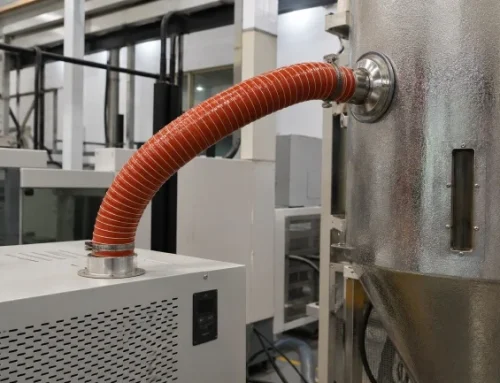
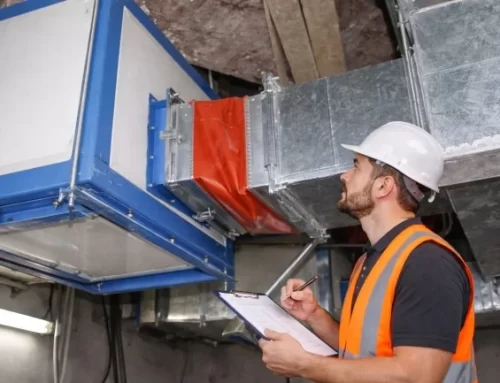
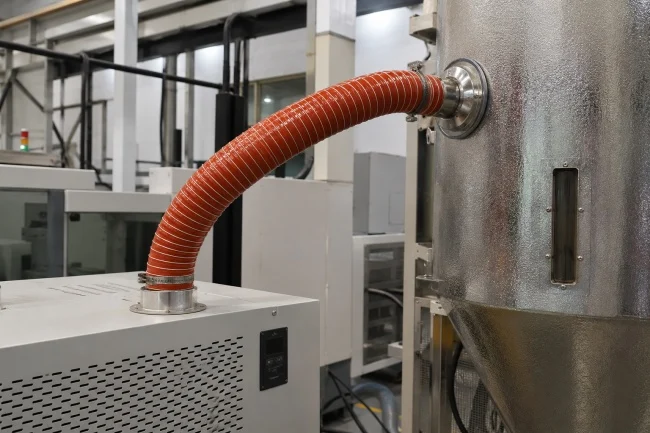
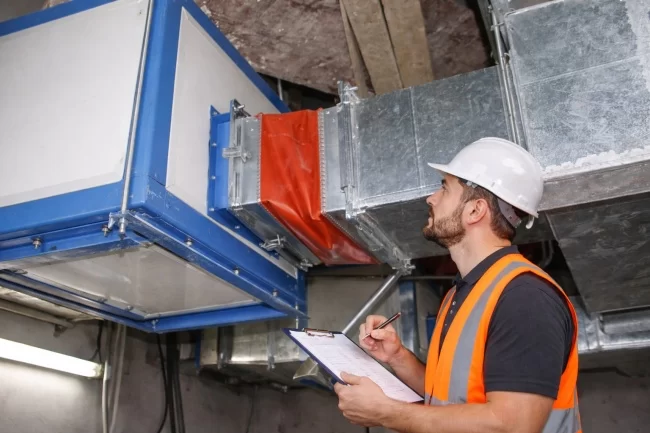
A non-metallic fabric expansion joint installed in an industrial pipeline system to accommodate thermal movement, vibration, and mechanical displacement.
Non-metallic expansion joints are flexible components installed between connected duct sections or equipment to accommodate movement caused by thermal expansion, vibration, and installation tolerances.
Unlike metal expansion joints, which generally use flexible metal bellows, fabric expansion joints use flexible elastomeric, thermoplastic, or composite materials.
Depending on the application, their construction may include coated fabrics, reinforcement materials, sealing membranes, insulation materials, and external protective layers.
The materials perform different functions within the complete assembly.
Accommodating Movement and Vibration
Industrial ducting systems experience movement during operation. Temperature changes can cause connected components to expand or contract, while fans, blowers, and other machinery generate vibration.
Fabric expansion joints are designed to accommodate specified axial, lateral, and angular movements.
They can also help reduce the transmission of vibration and structure-borne noise between connected equipment.
The amount of movement a joint can accommodate depends on its geometry, material construction, installation conditions, and design specifications.
Providing Reinforcement and Mechanical Support
Some non-metallic expansion joints use fiberglass, aramid, or other reinforcement materials to support their flexible construction.
These materials help improve dimensional stability and provide mechanical reinforcement.
However, the reinforcement material should not be confused with the pressure rating of the complete expansion joint.
The pressure capability of a finished expansion joint depends on the complete assembly, including its material layers, dimensions, attachment system, and supporting structure.
Providing Sealing and Environmental Protection
Depending on the design, different materials may be used to prevent process gas leakage and protect the joint against environmental exposure.
For example:
-
Elastomeric materials may provide flexibility and sealing properties.
-
Fluoropolymer materials, such as PTFE, may provide chemical protection.
-
Silicone-coated fiberglass fabrics may serve as flexible protective or outer layers.
-
Insulation materials may help control heat transfer between the process gas and other components.
The appropriate combination depends on the actual operating conditions.
Supporting Service Life
An unsuitable material combination can lead to coating deterioration, cracking, loss of flexibility, leakage, or damage to reinforcement layers.
For this reason, I recommend evaluating each material according to its specific function within the expansion joint.
A material that performs well as an external protective layer may not be suitable as the primary gas-sealing layer.
2. Common Materials Used in Non-Metallic Expansion Joints
Non-metallic expansion joints do not rely on one universal fabric material. Different elastomers, reinforcement fabrics, fluoropolymers, and insulation materials are used according to their intended functions.
The following materials are commonly considered in fabric expansion joint construction.
2.1 Fiberglass Fabric
Fiberglass fabric is an important reinforcement and insulation material in industrial expansion joint applications.
It is produced by weaving glass fiber yarns into different fabric structures, such as plain, twill, and satin weaves.
Its main characteristics include:
-
Good dimensional stability.
-
Useful mechanical reinforcement properties.
-
Thermal stability compared with many organic textile materials.
-
Availability in different weights, thicknesses, and weave constructions.
-
Compatibility with various coatings and surface treatments.
Fiberglass fabric can be used as a supporting layer, an insulation-related material, or a substrate for coated fabrics.
However, uncoated fiberglass fabric should not automatically be considered suitable for direct exposure to every process gas or chemical.
Its actual suitability depends on the glass fiber type, fabric construction, surface treatment, temperature, and operating environment.
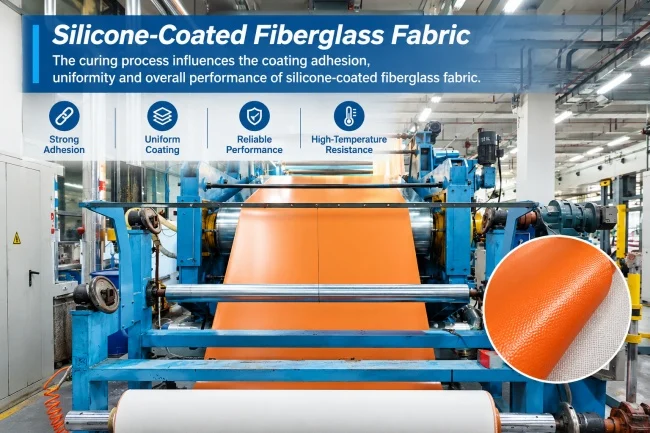
2.2 Silicone-Coated Fiberglass Fabric
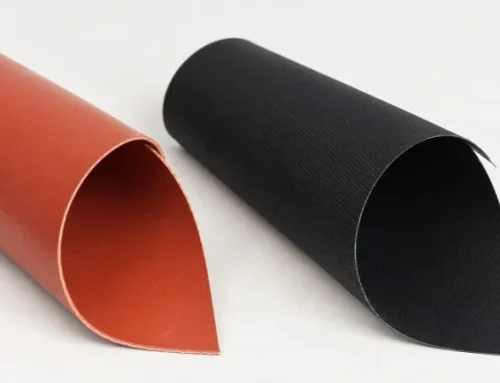
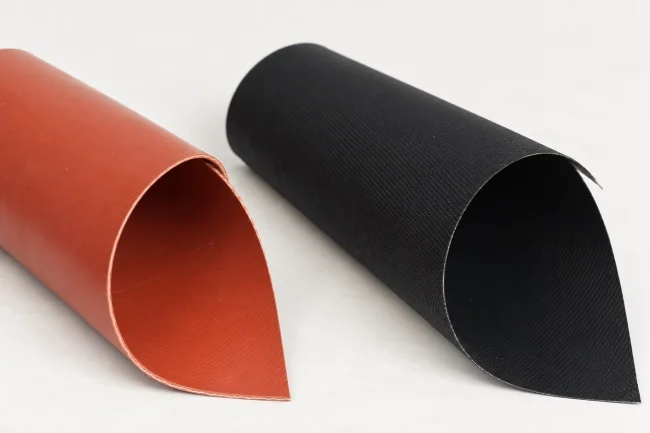
Silicone-coated fiberglass fabric combines woven fiberglass reinforcement with a silicone rubber coating.
The coating can be applied to one or both sides of the fiberglass substrate, depending on the product specification.
Its main characteristics include:
-
Good flexibility in suitable fabric constructions.
-
Resistance to moisture and weathering.
-
Good ozone resistance.
-
Electrical insulation properties, depending on the product.
-
A combination of fiberglass reinforcement and silicone surface protection.
Silicone-coated fiberglass fabric is used in various industrial applications, including removable insulation covers, protective curtains, flexible connectors, and certain fabric expansion joint constructions.
However, not every silicone-coated fiberglass fabric is suitable for every expansion joint application.
The coating formulation, thickness, fabric substrate, and manufacturing process influence the final product properties.
Temperature resistance requires particular attention.
For example, one manufacturer’s silicone-coated fiberglass fabric may have a recommended operating temperature of approximately 230°C, while another product may have a different rating. These figures must be checked against the specific product data sheet rather than treated as universal industry values.
When evaluating this material, buyers should confirm:
-
Continuous operating temperature.
-
Maximum temporary exposure temperature.
-
Coating thickness.
-
One-sided or two-sided coating.
-
Fabric weight and total thickness.
-
Suitability for the intended expansion joint layer.
It is also important to distinguish the temperature capability of the fiberglass substrate from that of the complete silicone-coated fabric.
The substrate may tolerate higher temperatures than the silicone coating. Therefore, the temperature rating of bare fiberglass should not be used as the operating temperature rating of the finished coated fabric.
2.3 PTFE and PTFE-Coated Fiberglass Materials
PTFE (polytetrafluoroethylene) is a fluoropolymer known for its chemical resistance, non-stick properties, and low friction.
In non-metallic expansion joint construction, PTFE may be used in different forms, depending on the design.
These include:
-
PTFE-coated fiberglass fabrics.
-
PTFE films or membranes.
-
Other fluoropolymer-based composite materials.
PTFE-coated fiberglass fabric combines a fiberglass substrate with a PTFE coating.
Its main characteristics include:
-
Resistance to many chemicals.
-
Non-stick surface properties.
-
Low friction.
-
Good moisture resistance.
-
Thermal performance within the specified product limits.
It may be considered for protective fabric layers and other industrial applications requiring chemical resistance.
However, it is important not to confuse PTFE-coated fiberglass fabric with a dedicated PTFE sealing membrane.
In some multilayer expansion joint designs, a PTFE membrane serves as the primary gas-sealing component, while fiberglass-based materials provide reinforcement or other functions.
These materials are not automatically interchangeable.
Chemical resistance must also be evaluated under actual conditions. Although PTFE is resistant to many chemicals, compatibility depends on the chemical substance, concentration, temperature, and exposure conditions. The glass substrate and other components must also be considered.
2.4 Other Specialized Materials
Some industrial applications require materials beyond standard fiberglass and silicone-coated fiberglass fabrics.
The following materials may be considered depending on the design.
Neoprene and other elastomers
Neoprene, EPDM, silicone rubber, and fluoroelastomers are examples of elastomeric materials used in certain non-metallic expansion joint constructions.
They provide different combinations of flexibility, sealing properties, temperature resistance, and chemical compatibility.
Their suitability depends on the specific formulation and operating conditions.
Neoprene-coated fiberglass fabric should not automatically be treated as a standard high-temperature expansion joint material. It should only be considered when its specific temperature and chemical resistance properties meet the application requirements.
Silicate and ceramic-based insulation materials
Silicate fabrics, ceramic fiber materials, and other specialized insulation products may be used in multilayer expansion joints.
Their function is generally related to thermal insulation and protection of other material layers.
They are not necessarily intended to provide the same reinforcement or sealing function as coated fiberglass fabrics.
Other fluoropolymer materials
Depending on the application, other fluoropolymers may be considered for chemical protection or sealing-related functions.
The final choice should be based on the manufacturer’s technical documentation and the complete expansion joint design.
3. Key Factors to Consider When Selecting Fabric Materials
When selecting materials for non-metallic expansion joints, I recommend starting with the actual operating conditions rather than choosing a material based only on its general product description.
A fabric may perform well in one application but be unsuitable in another because of differences in temperature, pressure, chemical exposure, or movement.
3.1 Operating Temperature and Temperature Fluctuations
Temperature is one of the most important factors in material selection.
However, buyers should distinguish between:
-
Normal operating temperature: The temperature experienced during regular operation.
-
Maximum operating temperature: The highest temperature expected under specified operating conditions.
-
Temporary temperature peaks: Short periods of elevated temperature during startup, shutdown, or other operating events.
These conditions can affect the selection of reinforcement fabrics, coatings, sealing membranes, and insulation materials.
For example, fiberglass may be used as a reinforcement substrate in a high-temperature construction. However, when coated with silicone rubber, the coating’s temperature limitations must also be considered.
The same principle applies to PTFE-based materials.
Other important considerations include:
-
Whether the process gas directly contacts the material.
-
Whether the material is positioned on the hot face or cold face.
-
Whether the system experiences frequent temperature changes.
-
Whether radiant heat affects the external surface.
-
Whether the material is exposed continuously or intermittently.
In multilayer expansion joints, the temperature experienced by each layer may be different.
The temperature distribution across the joint must therefore be considered when selecting materials. Suitable insulation may be required to protect temperature-sensitive layers.
Do not select a fabric based solely on the maximum temperature rating of its base material or coating. Evaluate the temperature capability of the complete material construction in its actual position.
3.2 Operating Pressure and Vacuum Conditions
Pressure and vacuum conditions also influence the design of non-metallic expansion joints.
Positive pressure, negative pressure, and pressure fluctuations can create different mechanical loads on the flexible section.
Buyers should identify:
-
Normal operating pressure.
-
Maximum positive pressure.
-
Maximum negative pressure or vacuum.
-
Pressure fluctuations and pulsation.
-
Potential pressure surges.
-
Supporting structures and internal sleeves, where applicable.
Negative pressure can cause an inadequately supported flexible section to deform or move into the gas stream.
Positive pressure can place loads on the flexible section and its connections.
The pressure capability of the complete joint depends on its geometry, reinforcement, dimensions, attachment system, and supporting components.
It is therefore incorrect to use the tensile strength of a coated fabric as a substitute for the working pressure rating of an expansion joint.
The designer or manufacturer should evaluate the complete assembly against the specified pressure and vacuum conditions.
3.3 Required Movement and Flexibility
The main function of an expansion joint is to accommodate movement between connected components.
Three common movement types need to be considered.
Axial movement
Axial movement occurs when connected components move toward or away from each other along the centerline of the system.
The expansion joint must accommodate the specified compression and extension.
Lateral movement
Lateral movement occurs when connected components move sideways relative to each other.
This can result from thermal expansion, equipment displacement, or structural movement.
Angular movement
Angular movement occurs when connected components rotate relative to each other.
The flexible section must accommodate the specified rotation without excessive stress.
When evaluating fabric materials, consider:
-
Fabric thickness.
-
Weave construction.
-
Coating flexibility.
-
Number and arrangement of layers.
-
Movement magnitude.
-
Movement frequency.
-
Operating temperature during movement.
A thicker coated fabric may provide useful mechanical protection but could affect the flexibility of the complete construction.
However, choosing a thinner material simply to increase flexibility may reduce reinforcement or durability.
The final construction should be selected according to the calculated movement requirements and the overall joint design.
3.4 Chemical Exposure and Corrosion Resistance
Chemical compatibility is particularly important in chemical processing plants, petrochemical facilities, and industrial exhaust systems.
Before selecting a material, buyers should identify the substances that may come into contact with the expansion joint.
These may include:
-
Acidic or alkaline gases.
-
Chemical vapors.
-
Solvents.
-
Oil and hydrocarbon vapors.
-
Moisture containing chemical contaminants.
-
Process residues and cleaning agents.
Different elastomers and fluoropolymers offer different chemical resistance properties.
For example, PTFE is commonly considered when resistance to a broad range of chemicals is required. However, its suitability must still be evaluated for the specific chemical mixture and operating conditions.
Silicone rubber also has useful properties, but it is not resistant to every solvent or chemical environment.
The evaluation should consider:
-
Chemical names and concentrations.
-
Operating temperature.
-
Exposure duration.
-
Continuous or intermittent contact.
-
Whether exposure occurs on the process side, external side, or both.
-
Whether condensation or liquid accumulation occurs.
For demanding chemical applications, I recommend requesting product-specific compatibility information before confirming a material specification.
3.5 Moisture, Weathering, and Environmental Conditions
Some expansion joints are installed outdoors or in environments exposed to rain, humidity, condensation, sunlight, and changing ambient temperatures.
These conditions may affect the coatings and other material layers over time.
When selecting materials, consider:
-
Water and moisture exposure.
-
Condensation inside or outside the duct.
-
Ultraviolet radiation.
-
Ozone exposure.
-
External temperature fluctuations.
-
Cleaning and washing procedures.
Silicone-coated fiberglass fabric may be considered for certain applications requiring moisture resistance and weathering performance.
However, the suitability of the product depends on its specific coating formulation and construction.
Where necessary, an external protective layer may be incorporated into the expansion joint design.
3.6 Abrasion and Mechanical Wear
Industrial exhaust systems may carry dust, particles, and other solid materials.
When these particles travel at high velocity, they can cause abrasion or erosion of the internal expansion joint components.
This is particularly relevant in:
-
Cement manufacturing.
-
Power generation.
-
Dust collection systems.
-
Material handling equipment.
-
Industrial drying systems.
When evaluating the construction, engineers should consider:
-
Particle size and hardness.
-
Gas velocity.
-
Dust concentration.
-
Direction of gas flow.
-
Material buildup.
-
Cleaning frequency.
A fabric suitable for clean hot air may not be suitable for a system carrying abrasive dust.
In these situations, additional design measures may be necessary, such as internal protective sleeves, liners, or abrasion-resistant components.
Abrasion protection should be evaluated as part of the complete expansion joint design, not only through the surface properties of the coated fabric.
4. How Fabric Construction and Coating Affect Expansion Joint Performance

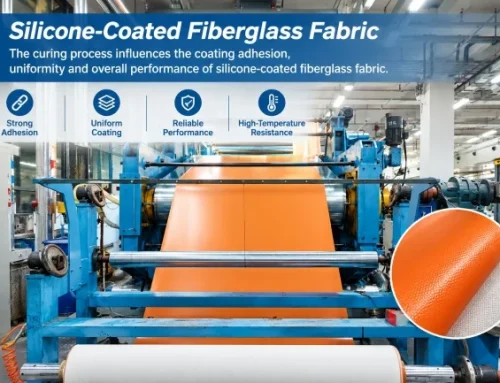
Silicone-coated fiberglass fabric combines a woven fiberglass substrate with a silicone coating. Its suitability for industrial applications depends on the specific fabric grade and operating conditions.
Two coated fiberglass fabrics may use the same coating material but still have different physical and mechanical properties.
The differences may come from the fiberglass substrate, weave structure, coating formulation, coating thickness, and manufacturing process.
For this reason, I recommend looking beyond the material name when comparing fabric options.
4.1 Fabric Weave and Reinforcement Structure
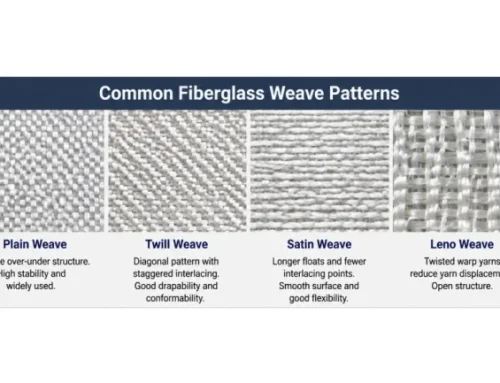
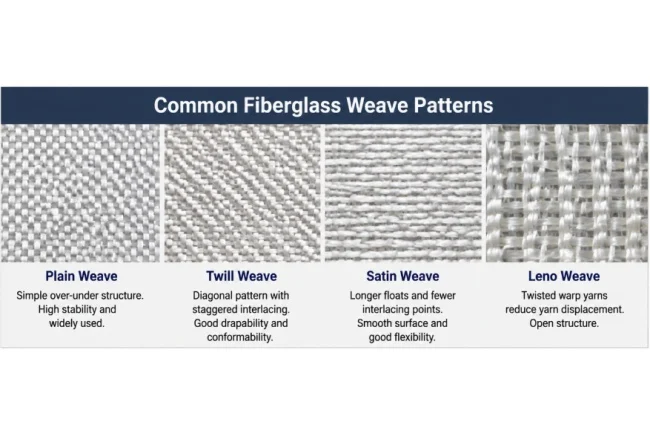
Fiberglass fabric is available in different weave constructions, including plain weave, twill weave, and satin weave.
Plain weave
Plain weave has a simple interlaced structure in which each warp yarn alternates over and under the weft yarns.
It generally provides a balanced and stable fabric construction.
Twill weave
Twill weave uses a different interlacing arrangement that creates a diagonal pattern.
Depending on the yarn and fabric construction, it may offer different flexibility and drape characteristics compared with plain weave.
Satin weave
Satin weave has longer yarn floats and fewer interlacings per unit area.
It can provide a smoother surface and different flexibility characteristics, depending on the fabric design.
However, it is not correct to assume that one weave pattern is always stronger or more suitable than another.
Actual performance also depends on:
-
Yarn type and diameter.
-
Warp and weft density.
-
Fabric weight.
-
Weave construction.
-
Fabric thickness.
-
Surface treatment.
For expansion joint applications, the weave should be selected according to the required reinforcement, flexibility, and dimensional stability.
4.2 Coating Material and Coating Thickness
The coating protects the fiberglass substrate and helps provide the required surface properties.
Common coating options include silicone rubber, PTFE, and other specialized compounds.
Coating thickness can influence:
-
Surface protection.
-
Flexibility.
-
Moisture resistance.
-
Coating adhesion.
-
Overall fabric thickness and weight.
However, thicker coatings are not automatically better.
A thicker coating may improve certain protective properties but may also change the flexibility and bending characteristics of the fabric.
The coating must also adhere properly to the fiberglass substrate.
When comparing suppliers, I recommend checking:
-
Coating material.
-
One-sided or two-sided coating.
-
Total fabric thickness.
-
Coating weight, where available.
-
Fabric weight.
-
Coating adhesion.
-
Relevant mechanical test results.
These details provide a more reliable basis for comparison than the coating name alone.
4.3 Single-Layer vs. Multilayer Fabric Construction
Non-metallic expansion joints can use single-layer or multilayer constructions.
The appropriate design depends on the operating conditions and required functions.
A multilayer expansion joint may include the following components:
-
Gas-sealing layer: Helps prevent process gas from leaking through the flexible section.
-
Insulation layer: Helps reduce heat transfer and protect temperature-sensitive materials.
-
Reinforcement layer: Provides mechanical support and dimensional stability.
-
External protective layer: Helps protect the assembly from moisture, weathering, and external mechanical damage.
-
Internal flow protection: May be required to protect against high gas velocity, dust, and abrasion.
Not every expansion joint requires all these layers.
Some designs use elastomeric or thermoplastic materials reinforced with supporting fabrics. Others use multiple functional layers arranged to meet more demanding thermal and chemical requirements.
The layers may also have different maximum permissible temperatures.
Therefore, their arrangement must consider the temperature distribution, gas composition, pressure, and movement.
The number of layers should be determined by the engineering requirements, not simply by assuming that more layers provide better performance.
5. Comparing Different Materials for Non-Metallic Expansion Joints
When comparing materials, buyers should evaluate their intended functions rather than ranking them from best to worst.
The following table provides a general comparison.
| Material | Main characteristics | Potential application considerations |
|---|---|---|
| Fiberglass fabric | Reinforcement and thermal stability | Supporting and insulation-related layers |
| Silicone-coated fiberglass fabric | Flexible coated surface, moisture resistance, fiberglass reinforcement | Suitable flexible protective layers and certain fabric expansion joint constructions |
| PTFE-coated fiberglass fabric | Chemical resistance and non-stick properties | Protective fabric applications requiring chemical resistance |
| PTFE film or membrane | Chemical barrier and sealing-related properties | Primary or secondary sealing functions in suitable designs |
| Neoprene and other elastomers | Flexibility and sealing properties | Single-ply or composite expansion joint constructions, subject to product limitations |
| Silicate and ceramic-based materials | Thermal insulation and high-temperature protection | Specialized insulation layers |
How Should Buyers Compare These Materials?
Fiberglass fabric
Consider it when reinforcement, dimensional stability, or insulation-related functions are required.
Silicone-coated fiberglass fabric
Consider it when a flexible coated fiberglass material is needed and the specified temperature and environmental conditions are within the product’s capabilities.
PTFE-coated fiberglass fabric
Consider it when a coated textile with chemical resistance and low-friction properties is required.
Do not assume that it can replace a dedicated PTFE sealing membrane without verifying the joint design.
Neoprene and other elastomers
Evaluate their sealing, flexibility, temperature, and chemical resistance properties according to the specific formulation.
Silicate and ceramic-based materials
Consider them when additional thermal insulation or specialized high-temperature protection is required.
This comparison is intended as an initial material selection guide, not a universal performance ranking. Final selection should be based on product-specific technical data and the complete expansion joint design.
6. Matching Materials to Different Industrial Applications
Different industrial sectors operate under different conditions. Therefore, fabric and material selection should be based on the actual application rather than using the same construction for every expansion joint.
6.1 Power Generation and Boiler Exhaust Systems
Power generation facilities and boiler systems commonly use expansion joints in exhaust ducts and other connected equipment.
These systems may involve:
-
High-temperature flue gases.
-
Temperature fluctuations during startup and shutdown.
-
Dust and combustion residues.
-
Moisture and condensation.
-
Pressure fluctuations.
Fiberglass-based materials may be used as reinforcement or insulation-related components in suitable constructions.
Depending on the temperature profile and gas composition, silicone-coated fiberglass, PTFE-based membranes, specialized insulation materials, and other protective layers may also be considered.
One important point is that the temperature inside the duct is not necessarily the temperature experienced by every layer of the expansion joint.
The temperature distribution across the construction, heat transfer, insulation arrangement, and ambient conditions all influence material selection.
For high-temperature applications, the designer should evaluate the temperature at the actual position of each material layer.
6.2 Cement Plants and Industrial Dust Collection Systems
Cement plants and dust collection systems can expose expansion joints to abrasive particles and fluctuating operating conditions.
Typical considerations include:
-
Dust concentration.
-
Particle size and hardness.
-
Gas velocity.
-
Operating temperature.
-
Pressure or vacuum.
-
Mechanical vibration.
In these applications, abrasion protection may be just as important as temperature resistance.
A fabric with suitable thermal properties may still experience premature damage if its internal surface is exposed to continuous particle impact.
Engineers may therefore need to consider:
-
Internal protective sleeves.
-
Abrasion-resistant liners.
-
Suitable reinforcement materials.
-
Appropriate insulation and sealing arrangements.
The complete internal construction should be evaluated, particularly where dust-laden gas passes through the expansion joint.
6.3 Chemical Processing and Industrial Exhaust Systems
Chemical processing facilities may expose expansion joints to corrosive gases, vapors, solvents, and other chemical substances.
The chemical composition of the process gas is therefore a major factor in material selection.
PTFE-based materials may be considered where their chemical resistance properties meet the application requirements.
However, buyers should not assume that all PTFE-coated products are compatible with every chemical mixture.
Before selecting materials, establish:
-
Chemical names and concentrations.
-
Operating temperature.
-
Gas or vapor composition.
-
Exposure duration.
-
Whether condensation occurs.
-
Whether the material is exposed to cleaning chemicals.
For example, a material may be compatible with a particular chemical at room temperature but behave differently at elevated temperatures.
In these applications, I recommend requesting specific chemical compatibility information and discussing the complete joint construction with the manufacturer.
6.4 HVAC and Industrial Ventilation Systems
HVAC and industrial ventilation systems may require expansion joints or flexible connections to accommodate vibration, thermal movement, and installation tolerances.
Some ventilation systems operate under relatively moderate temperatures and pressures, but their requirements can still vary considerably.
Important selection factors include:
-
Air temperature.
-
Positive or negative pressure.
-
Required movement.
-
Air leakage requirements.
-
Indoor or outdoor installation.
-
Moisture exposure.
-
Expected operating frequency.
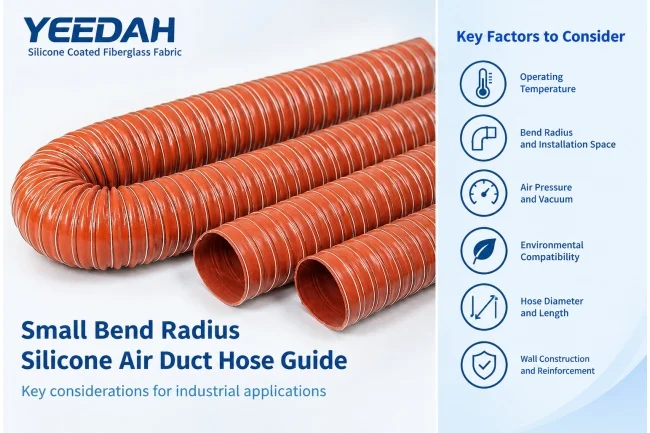
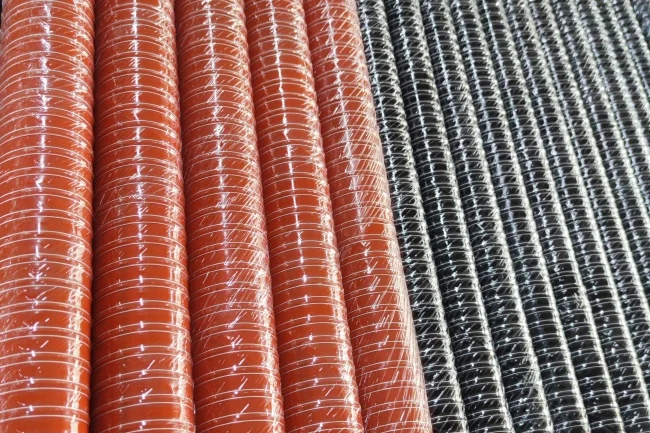
Silicone-coated fiberglass fabric may be considered for certain hot-air ventilation applications where its flexibility and environmental resistance are beneficial.
For other ventilation systems, different coated fabrics or elastomeric materials may be more appropriate.
The important point is to match the construction to the actual operating conditions.
7. Common Mistakes to Avoid When Selecting Expansion Joint Materials
Even when buyers understand the basic properties of different materials, several common mistakes can still occur during material selection.
Avoiding these mistakes can help reduce the risk of premature deterioration, unnecessary replacement costs, and unsuitable expansion joint performance.
7.1 Choosing Materials Based Only on Maximum Temperature
One common mistake is selecting a material based only on its advertised maximum temperature.
For example, a fiberglass substrate may tolerate temperatures higher than the silicone coating applied to it.
If buyers only consider the temperature resistance of the fiberglass, they may select a silicone-coated fabric that is unsuitable for the actual operating temperature.
The same principle applies to other coated materials.
I recommend checking:
-
Continuous operating temperature.
-
Maximum temporary exposure temperature.
-
Exposure duration.
-
Temperature at the actual material layer.
-
Temperature resistance of the complete construction.
A temporary temperature rating should never be treated as a continuous operating temperature rating.
7.2 Ignoring Pressure and Vacuum Requirements
Another mistake is focusing on fabric strength without considering the pressure conditions of the system.
A fabric may have good tensile strength but still be unsuitable for a particular expansion joint design.
For example, negative pressure may cause an inadequately supported flexible section to deform.
Positive pressure may place additional loads on the flexible section and its connections.
Buyers should provide the normal and maximum pressure or vacuum conditions before confirming the material specification.
7.3 Overlooking Chemical Compatibility
A coated fabric may perform well in hot-air applications but deteriorate when exposed to incompatible chemicals.
This is particularly important in chemical processing and industrial exhaust systems.
Do not assume that a material is chemically resistant simply because it uses silicone or PTFE.
Always identify the actual chemicals, their concentrations, and the operating temperature.
7.4 Selecting Fabric Without Considering Movement Requirements
An expansion joint must accommodate the movement of connected equipment and ducting.
If the selected construction is too stiff or unsuitable for the required movement, it may experience excessive stress during operation.
On the other hand, selecting a fabric solely for flexibility without considering reinforcement and mechanical requirements can also create problems.
The fabric construction should be evaluated together with the specified axial, lateral, and angular movement.
7.5 Comparing Materials Based Only on Price
Price is an important consideration for procurement managers, but it should not be the only selection criterion.
A lower-priced fabric may have different coating weight, thickness, reinforcement, or quality consistency compared with a more expensive alternative.
Buyers should compare:
-
Technical specifications.
-
Material construction.
-
Relevant test results.
-
Manufacturing consistency.
-
Expected operating conditions.
-
Required service life.
-
Replacement and maintenance costs.
For B2B buyers, the most economical solution is not necessarily the fabric with the lowest purchase price.
The objective should be to select a material that meets the application requirements at an acceptable overall cost.
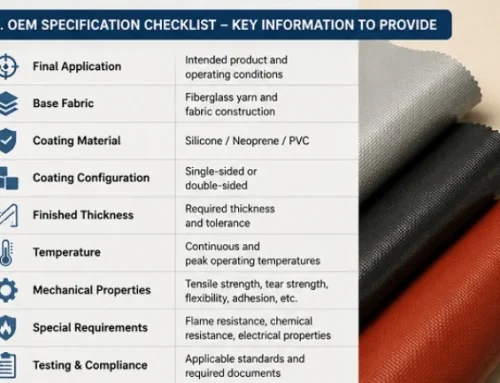
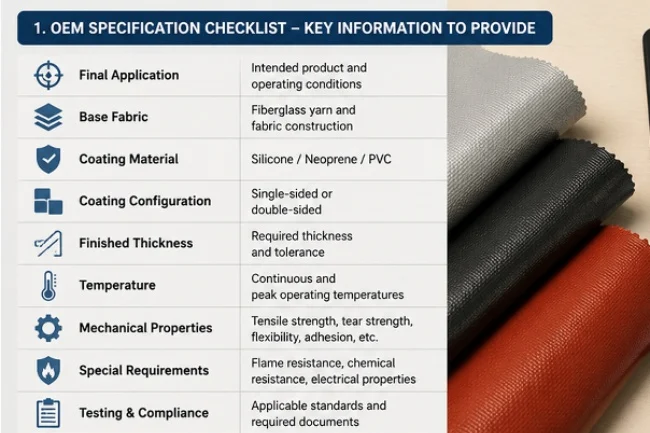
8. What Technical Information Should Buyers Provide to Fabric Manufacturers?
When contacting a fabric manufacturer or expansion joint supplier, providing accurate operating information can make the material selection process more efficient.
If the buyer only provides the required fabric thickness or temperature, the manufacturer may not have enough information to evaluate a suitable material.
I recommend preparing the following information before requesting a quotation or technical evaluation.
| Information required | Why it matters |
|---|---|
| Normal operating temperature | Helps identify potentially suitable materials |
| Maximum temperature and exposure duration | Helps evaluate temperature limitations |
| Operating pressure or vacuum | Helps establish structural requirements |
| Axial movement | Determines required compression and extension capability |
| Lateral movement | Helps evaluate flexibility requirements |
| Angular movement | Helps determine the required joint configuration |
| Gas or chemical composition | Helps evaluate chemical compatibility |
| Gas velocity and dust content | Helps assess abrasion and erosion risks |
| Operating environment | Identifies moisture, UV, and external exposure |
| Required dimensions | Supports material and joint configuration selection |
| Expected service conditions | Helps establish appropriate construction requirements |
Why Are Drawings and Installation Photos Important?
In addition to the technical information above, drawings and installation photographs can help manufacturers understand the application more accurately.
For example, a drawing may show:
-
The distance between connected duct sections.
-
The available installation space.
-
The required expansion joint dimensions.
-
The connection and flange arrangement.
-
The direction of movement.
-
Nearby equipment or structural limitations.
An existing expansion joint sample or technical specification can also provide useful reference information.
If the buyer is replacing an existing joint, it is helpful to provide details about the original material construction and any problems experienced during previous operation.
Provide Actual Operating Data Whenever Possible
Estimated information can be useful during an initial discussion, but actual operating data is preferable.
For example, saying that a system operates at approximately 200°C is less useful than providing its normal temperature, maximum temperature, peak duration, and operating cycle.
Similarly, stating that a duct experiences negative pressure is not enough. The actual vacuum level should be provided whenever available.
The more complete the application information, the easier it is for the manufacturer to evaluate potential material options.
If some technical details are unavailable, buyers should identify the missing information rather than assume that a material is suitable.
9. How to Evaluate a Fabric Material Manufacturer Before Purchasing
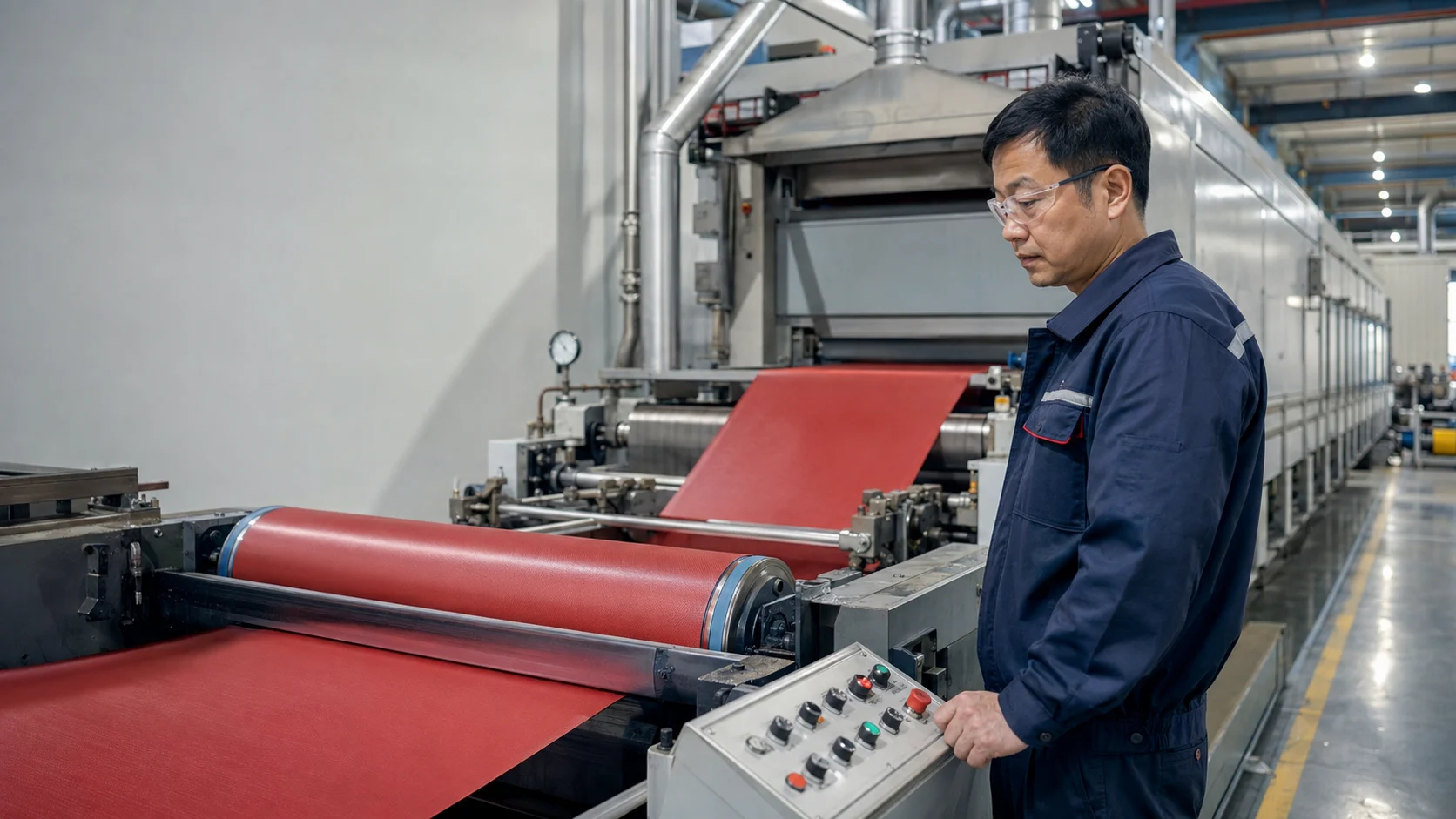
Selecting the right material is only part of the purchasing process. Buyers also need to evaluate whether the supplier can provide consistent product quality, accurate technical information, and the required customization.
For expansion joint manufacturers and industrial equipment suppliers, choosing a reliable coated fabric supplier can help reduce production uncertainties.
9.1 Check Manufacturing Capabilities
First, determine whether the supplier manufactures coated fabrics or primarily trades finished products.
A manufacturer with relevant production capabilities may offer more flexibility in material specifications and customization.
Important questions include:
-
What types of fiberglass substrates are available?
-
Which coating materials can the manufacturer supply?
-
What fabric thicknesses and widths are available?
-
Can the coating be applied to one or both sides?
-
Can the supplier accommodate customized specifications?
-
What are the minimum order quantity and production lead time?
For buyers with long-term purchasing requirements, it is also useful to understand the supplier’s production capacity and quality control procedures.
9.2 Request Technical Data Sheets
A technical data sheet provides important information about the fabric’s construction and physical properties.
Before purchasing, I recommend requesting the following details:
-
Base fabric material.
-
Weave construction.
-
Coating material.
-
Total thickness.
-
Fabric weight.
-
Available width.
-
Temperature resistance.
-
Tensile strength.
-
Tear strength.
-
Coating adhesion, where applicable.
Where specific performance requirements exist, buyers should also request relevant test reports.
One important point is to check how the test values were obtained and whether they apply to the exact product grade being purchased.
For example, a temperature rating for one silicone-coated fiberglass fabric should not automatically be applied to another fabric with a different coating formulation or thickness.
9.3 Evaluate Quality Consistency
Technical specifications are important, but consistent production quality is equally important for repeat orders.
When evaluating a supplier, consider checking:
-
Uniformity of coating.
-
Consistency of fabric thickness.
-
Fabric width and dimensional tolerances.
-
Surface appearance.
-
Coating adhesion.
-
Batch-to-batch consistency.
-
Packaging and storage conditions.
Requesting samples before bulk purchasing can help buyers inspect the material and confirm that it meets their requirements.
For repeat orders, it is also useful to establish an agreed product specification and inspection criteria.
9.4 Confirm Customization and Technical Support
Not every application can use a standard coated fabric specification.
Some buyers may require customized thickness, width, coating weight, color, or fabric construction.
Before placing an order, confirm whether the supplier can accommodate the required specifications.
It is also important to understand the supplier’s technical support capabilities.
A coated fabric manufacturer can provide information about its products and help buyers identify potentially suitable material options.
However, the engineering responsibility for selecting and approving the complete expansion joint construction should remain with the responsible expansion joint designer or manufacturer.
For customized applications, the final material selection should be reviewed against the actual operating conditions.
10. A Practical Framework for Selecting the Right Fabric Material
After considering the different materials and operating requirements, I recommend following a structured selection process.
This can help procurement managers and engineers organize their requirements before contacting fabric manufacturers.
Step 1: Identify the operating temperature.
Record the normal temperature, maximum temperature, temporary temperature peaks, and exposure duration.
Step 2: Determine pressure or vacuum conditions.
Identify the normal and maximum positive pressure or negative pressure conditions.
Step 3: Establish the required movement.
Specify axial, lateral, and angular movement, including the expected frequency of movement.
Step 4: Identify chemical exposure.
Provide the gas composition, chemical concentrations, and potential contaminants.
Step 5: Evaluate environmental and mechanical conditions.
Consider moisture, UV exposure, dust concentration, gas velocity, and abrasion.
Step 6: Identify potential material substrates and coatings.
Compare fiberglass, silicone-coated fiberglass, PTFE-based materials, elastomers, and specialized insulation materials according to their intended functions.
Step 7: Determine the required construction.
Evaluate whether the application requires a single-layer or multilayer construction involving reinforcement, sealing, insulation, and protective materials.
Step 8: Review technical specifications.
Request technical data sheets and relevant test reports for the specific material grades.
Step 9: Request samples and confirm specifications.
Inspect samples and confirm the agreed thickness, width, coating, and other relevant properties before bulk production.
Step 10: Evaluate the complete expansion joint design.
Have the responsible designer or manufacturer verify that the proposed material construction is suitable for the actual operating conditions.
Following these steps can help buyers avoid selecting materials based on incomplete information.
It also makes communication between procurement teams, engineers, and fabric manufacturers more efficient.
11. References and Further Technical Reading
For material selection and expansion joint design, I recommend consulting technical documents from industry organizations and manufacturers.
The following resources provide useful background information:
1. European Sealing Association (ESA) – Expansion Joints: Engineering Guide
This guide covers fabric expansion joint construction, materials, operating conditions, movement, pressure, temperature, dust loading, and quality assurance. It is particularly useful for understanding the relationship between material selection and complete joint design.
2. Quality Association for Fabric Expansion Joints – Quality Levels and Test Specifications for Fabric Expansion Joints
This resource explains single-ply and multi-ply fabric expansion joint constructions and discusses the importance of considering movement, temperature, pressure, and chemical loading.
3. Davlyn Group – G15SIL Silicone-Coated Fiberglass Fabric
This product reference provides an example of silicone-coated fiberglass fabric used in applications that include expansion joints. It also illustrates why the temperature rating of the coated fabric must be distinguished from that of the fiberglass substrate.
4. Techniflon – PTFE-Coated Glass Fabric Technical Data Sheet
This technical sheet provides an example of product-specific PTFE-coated glass fabric properties, including thickness, weight, tensile strength, and operating temperature. Its specifications apply to the identified product grade, not all PTFE-coated fiberglass fabrics.
Conclusion
Selecting suitable materials for non-metallic expansion joints requires careful consideration of the complete operating environment.
Fiberglass fabrics, silicone-coated fiberglass fabrics, PTFE-based materials, elastomers, and specialized insulation materials all have different properties and functions.
The most important factors to evaluate include operating temperature, pressure or vacuum, required movement, chemical exposure, abrasion, and environmental conditions.
Fabric construction is equally important. The substrate, weave pattern, coating material, coating thickness, and arrangement of different layers can all influence the performance of the finished expansion joint.
My recommendation is to start with the actual operating conditions, identify the required material properties, and then evaluate suitable material constructions with the manufacturer.
This approach helps engineers and procurement managers make more informed purchasing decisions and reduces the risk of selecting materials based on incomplete technical information.
Call to Action
At YEEDAH, we manufacture and supply industrial coated fabrics for B2B customers, including silicone-coated fiberglass fabric, neoprene-coated fiberglass fabric, and PVC-coated fabric.
With 35 production lines, we support wholesale customers, distributors, importers, and industrial manufacturers looking for coated fabric products with customized specifications.
If you are sourcing coated fiberglass fabric for industrial applications, including non-metallic expansion joint production, we welcome your inquiry.
To help us understand your requirements, please share:
-
Required fabric material or coating type.
-
Required thickness and width.
-
Application and operating temperature.
-
Estimated order quantity.
-
Available technical specifications or drawings.
We can review your requirements and discuss the available material options.