Table of Contents
Why Silicone Air Ducts Are Commonly Used in Plastic Drying Systems
Plastic drying systems depend on controlled airflow. Heated, dehumidified air must travel from the dryer to the drying hopper and, in many systems, return through a closed-air circuit. If the ducting leaks, collapses, restricts airflow, or cannot tolerate the operating temperature, drying performance may become inconsistent.
In my work with industrial equipment manufacturers and flexible ducting buyers, I often see silicone air ducts selected for connections around hopper dryers, dehumidifying dryers, and centralized drying systems. Their popularity is not based on temperature resistance alone. The combination of heat resistance, flexibility, low weight, vibration accommodation, and customizable construction makes silicone ducting practical for many plastic-processing environments.
However, not every silicone duct is suitable for every dryer. Temperature, airflow, pressure, diameter, bending conditions, and connection design all need to be evaluated.
This article explains why silicone air ducts are commonly used in plastic drying systems, how they compare with other duct materials, and what engineers and procurement teams should verify before placing an order.
Understanding Airflow in a Plastic Drying System
A plastic drying system removes moisture from resin before injection molding, extrusion, blow molding, or film production. This is especially important for hygroscopic materials such as PET, PA, PC, and certain grades of ABS, which can absorb moisture from the surrounding air.
Although system designs vary, a typical drying process includes:
- A blower moves air through the system.
- The air is heated to the required drying temperature.
- Hot, dry air enters the drying hopper and passes through the plastic resin.
- Moisture is carried away by the outgoing air.
- In a closed-loop system, the return air travels back to the dehumidifier for treatment and reuse.
Flexible ducts may be installed between the dryer and hopper, along return-air lines, or at points where rigid pipes need to connect to movable equipment.
The condition of these ducts directly affects the process. Air leakage can reduce delivered airflow and waste heat. A duct with a small internal diameter or a sharp bend can create excessive flow resistance. A hose that collapses under suction can restrict the return-air circuit.
For these reasons, ducting should not be treated as a minor accessory. A properly selected air duct helps the drying system deliver the intended temperature and airflow to the resin.
It is also important to distinguish between an air-handling duct and a material-conveying hose. A silicone air duct designed for clean heated air may not be suitable for conveying plastic pellets. Pellet transport can create considerable internal abrasion and may require a hose with a different wall material and reinforcement.
What Is a Silicone Air Duct?
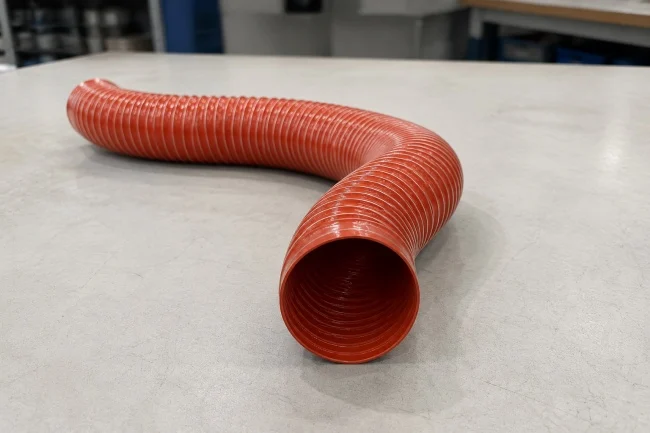
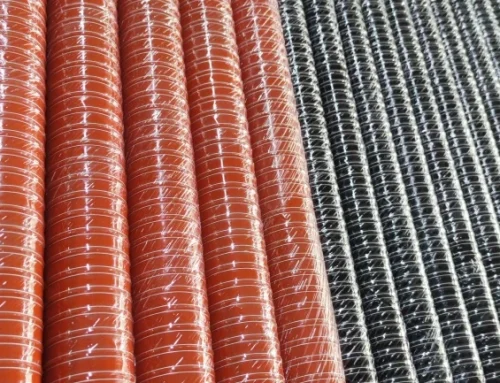
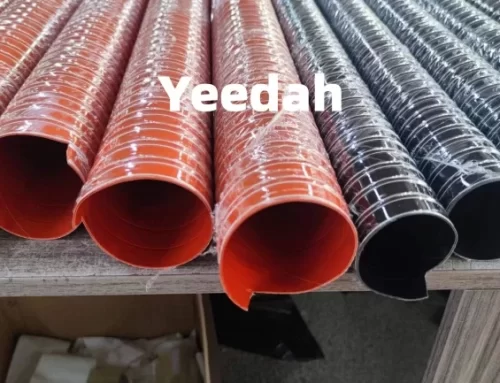
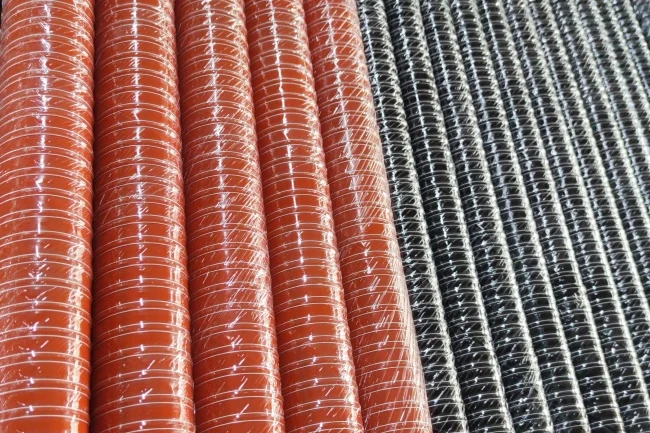
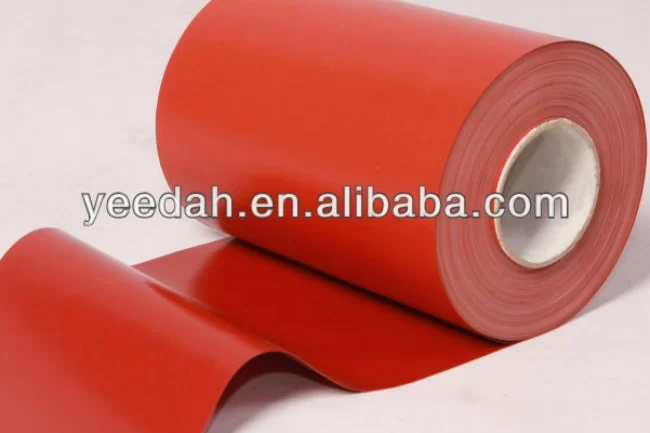
A lightweight single-layer air duct made from silicone-coated fiberglass fabric and reinforced with a continuous wire helix for flexible high-temperature air handling.
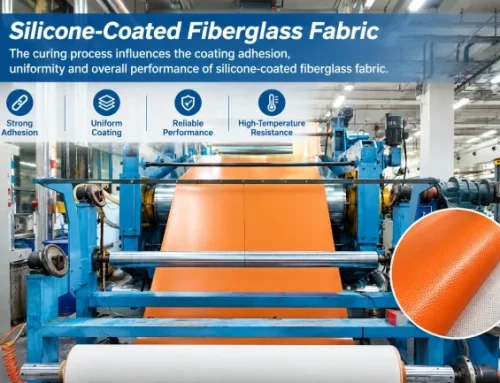
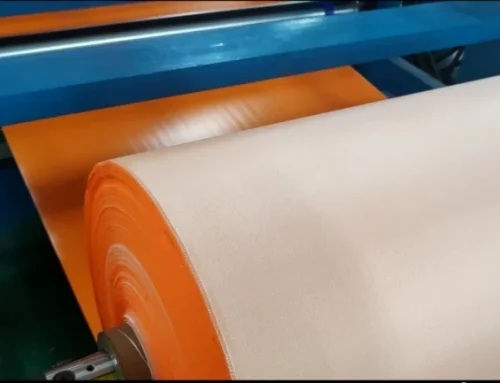
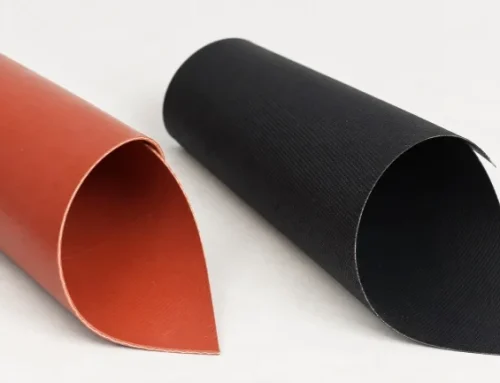
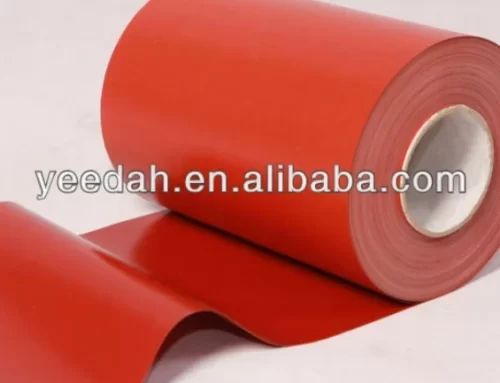
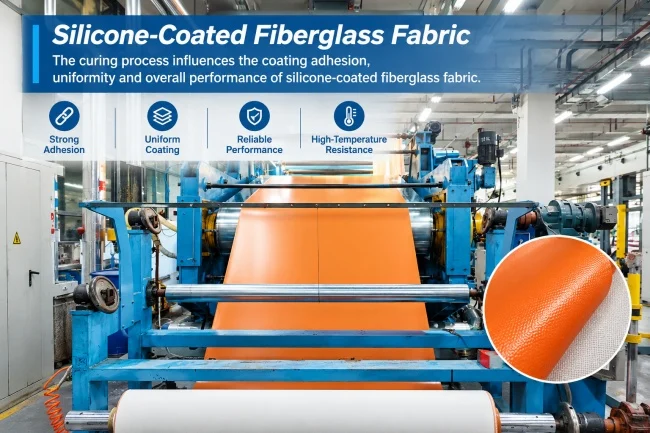
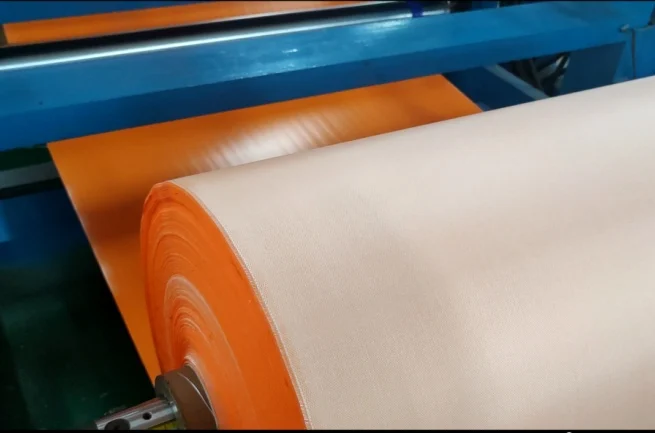
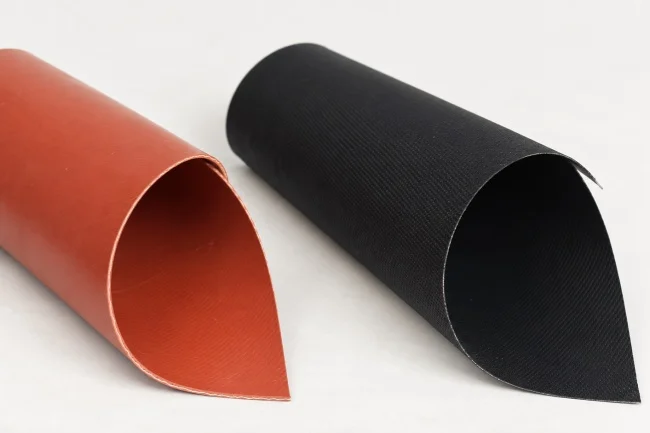
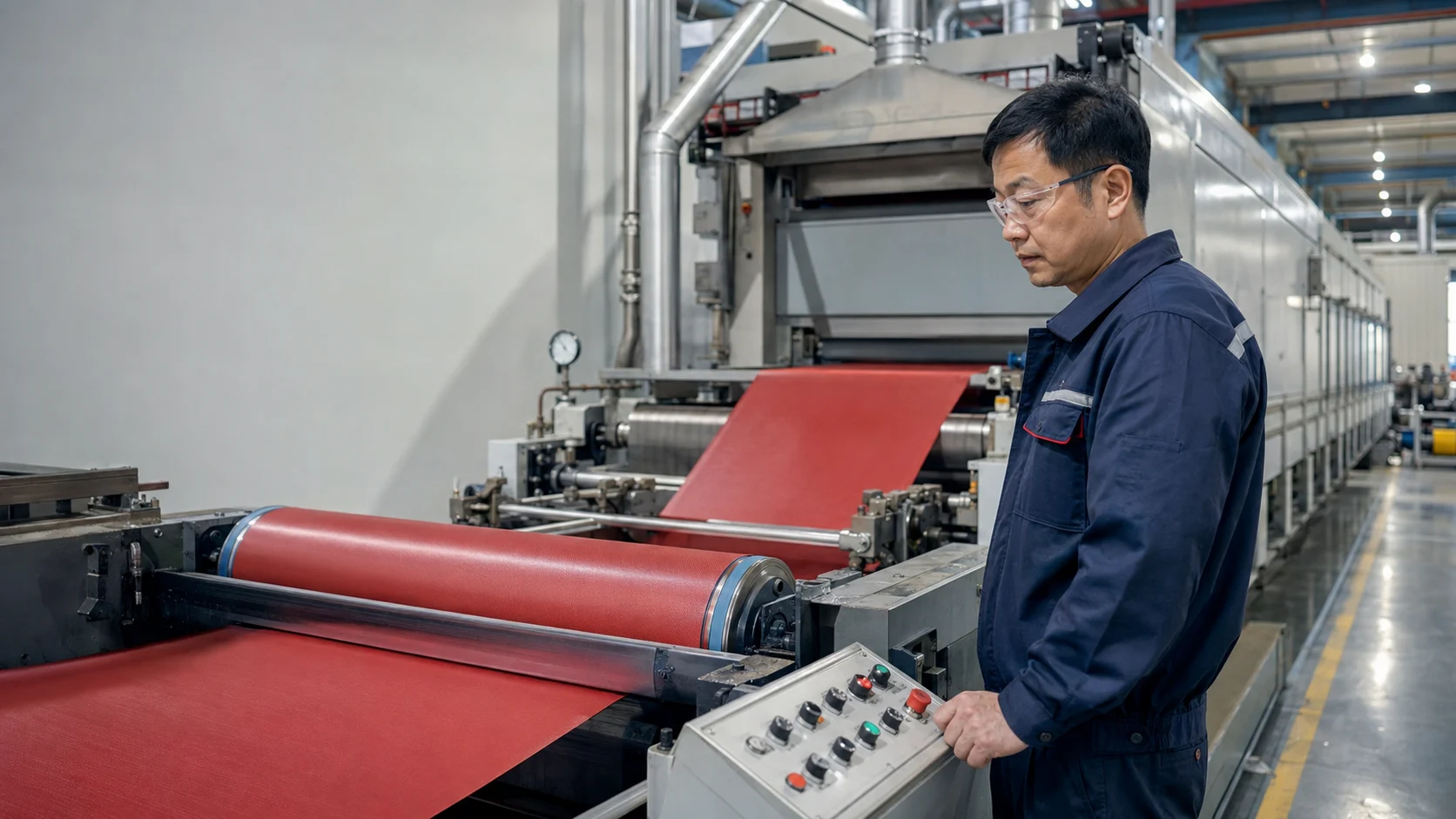
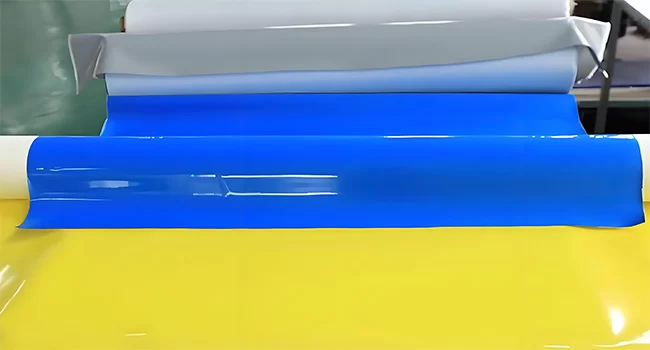
A silicone air duct is a flexible duct commonly manufactured from silicone-coated fiberglass fabric. The fiberglass textile provides mechanical strength and dimensional stability, while the silicone coating supplies heat resistance, flexibility, and a relatively airtight surface.
A typical industrial silicone air duct may include:
- Silicone-coated fiberglass fabric
- A spring steel wire embedded in or supported by the duct wall
- External fiberglass cord or another wear-resistant reinforcement
- One or more fabric layers
- Plain ends or flexible cuffs for clamping
- Customized diameters, lengths, colors, and wall constructions
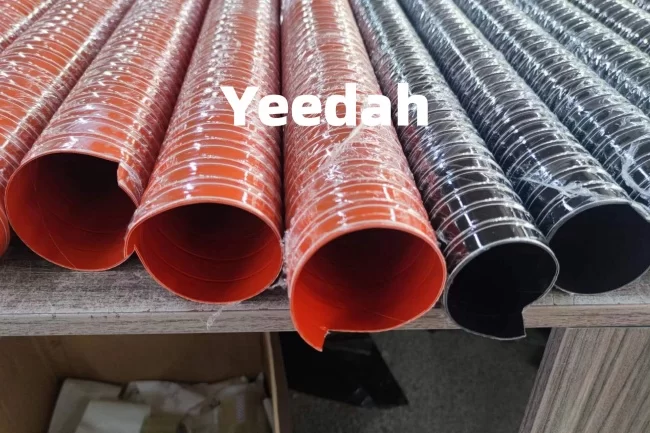
At YEEDAH, our standard high-temperature silicone air duct uses a two-layer silicone fabric wall, embedded spring steel wire, and external fiberglass cord. Our standard silicone ducting is designed for a working temperature range of approximately −70°C to +260°C, subject to the particular construction and application conditions.
The steel wire allows the duct to bend while helping it retain its round cross-section. It can also improve resistance to deformation, particularly when the duct is correctly sized and installed.
A silicone air duct should not be confused with a molded or extruded silicone hose. Solid silicone hoses are generally thicker and may be designed for liquids, pressure, or specialized process connections. Flexible fabric ducts are lighter and more compressible, making them better suited to many air-handling applications.
They are also different from rigid stainless-steel or galvanized steel pipes. Metal pipes provide greater rigidity and may offer better performance for long, straight runs, high pressure, or severe temperatures. Fabric silicone ducting is normally selected where flexibility is beneficial.
Why Plastic Drying Systems Need Heat-Resistant Flexible Ducting
Plastic dryers generate operating conditions that ordinary ventilation ducts may not tolerate.
The air inside the system can remain hot for many hours. The duct may also experience repeated heating and cooling as production starts and stops. Meanwhile, vibration from blowers and machinery can place stress on connections.
Space around the equipment is another concern. Drying hoppers, loaders, pipes, electrical cabinets, and structural frames may be positioned close together. A rigid pipe cannot always follow the required route without multiple elbows or modifications.
Flexible high-temperature ducting can help address these conditions by:
- Connecting components that are slightly misaligned
- Following curved or restricted installation routes
- Accommodating limited vibration and movement
- Simplifying equipment maintenance
- Reducing the weight placed on connection points
- Allowing equipment positions to be adjusted more easily
Selection should be based on the temperature inside the duct—not simply the dryer’s displayed setpoint. The actual temperature may vary at different locations, particularly near heaters and outlets. Startup conditions, abnormal airflow, or a control fault may also produce temporary temperature increases.
Before selecting a duct, I recommend confirming the normal operating temperature, maximum expected temperature, and duration of any peak-temperature exposure.
Key Reasons Silicone Air Ducts Are Commonly Selected
Resistance to Elevated Air Temperatures
Temperature resistance is the most obvious reason silicone air ducts are used around plastic drying machines.
PVC ducting can be practical for room-temperature or moderately warm air, but it is generally unsuitable for the higher temperatures found in many resin-drying processes. A correctly manufactured silicone-coated fiberglass duct can tolerate substantially higher continuous temperatures.
However, buyers should not evaluate the silicone coating alone. The usable temperature of the complete duct also depends on:
- Base fabric
- Coating formulation and coverage
- Adhesives, if used
- Thread or seam construction
- External reinforcement
- End treatment
- Manufacturing method
A supplier may state both continuous and short-term temperature limits. These are not interchangeable. A short-term peak rating should never be treated as the normal operating temperature.
The system should also maintain a reasonable safety margin. Operating a duct continuously at its absolute limit may accelerate hardening, cracking, coating degradation, or reinforcement damage.
Flexibility in Compact Equipment Layouts
Plastic-processing factories often have restricted space around dryers, hoppers, and production machines. Connection points may not be perfectly aligned, especially when different equipment brands are integrated into one system.
Silicone flexible ducting can be routed around frames and adjacent components without requiring a custom rigid pipe for every bend. This can make initial installation and later equipment adjustment more convenient.
Flexibility does not eliminate the need for good routing. A duct should not be forced into an extremely tight bend. Sharp bends can reduce the effective inside diameter and increase air resistance. Excessive compression can also cause the inner wall to become uneven.
Wherever possible, use gradual curves and select a duct length that allows movement without unnecessary sagging.
Accommodation of Vibration and Movement
Blowers, heaters, and other rotating equipment generate vibration. If two rigid parts are connected directly, this vibration can be transmitted through the pipework and place stress on flanges or mounting points.
A flexible silicone duct can accommodate limited vibration and minor relative movement. This makes it useful as a connection between a dryer and hopper or between rigid duct sections.
Nevertheless, a standard silicone air duct is not a replacement for a specially engineered expansion joint. It should not be expected to absorb unlimited axial, lateral, or angular movement. Applications involving large movement, pressure pulses, or structural displacement require separate engineering.
Resistance to Repeated Heating and Cooling
Drying equipment may run continuously during production and cool down during maintenance, weekends, or product changes. The connected duct therefore experiences repeated thermal cycles.
Silicone-coated fiberglass fabric generally performs well under these conditions when the duct remains within its rated limits. The fiberglass base fabric provides dimensional stability, while the silicone coating retains flexibility across a broad temperature range.
Product quality still matters. Poor coating adhesion, inconsistent wall thickness, or weak reinforcement can shorten service life. Even a well-made duct will deteriorate more quickly if it is repeatedly overheated, sharply bent, dragged across machinery, or exposed to incompatible chemicals.
Low Weight and Easier Handling
A silicone fabric air duct is much lighter than an equivalent rigid metal pipe. This reduces the load on equipment connections and makes the duct easier to install, remove, and replace.
Low weight is helpful when:
- Hoppers need to be repositioned
- A dryer is used with different production machines
- Ducts are removed regularly for cleaning
- Maintenance space is limited
- Replacement must be completed quickly
For a long permanent duct route, rigid metal piping may still provide better structural support and a smoother internal airflow path. Many well-designed systems therefore use rigid pipes for main runs and short silicone ducts at equipment connections.
Availability of Customized Sizes and End Configurations
Drying systems do not all use the same connection dimensions. Equipment outlets may differ in outside diameter, orientation, or available clamping length.
Silicone ducting can be customized in several ways:
- Inside diameter
- Overall length
- Wall thickness
- Single- or double-layer construction
- Wire spacing
- Color
- Flexible cuff length
- End reinforcement
- Clamp or connector arrangement
When requesting a quotation, buyers should provide the actual outside diameter of the equipment connection rather than only a nominal pipe size. The duct inside diameter must allow installation while remaining tight enough to be secured with a suitable clamp.
For longer routes, several duct sections can be joined using correctly sized rigid metal connectors and clamps. Each joint should be designed to minimize leakage and avoid unnecessary airflow restriction.
Silicone Air Ducts Compared with Other Duct Materials
Different materials offer different advantages. The correct choice depends on temperature, pressure, routing, environment, service life, and budget.
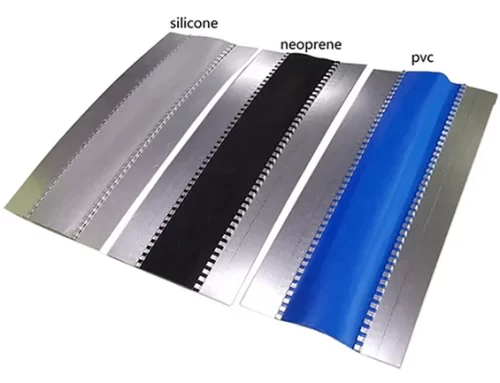
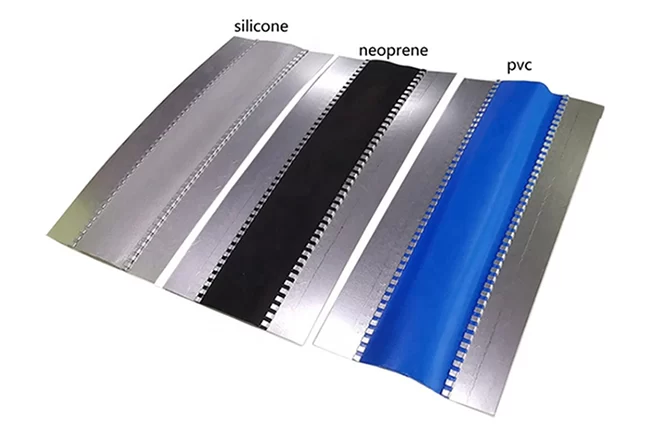
Silicone Air Duct vs. PVC Flexible Duct
PVC flexible ducting is economical and widely used for ventilation, fume extraction, and lower-temperature air transfer. It may be a suitable choice when the operating temperature is safely within the product’s rated range.
Silicone-coated fiberglass ducting is generally preferred when higher continuous temperatures are involved. It also tends to retain useful flexibility across a wider temperature range.
Selecting PVC only because it has a lower purchase price can be a false economy if the material softens, deforms, or requires frequent replacement. At the same time, specifying silicone for a low-temperature application may add unnecessary cost.
The selection should follow the actual operating conditions.
Silicone Air Duct vs. Neoprene Air Duct
Neoprene-coated fiberglass ducting is another common industrial option. It offers useful flexibility and is suitable for many moderate-temperature air-handling applications.
At YEEDAH, our typical neoprene air ducts are designed for approximately −20°C to +110°C, while our standard silicone ducts can be used from approximately −70°C to +260°C. Exact values should always be verified for the particular model.
Neoprene may be appropriate when the air temperature remains moderate and its other performance characteristics suit the environment. Silicone becomes more relevant when the required continuous temperature exceeds the safe working range of neoprene.
Material compatibility also matters. If the air contains oil mist, chemicals, or process vapors, the buyer should discuss the composition and concentration with the manufacturer rather than making a decision based on temperature alone.
Silicone Air Duct vs. Rigid Metal Ducting
Rigid metal ducting offers several advantages:
- Good structural stability
- A relatively smooth internal surface
- Suitability for long, permanent runs
- Higher resistance to crushing
- Potentially better performance at elevated pressure or vacuum
- High-temperature options depending on the metal and joint design
Silicone air ducts offer different benefits:
- Easier routing
- Lower weight
- Faster installation
- Accommodation of limited vibration
- Easier removal during maintenance
- Custom connection options
These materials are often complementary rather than direct substitutes. A practical drying system may use rigid metal pipe for the central air route and flexible silicone ducts at the machine or hopper connections.
Quick Material Comparison Table
| Factor | Silicone-coated fiberglass duct | Neoprene-coated fiberglass duct | PVC flexible duct | Rigid metal duct |
|---|---|---|---|---|
| Temperature suitability | High-temperature air service, subject to construction | Moderate-temperature service | Generally lower-temperature service | Depends on metal, joints, and overall design |
| Flexibility | High | High | High | Low |
| Weight | Low | Low | Low | Higher |
| Vibration accommodation | Good for limited movement | Good for limited movement | Good within rated conditions | Limited without flexible connectors |
| Long straight runs | May require support | May require support | May require support | Well suited |
| Pressure capability | Normally low-pressure unless specially designed | Normally low-pressure unless specially designed | Product-dependent | Usually higher when properly engineered |
| Customization | Diameter, length, layers, cuffs, and color | Diameter, length, layers, cuffs, and color | Widely available in standard sizes | Requires fabrication |
| Typical dryer use | Hot-air supply and return connections | Moderate-temperature connections | Low-temperature ventilation | Main permanent pipe runs |
The table provides general guidance only. Actual ratings vary significantly among products, so the technical datasheet and operating conditions must be reviewed before selection.
Common Applications in Plastic Processing Equipment
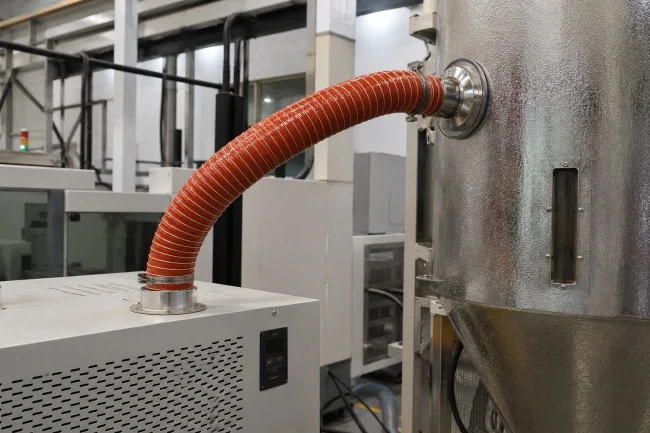
A silicone-coated fiberglass air duct connects a floor-standing dryer to an insulated drying hopper, providing a flexible route for heated process air.
Silicone air ducts can be found in several types of plastic-processing equipment.
Hot-Air Dryers
A hot-air dryer uses heated air to remove surface moisture from plastic material. Flexible silicone ducting may connect the blower or heater to the drying hopper, particularly where the air temperature is too high for ordinary PVC ducting.
Desiccant and Dehumidifying Dryers
Dehumidifying dryers use very dry air to remove moisture from hygroscopic resin. These systems often include both supply-air and return-air lines.
Leak control is particularly important because outside air entering the system can affect dew-point performance. Duct connections should therefore be correctly sized, securely clamped, and regularly inspected.
Centralized Drying Systems
Central systems may serve several hoppers or processing machines. Rigid pipes are often used for the main distribution network, while flexible silicone ducts connect the pipe branches to individual pieces of equipment.
These flexible sections make alignment easier and help isolate limited vibration.
Injection Molding and Extrusion Support Equipment
Injection molding and extrusion processes frequently require pre-dried resin. Silicone ducting may be installed between auxiliary drying equipment, hoppers, and processing machinery.
Film-Blowing Lines
Film-blowing machine manufacturers may integrate hot-air handling or resin-drying equipment into a larger production line. Customized duct diameters and lengths can help fit connections within the available machine layout.
Movable or Temporary Equipment Connections
Some factories move dryers or hoppers between production lines. Lightweight flexible ducting is easier to disconnect and reinstall than fabricated rigid pipework.
In every case, it is essential to confirm whether the hose carries air or plastic material. A hot-air duct should not automatically be used as a pellet-conveying hose, because direct contact with moving resin can create abrasion that the duct was not designed to resist.
Technical Factors to Check Before Selecting a Silicone Air Duct
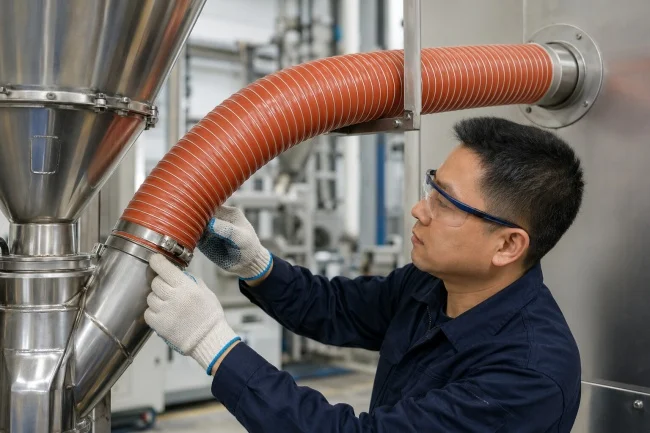
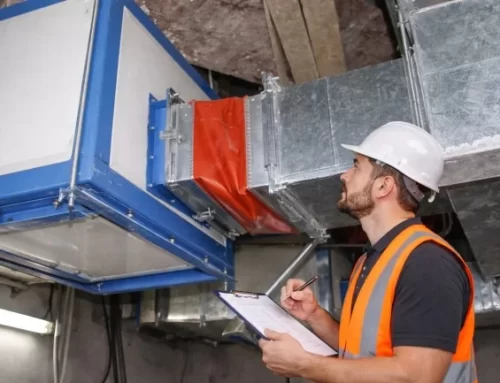
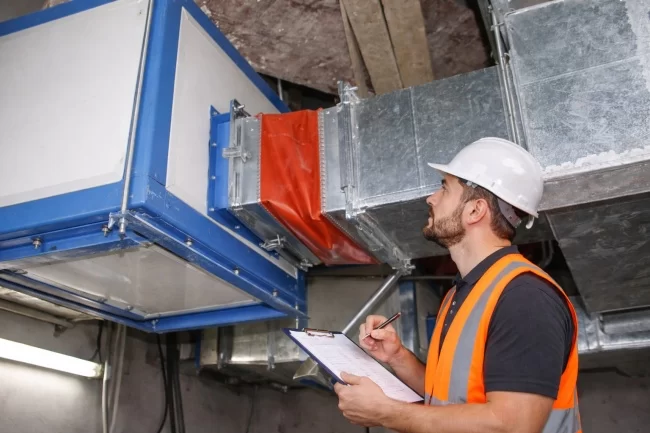
A technician inspects the silicone air duct, stainless-steel clamp, and equipment connection to identify looseness, air leakage, abrasion, or other signs of damage.
Continuous and Peak Air Temperature
Temperature is the first specification to confirm, but a single number is not enough. Buyers should identify:
- Normal continuous air temperature
- Maximum temperature during startup
- Possible temporary peak temperature
- Duration and frequency of peak exposure
- Ambient temperature outside the duct
- Nearby radiant heat or hot surfaces
The normal operating temperature should remain safely within the duct’s continuous rating. If the system can exceed that temperature during a fault, additional control or a higher-specification material may be necessary.
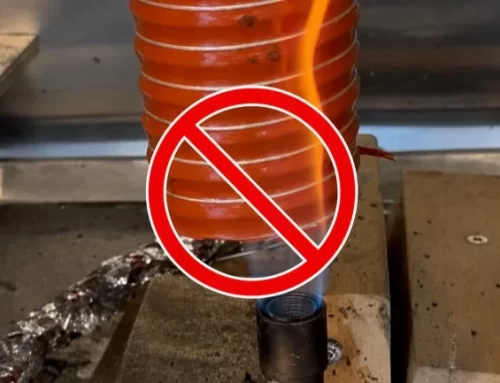
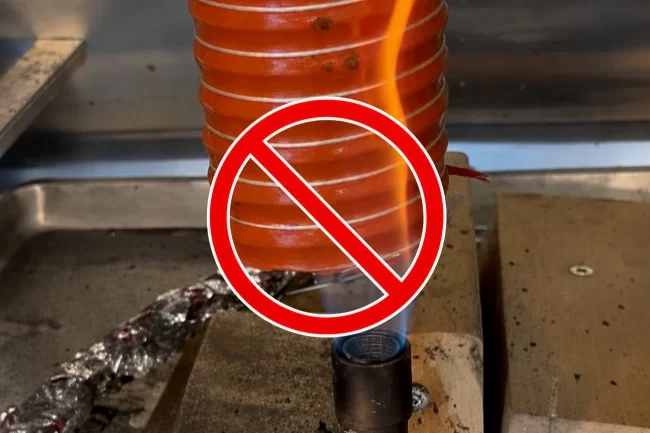
The duct should also be kept away from direct flame and hot metal surfaces unless it has been specifically designed and tested for that exposure.
Inside Diameter and Required Airflow
The duct diameter affects airflow resistance. An undersized duct increases air velocity and pressure loss, potentially reducing the volume of hot air delivered to the drying hopper.
To select the diameter correctly, consider:
- Equipment outlet outside diameter
- Required airflow volume
- Acceptable air velocity
- Total duct length
- Number and severity of bends
- Connectors or reducers in the route
- Pressure capability of the blower
The best practice is to keep the duct diameter consistent with the equipment design wherever possible. Unnecessary reducers and abrupt changes in diameter should be avoided.
Operating Pressure and Vacuum
Many silicone fabric ducts are designed for low-pressure air-handling systems. They should not be assumed to tolerate high internal pressure.
Return-air lines may also operate under negative pressure. If the wall and wire reinforcement are insufficient, a duct can partially collapse and restrict airflow.
Before ordering, provide the supplier with:
- Maximum positive pressure
- Maximum negative pressure or vacuum
- Whether the pressure is continuous or pulsating
- Airflow rate
- Duct diameter and unsupported length
If the manufacturer does not have verified pressure data for the proposed construction, application testing may be necessary.
Bend Radius and Installation Length
A flexible duct must be long enough to follow the required route without being stretched. It should not be so long that it sags, twists, or creates unnecessary airflow resistance.
I recommend measuring the actual routed length rather than the straight-line distance between two connection points. Consider any machine movement that may occur during normal operation or maintenance.
Avoid:
- Tight 90-degree bends
- Excessive axial compression
- Stretching the duct to its maximum length
- Unsupported horizontal runs
- Contact with sharp sheet-metal edges
- Routing close to moving mechanical parts
If a long route is unavoidable, rigid supports or a combination of metal pipe and short flexible sections may provide a better result.
Wall Construction and Reinforcement
Silicone air ducts are available in different constructions. A single-layer duct may be lighter and more flexible, while a double-layer design may provide additional wall strength and protection.
Important construction details include:
- Fiberglass fabric weight
- Silicone coating coverage
- Number of fabric layers
- Wall thickness
- Spring-wire diameter and spacing
- External cord or wear reinforcement
- Seam and cuff design
A thicker or double-layer wall is not automatically the correct choice. It may increase weight, stiffness, and cost. The construction should be matched to temperature, movement, pressure, and expected service conditions.
Connection and Clamping Method
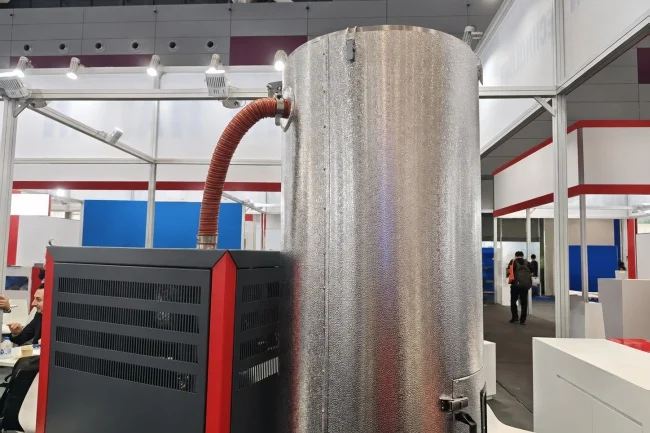
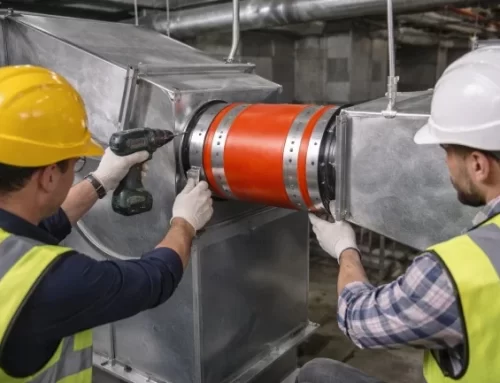
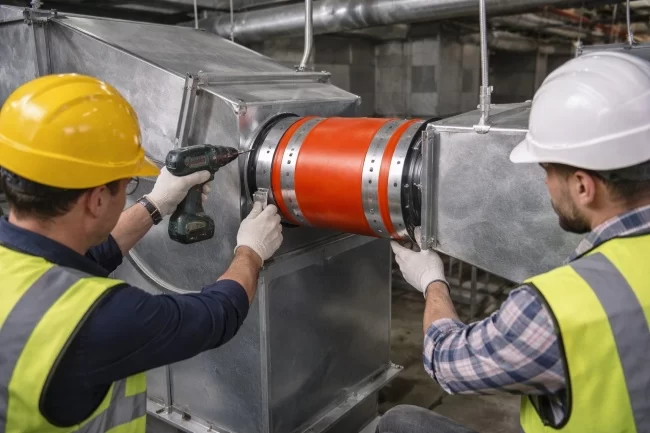
An orange-red silicone air duct provides a flexible air connection between the drying unit and an insulated hopper in a plastic drying system.
A reliable connection requires more than choosing the correct duct diameter.
The buyer should confirm:
- Outside diameter of the equipment outlet
- Available insertion length
- Required cuff length
- Surface condition of the connection pipe
- Clamp type and width
- Need for a rigid joining sleeve
- Frequency of removal and reinstallation
Stainless-steel worm-drive clamps are common, but the best clamp depends on the duct wall and connection geometry. The clamp should compress the cuff evenly without cutting into the fabric.
Overtightening can damage the silicone coating or reinforcement. Undertightening can cause air leakage or allow the duct to come loose.
Air and Contaminant Compatibility
Temperature resistance does not automatically mean chemical resistance.
The process air may contain:
- Oil mist
- Plastic additives
- Dust
- Cleaning-agent residue
- Solvent vapor
- Degradation products from overheated resin
If these contaminants are present, their type, concentration, and exposure temperature should be reviewed. Chemical compatibility can change as temperature increases.
Applications involving food-contact, pharmaceutical, medical, or other regulated materials may also require specific compliance documents. A general-purpose industrial silicone air duct should not be assumed to meet such requirements without verification.
Common Purchasing and Installation Mistakes
Many duct failures can be traced to incomplete specifications or poor installation rather than the base material itself.
Ordering by Nominal Pipe Size
A nominal pipe designation may not match the actual outside diameter. Always measure the equipment connection and state whether the dimension is an inside diameter or outside diameter.
Confusing Different Temperature Measurements
The heater setpoint, heater-element temperature, air temperature, and equipment-surface temperature are not necessarily the same. The relevant value for duct selection is the actual air temperature at the duct location, together with any external heat exposure.
Using a Peak Rating as a Continuous Rating
A duct that tolerates a higher temperature for a few minutes may not survive continuous operation at that level. Confirm both ratings and how the supplier defines short-term exposure.
Selecting an Undersized Duct
A smaller duct may be easier to route, but it can restrict airflow and affect drying performance. Sizing should follow the dryer’s airflow requirements and connection dimensions.
Ignoring Vacuum Conditions
A duct that performs well under positive pressure may collapse under suction. Return-air applications should be clearly identified when requesting a recommendation.
Creating Sharp Bends
Tight bends reduce the internal passage and concentrate mechanical stress. Use gradual routing and adequate length.
Allowing Contact with Hot or Sharp Surfaces
Even a high-temperature duct can be damaged by friction against a metal edge. Direct contact with a very hot machine surface can also expose the outer wall to temperatures different from those inside the airflow.
Using Flexible Ducting for an Excessively Long Run
Long flexible runs may sag and create higher pressure loss. Rigid pipe with short flexible end connections is often more effective.
Comparing Products Only by Price
Two ducts described as “silicone fiberglass hoses” may differ in fabric weight, coating amount, wall layers, reinforcement, wire spacing, and workmanship. These differences affect durability and performance.
Using an Air Duct for Pellet Conveying
Plastic pellets can abrade the inside surface, especially at bends. A hose designed only for air transfer should not be used for resin conveying unless the manufacturer confirms its suitability.
How Silicone Air Duct Quality Affects Drying-System Performance
The term “silicone air duct” describes a broad product category. It does not guarantee a specific level of quality.
Several construction details deserve attention.
Silicone Coating Uniformity
A uniform coating helps create a consistent, relatively airtight wall. Areas with inadequate coverage may be more vulnerable to leakage, delamination, or early wear.
Fabric and Tear Resistance
The fiberglass base fabric carries much of the mechanical load. Its weave, weight, and treatment influence dimensional stability and resistance to tearing.
Steel-Wire Integration
The spring wire should be installed securely and at a consistent pitch. Poorly integrated wire may shift, protrude, or create irregular sections in the duct.
Diameter Consistency
An inconsistent internal diameter can make installation difficult and alter airflow. Buyers should confirm the relevant dimensional tolerance, particularly for customized sizes.
Cuff and End Quality
The ends experience repeated stress during installation, clamping, and removal. Cuff length, flexibility, reinforcement, and workmanship can significantly affect service life.
Performance Under Bending and Suction
A sample that looks acceptable when lying flat may behave differently when bent or exposed to negative pressure. For an important project, I recommend evaluating a sample under realistic temperature, airflow, and routing conditions before approving large-volume production.
Inspection and Maintenance Recommendations
No flexible duct lasts indefinitely. Routine inspection can identify deterioration before it causes a significant airflow problem or unplanned shutdown.
Check the duct regularly for:
- Surface cracks
- Hardening or loss of flexibility
- Abrasion marks
- Tears or punctures
- Exposed fiberglass or steel wire
- Loose external reinforcement
- Damaged cuffs
- Air leakage
- Partial collapse under suction
- Loose or corroded clamps
Inspection frequency should reflect operating temperature, production hours, movement, vibration, and environmental exposure. A continuously operated high-temperature dryer may require more frequent checks than an intermittently used system.
Keep the duct supported and away from sharp edges. If cleaning is required, use a method compatible with the silicone coating and the contaminants present. Avoid aggressive tools or chemicals unless their suitability has been confirmed.
A damaged section should not be covered with ordinary tape as a permanent repair. If reinforcement is exposed or the wall is significantly cracked, replacement is normally the safer option.
For critical drying lines, keeping spare ducts in stock can reduce downtime.
Questions to Ask a Silicone Air Duct Manufacturer
A clear technical inquiry helps the manufacturer recommend an appropriate construction and prepare an accurate quotation.
Procurement managers and engineers should consider asking:
- What is the verified continuous operating-temperature range?
- Is there a separate short-term peak-temperature rating?
- What type and weight of silicone-coated fiberglass fabric are used?
- Is the duct single-layer or double-layer?
- What reinforcement is used?
- What are the recommended pressure and vacuum limits?
- What diameters and lengths are available?
- Can the inside diameter be customized for our connection?
- What dimensional tolerances apply?
- Can the cuff length and end design be customized?
- Are matching clamps or metal connectors available?
- What is the minimum order quantity?
- What is the production lead time?
- Can a sample be supplied for installation testing?
- What inspection records or technical documents are available?
- Can the supplier maintain consistent specifications for repeat orders?
For customized projects, drawings or clear photographs of the installation can reduce misunderstandings. It is also useful to show the duct route, nearby heat sources, and available clamping area.
When a Silicone Air Duct May Not Be the Right Choice
Silicone air ducting is versatile, but it has practical limits.
Another solution may be more appropriate when:
- The continuous temperature exceeds the verified product rating
- The duct is exposed to direct flame
- The system operates at high pressure or high vacuum
- The medium is highly abrasive
- Plastic pellets will be conveyed continuously
- Severe chemical exposure is present
- A hygienic, smooth, and easily sanitized internal surface is required
- A long pipe run needs structural rigidity
- The application requires a specific certification that the duct does not have
- Failure would create a critical safety risk
At very high temperatures, a specialized high-temperature textile duct, insulated assembly, or engineered metal pipe may be necessary. High-pressure service should be evaluated separately and should not rely on a standard low-pressure ventilation hose.
A reliable supplier should be willing to identify these limitations instead of recommending silicone ducting for every application.
A Practical Selection Checklist for Plastic Drying Systems
Before requesting a quotation, prepare the following information:
- Dryer type and model
- Plastic resin being processed
- Function of the duct: supply air or return air
- Whether the duct carries air only
- Normal continuous air temperature
- Maximum and temporary peak temperature
- Airflow rate
- Positive pressure or negative pressure
- Equipment connection outside diameter
- Required duct inside diameter
- Required overall length
- Number and approximate angle of bends
- Available installation space
- Minimum acceptable bend radius
- Preferred single- or double-layer construction
- Cuff length and end requirements
- Clamp or metal connector requirements
- Exposure to oil, chemicals, dust, or outdoor conditions
- Required quantity
- Replacement frequency
- Required documents or testing standards
Providing these details at the beginning is much more effective than selecting a hose from temperature and diameter alone.
Conclusion
Silicone air ducts are commonly used in plastic drying systems because they combine elevated-temperature capability, flexibility, low weight, and customizable connections. These properties make them useful around hot-air dryers, dehumidifying dryers, drying hoppers, extrusion lines, and centralized material-handling systems.
Their performance still depends on correct selection. Temperature, airflow, diameter, pressure, vacuum, routing, wall construction, and clamping method must all be considered. The duct also needs to be inspected regularly for cracking, abrasion, leakage, and reinforcement damage.
In many systems, the most practical design combines rigid metal piping for main runs with flexible silicone ducting at equipment connections. The final choice should always reflect the actual operating conditions rather than a general material description.
Call to Action
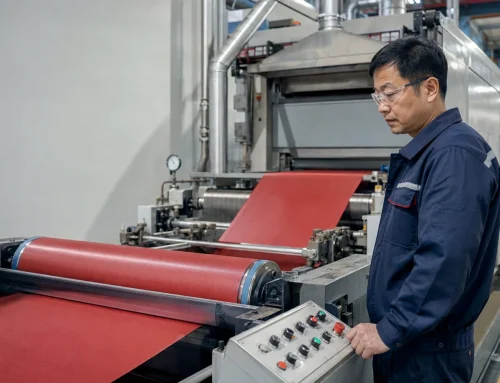
I am Tina Tian from YEEDAH, a China-based B2B manufacturer with 35 production lines. We manufacture silicone air ducts, neoprene air ducts, coated fiberglass fabrics, flexible duct connectors, and other customized industrial flexible ducting products for equipment manufacturers, importers, wholesalers, and distributors.
If you are selecting a silicone air duct for a plastic dryer, please send me the operating temperature, airflow pressure, connection outside diameter, required length, installation drawing or photo, and estimated quantity. I can help you evaluate a suitable construction and connection method.
Email: sales@yeedah.com
Website: www.siliconcoatedfabric.com
Brand: YEEDAH