Table of Contents
Silicone coated fiberglass fabric is not produced simply by placing a layer of silicone rubber on top of a piece of fiberglass cloth.
During coating, the silicone compound must spread across the fabric, enter the openings between the woven yarns, cover the raised yarn surfaces and form a stable coating after curing. The final result depends on the fiberglass construction, silicone formulation and production settings.
However, the word “penetration” needs to be understood correctly.
Glass filaments are solid and do not absorb silicone like cotton or other porous natural fibers. Silicone moves into the spaces within the woven structure and around the surfaces of the fiberglass yarns. It does not soak into the glass itself.
In this article, I will explain how this process works, what controls the coating result and what buyers should evaluate when selecting silicone coated fiberglass fabric.
What Does Silicone Penetration Mean?
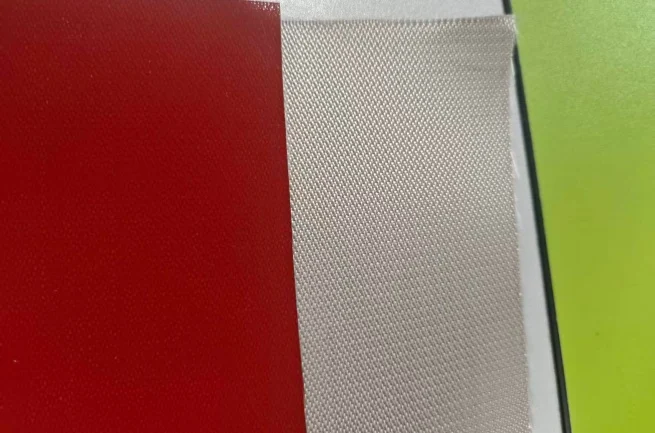
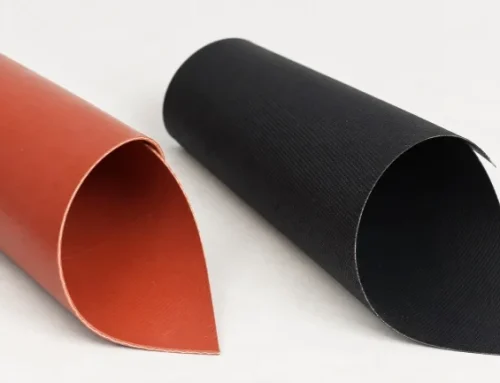
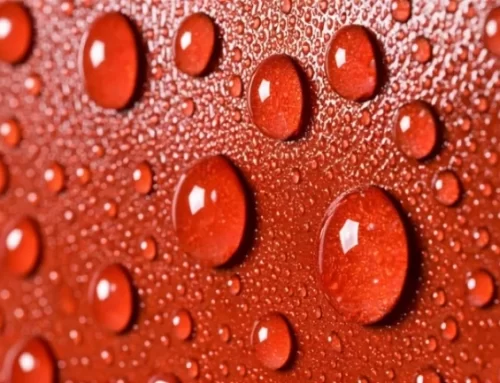
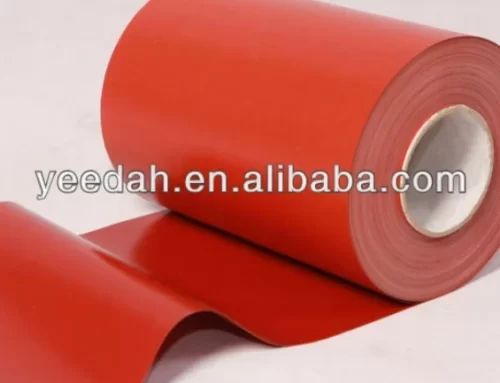
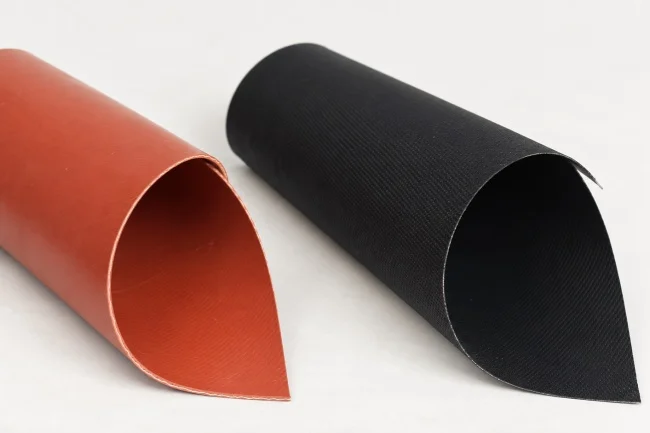
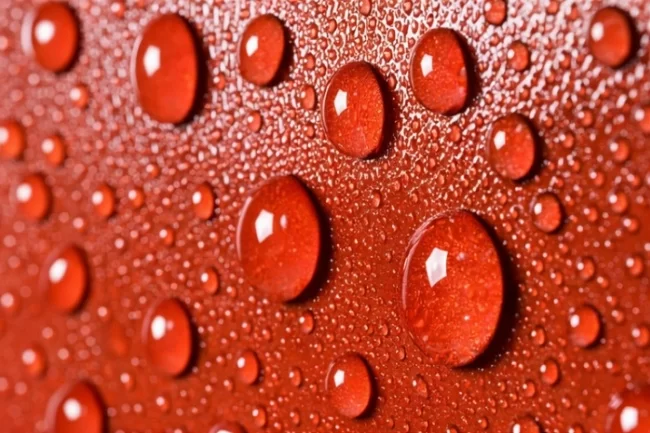
A close comparison shows the visible difference between the woven fiberglass base fabric and the smoother surface formed after silicone coating.
Fiberglass fabric is made from warp and weft yarns woven together. Even when the fabric appears compact, there are still spaces:
- Between the warp and weft yarns
- Around yarn intersections
- Between some filaments within each yarn bundle
- In low areas below the raised yarn surfaces
When uncured silicone is applied, it spreads across the surface and enters some of these available spaces.
The amount and location of the silicone depend on the fabric structure and coating process. On a relatively open fiberglass fabric, the compound can move more easily through the weave openings. On a dense or heavy fabric, movement through the structure is more restricted.
The practical objective is normally not to fill every microscopic space. The manufacturer needs to obtain an appropriate balance among:
- Coverage of the fiberglass yarns
- Required finished thickness
- Silicone coating weight
- Surface condition
- Flexibility
- Air or moisture barrier performance
- Material cost
Maximum penetration is therefore not automatically the best result.
Why Fiberglass Fabric Does Not Absorb Silicone
Fiberglass filaments are nonporous solid glass. They do not absorb liquid silicone into their internal structure.
During coating, silicone instead:
- Wets the surface of the fiberglass yarns.
- Spreads across the woven fabric.
- Enters accessible gaps in the weave.
- Surrounds portions of the yarn structure.
- Forms a cured elastomeric coating.
The quality of the finished material depends on how evenly this occurs.
A fabric can look completely red, grey or black on the surface but still have an uneven coating weight or exposed yarns in localized areas. Conversely, a visible woven texture does not necessarily mean the coating is defective. Surface appearance must be evaluated together with the product specification and intended application.
The Main Factors Affecting Silicone Distribution
Fiberglass Fabric Construction
The base fabric is one of the most important factors.
Relevant characteristics include:
- Weave type
- Yarn size
- Fabric density
- Base-fabric weight
- Fabric thickness
- Surface treatment or sizing
- Widthwise consistency
An open weave generally allows silicone to move through the yarn gaps more easily. A tightly woven fabric provides more resistance and may require different silicone viscosity, coating weight or production settings.
This is why two silicone coated fiberglass fabrics with the same finished thickness can have different performance.
Silicone Viscosity and Flow Behavior
The silicone compound must flow sufficiently to cover the fabric and enter its accessible spaces.
If the compound is too viscous for the selected fabric and process, it may remain mainly on the surface and leave some low areas or yarn intersections inadequately covered.
If it flows too readily, excessive material may pass through the fabric or accumulate unevenly on the opposite side.
However, viscosity cannot be considered separately. It works together with:
- Coating temperature
- Line speed
- Applied coating quantity
- Fabric tension
- Metering settings
- Silicone formulation
Changing one parameter may require adjustments to the others.
Certain silicone dispersions are specifically formulated to provide better penetration into textile substrates. This also shows that penetration depends strongly on the selected silicone system rather than on coating pressure alone. For example, WACKER describes one silicone dispersion as suitable for textile coatings requiring good substrate penetration.WACKER ELASTOSIL RD 6600 F
Wetting and Surface Condition
Before silicone can spread uniformly, it must wet the fiberglass surface.
Dust, oil, moisture or an incompatible surface treatment can interfere with wetting and coating adhesion. Possible results include:
- Pinholes
- Local coating retraction
- Exposed yarns
- Uneven coverage
- Poor surface appearance
- Weak coating attachment
The fiberglass base fabric, silicone formulation and any surface treatment must therefore be compatible.
Coating Weight
Coating weight determines how much silicone is applied to the fiberglass fabric.
Too little silicone may result in:
- Exposed fiberglass yarns
- Pinholes
- Uneven color
- Insufficient barrier performance
- Reduced surface protection
Too much silicone may increase:
- Finished weight
- Material cost
- Stiffness
- Difficulty in cutting, folding or sewing
A heavier coating does not automatically prove that the silicone has penetrated more deeply. Some of the additional material may remain mainly above the fabric surface.
Coating and Metering Settings
During continuous coating, the equipment applies the silicone and controls the amount left on the fabric.
Depending on the production line, important settings may include:
- Metering gap
- Roller position
- Fabric tension
- Line speed
- Silicone supply
- Coating passes
- Coating on one or both sides
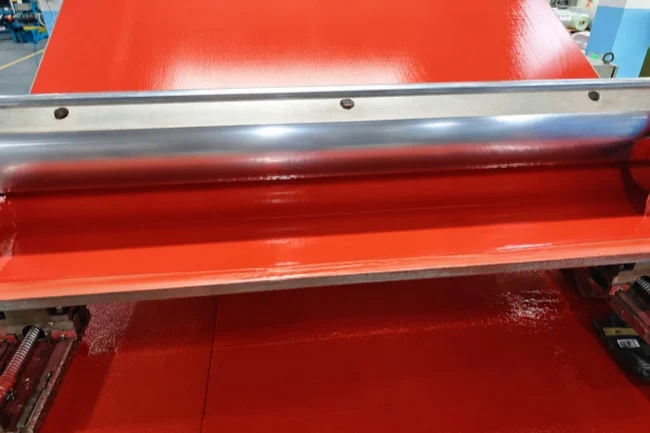
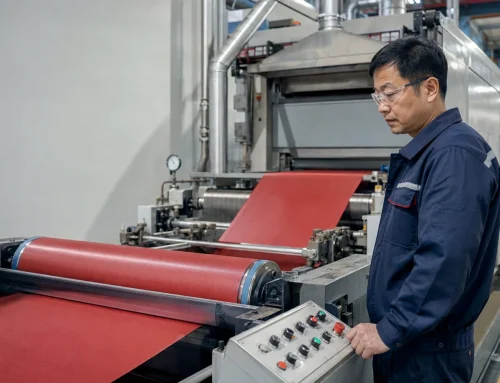
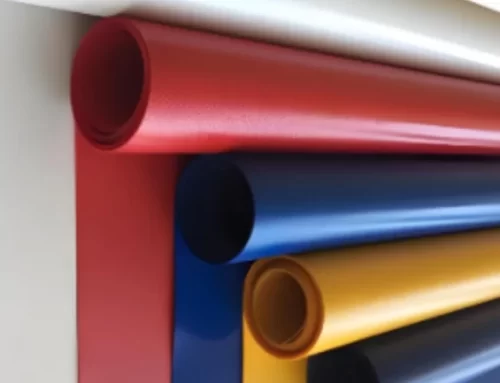
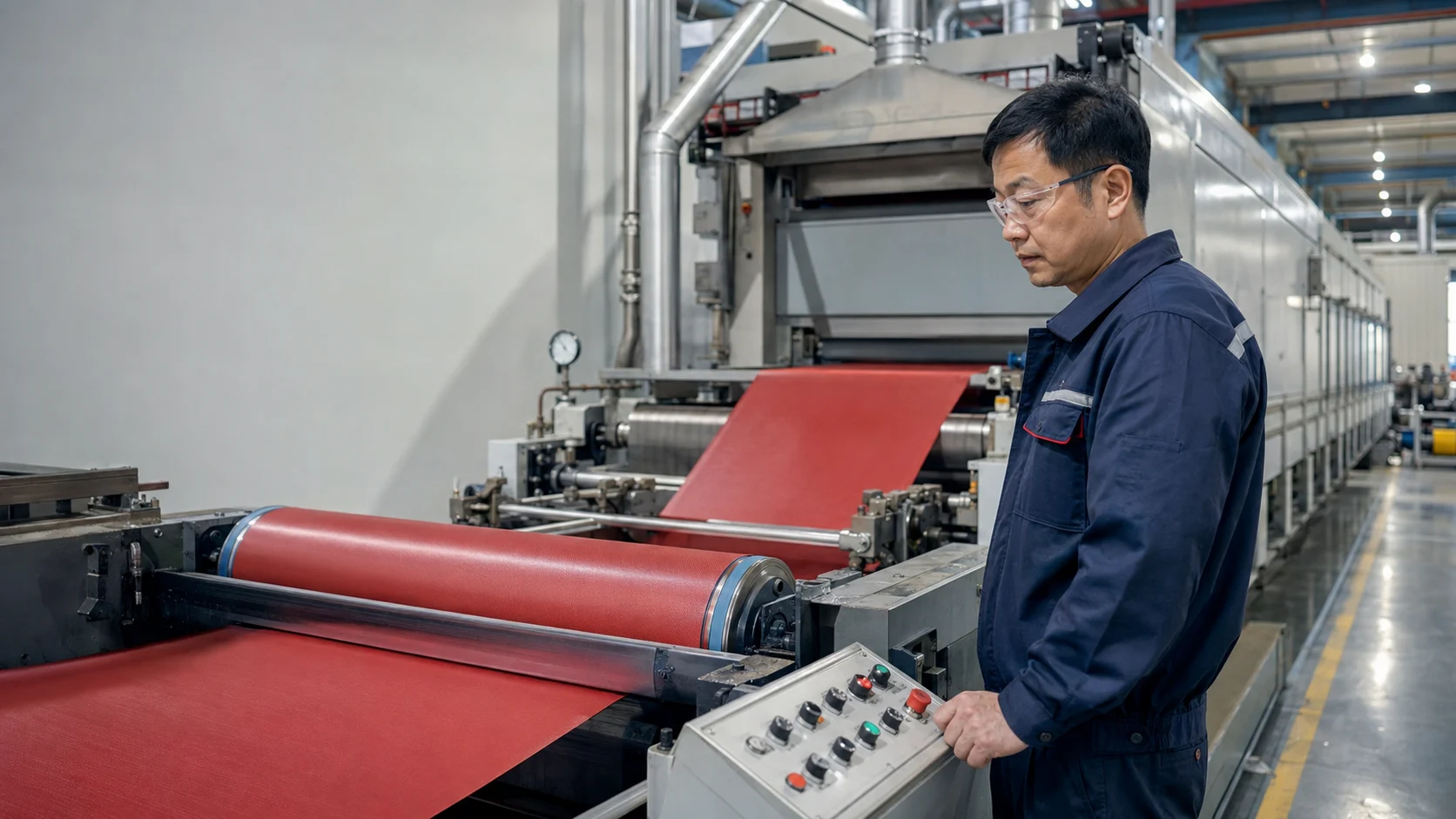
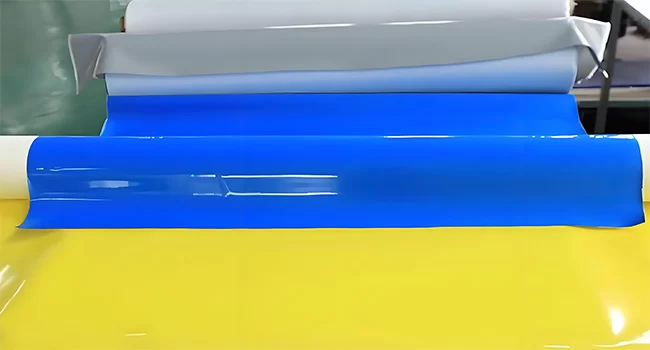
Silicone coating is applied to fiberglass fabric during a continuous coating process.
These settings affect both surface coverage and coating-weight uniformity.
It is more accurate to say that the coating equipment helps bring the silicone into close contact with the fiberglass and meters the applied quantity. It should not be assumed that every coating line uses high pressure to force silicone deeply into the yarn bundles.
One-Sided and Double-Sided Coating
Silicone coated fiberglass fabric can be produced with silicone on one side or both sides, depending on the product design.
For double-sided material, the two surfaces are coated separately or through an appropriate multi-stage process. This can improve coverage on both faces and reduce exposed fiberglass.
However, double-sided coating does not by itself prove that every internal space has been filled. The final distribution still depends on:
- Base-fabric density
- Silicone viscosity
- Coating quantity
- Number of passes
- Production settings
- Cure condition
Buyers should specify the functional requirement instead of relying only on terms such as “fully penetrated” or “fully impregnated.”
What Happens During Curing?
After application, the silicone coating must be cured under controlled conditions.
Curing converts the applied silicone into a stable elastomeric layer. The appropriate conditions depend on the actual silicone system and coating construction.
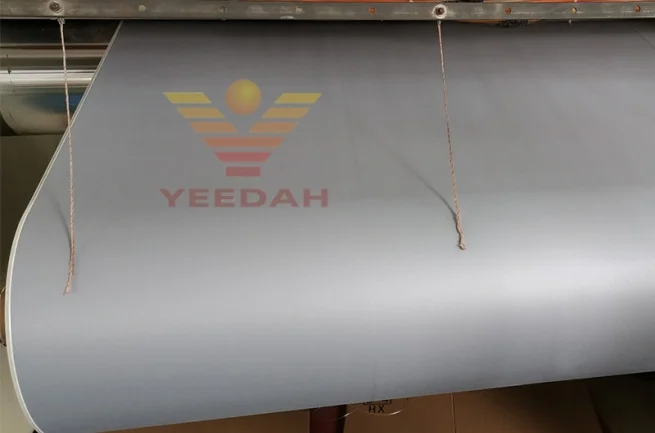
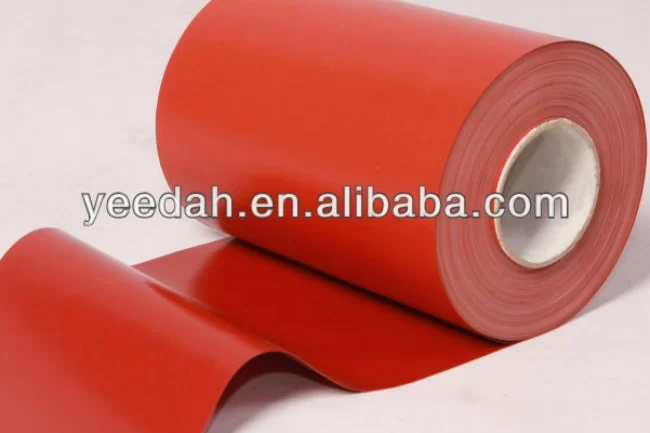
Grey silicone coated fiberglass fabric moves through the production line, forming a continuous and relatively uniform coated surface.
Important variables may include:
- Oven temperature
- Heating time
- Line speed
- Coating thickness
- Number of coating passes
- Fabric temperature
- Air circulation
- Silicone cure chemistry
Insufficient curing may result in tackiness, surface transfer, unstable coating properties or poor handling.
Excessive thermal exposure may cause discoloration, unnecessary hardening or other changes to the finished fabric.
For this reason, it is not professional to publish one universal curing temperature and time for all silicone coated fiberglass fabrics. Production settings should be determined according to the actual raw materials, equipment and required specification.
Penetration Is Not the Same as Finished Thickness
Finished thickness is important, but it does not fully describe the material construction.
Two products with the same nominal thickness can use different combinations of:
- Fiberglass base fabric
- Base-fabric weight
- Silicone coating weight
- Weave density
- Coating distribution
- Silicone formulation
For example, one 1.0 mm material may use a heavier fiberglass base fabric with a moderate silicone coating. Another 1.0 mm product may use a lighter base fabric and more silicone.
Although their measured thicknesses are similar, their finished weight, flexibility, strength and cost can be different.
Buyers should therefore confirm at least:
- Finished thickness
- Finished weight
- Base-fabric construction or weight
- Coating on one or both sides
- Color
- Width and roll length
- Required tolerances
Thickness also needs to be measured using an agreed method because coated fabric can compress under the pressure of the measuring instrument. ASTM D751 includes test methods for coated fabrics, but the exact applicable procedure and acceptance criteria should be agreed between the buyer and supplier.ASTM coated-fabric standards
Common Coating Problems
Pinholes
Pinholes may be related to trapped air, contamination, inadequate coating weight, poor wetting or an unsuitable combination of fabric and production settings.
They are especially important when the material is expected to restrict airflow or moisture.
Exposed Fiberglass Yarns
Fiberglass yarns may remain visible when the surface coating is too light or uneven.
A small amount of visible fabric texture can be normal, depending on the specification. Clearly exposed or poorly protected yarns, however, may affect abrasion resistance and surface quality.
Uneven Coating Weight
Uneven coating across the roll can result from variations in:
- Fabric thickness
- Tension
- Metering gap
- Compound distribution
- Equipment alignment
Inspection should therefore cover different positions across the fabric width rather than only one point.
Bubbles or Surface Irregularities
Bubbles can be introduced during mixing or coating, or they can form when air is trapped in the fabric structure.
Surface streaks or marks may also result from contamination, unstable compound flow or coating-head conditions.
Because coated fiberglass is a woven composite, a completely mirror-smooth appearance should not always be expected. The important question is whether the surface condition affects the agreed specification or application.
Coating Separation
Coating separation should not automatically be blamed on insufficient thickness.
Possible factors include:
- Surface contamination
- Incompatible fiberglass sizing
- Poor wetting
- Unsuitable formulation
- Inadequate curing
- Mechanical stress during fabrication or use
Silicone selection and substrate compatibility are therefore essential parts of the coating process.
How Should Coating Quality Be Evaluated?
No single inspection can prove every aspect of coating quality.
Depending on the customer’s application and agreed specification, evaluation may include:
- Visual surface inspection
- Finished thickness measurement
- Finished weight measurement
- Width and roll-length checks
- Tensile or tear testing
- Pinholes or light-table inspection
- Application-specific leakage testing
- Sample fabrication and installation testing
Cross-sectional examination can also be used when a more detailed analysis of coating distribution is required. However, it should not be presented as a routine production test unless the manufacturer actually performs it.
The most useful test is the one connected to the intended application. For example, an airtight connector may require an agreed leakage test, while material used for a removable insulation jacket may be evaluated mainly for flexibility, handling and surface durability.
How Coating Distribution Affects the Finished Product
A properly controlled coating can contribute to:
- Protection of the fiberglass yarns
- Reduced air and moisture permeability
- Improved handling
- More consistent fabrication
- Stable finished thickness
- Better surface durability
The silicone coating does not normally provide most of the fabric’s tensile strength. The woven fiberglass base is the main reinforcement, while the silicone supplies surface protection, flexibility, sealing characteristics and environmental resistance.
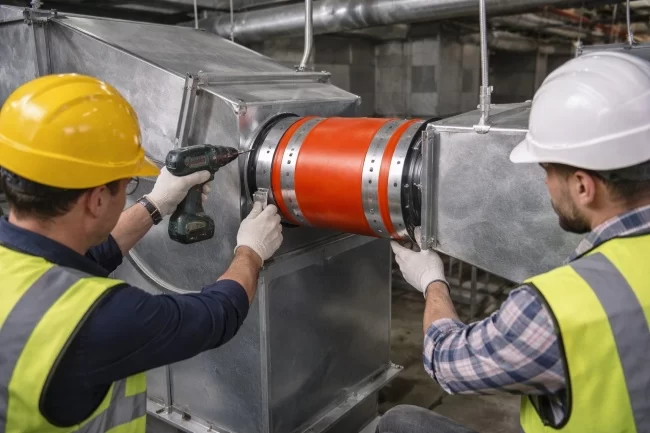
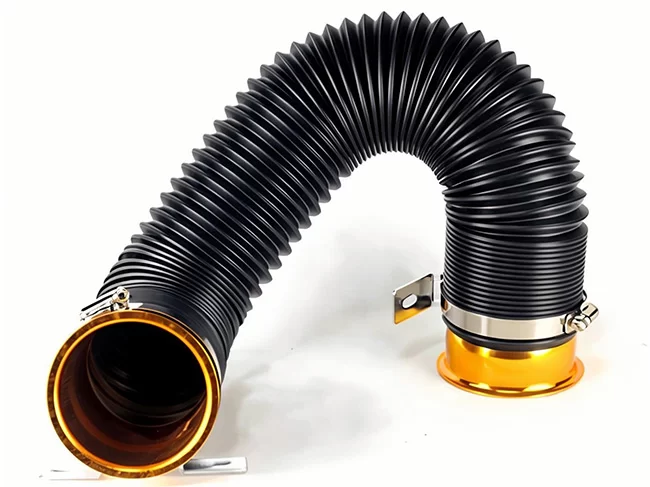
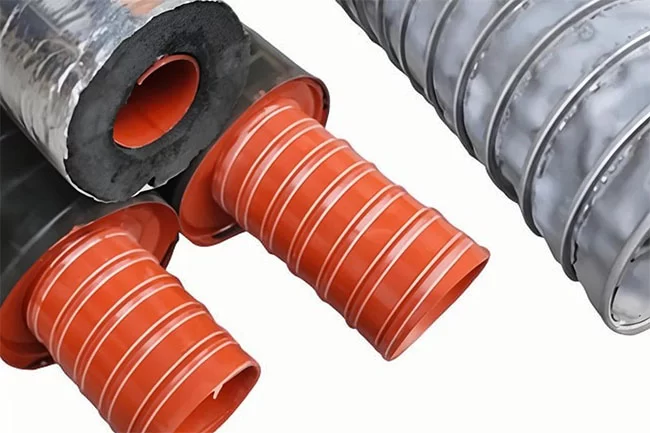
Dow confirms that silicone rubber can be dispersed or calender-coated onto fiberglass and then fabricated into ducting or hose, but the performance of the finished component still depends on the complete construction.Dow XIAMETER S-2351U
Information Buyers Should Provide
When requesting silicone coated fiberglass fabric, it is useful to provide:
- Intended application
- Required finished thickness
- Required width and roll length
- One-sided or double-sided coating
- Required color
- Finished weight, if specified
- Continuous operating temperature
- Short-duration peak temperature
- Exposure time
- Pressure or leakage requirements
- Required mechanical properties
- Applicable test standard
- Expected order quantity
Buyers should also explain whether the material will be sewn, folded, clamped, bonded or fabricated into another product.
This information helps the supplier determine whether an existing construction is suitable or whether a customized material needs to be evaluated.
Common Purchasing Mistakes
Selecting Only by Thickness
Thickness alone does not define the fiberglass base fabric, silicone content or finished weight.
Treating Surface Smoothness as Proof of Penetration
A smooth surface shows the external finish but does not reveal the internal coating distribution.
Assuming More Silicone Always Means Better Quality
A heavier coating can improve coverage in some cases, but it also increases weight, stiffness and cost.
Comparing Prices Without Comparing Base Fabrics
Two quotations for the same nominal thickness may be based on different fiberglass constructions and finished weights.
Using “Fully Impregnated” Without an Acceptance Method
If impregnation is critical, the buyer should define a measurable requirement, such as allowable air permeability, visible pinholes, coating weight or an agreed cross-sectional criterion.
Assuming One Test Report Covers Every Construction
A test report for one thickness, color, base fabric or silicone formulation may not automatically apply to a different material.
Conclusion
Silicone does not absorb into solid fiberglass filaments. During coating, it wets the fiberglass surface, covers the woven yarns and enters accessible spaces within the fabric structure. After curing, the silicone and fiberglass form a flexible coated composite.
The final coating result depends on the interaction among:
- Fiberglass construction
- Surface condition
- Silicone formulation and viscosity
- Applied coating weight
- Metering settings
- Fabric tension and line speed
- Number of coating passes
- Curing conditions
Good coating control is not about achieving the deepest possible penetration. It is about producing the required balance of surface coverage, finished thickness, flexibility, weight and application performance.
For technical buyers, silicone coated fiberglass fabric should therefore be evaluated as a complete material construction—not by thickness or surface appearance alone.
Contact YEEDAH
At YEEDAH, we manufacture silicone coated fiberglass fabric for B2B industrial customers.
Available requirements can be discussed according to the required thickness, width, roll format, color, coating construction and intended application.
For an accurate material evaluation and quotation, please email us at sales@yeedah.com with the following information:
- Application
- Required dimensions
- Operating temperature
- Pressure or leakage requirements
- Required test standards
- Expected quantity