Table of Contents
For procurement managers, engineers, and equipment manufacturers sourcing industrial flexible ducting, choosing a supplier involves more than comparing prices. The suitability of a silicone air duct depends on its materials, construction, dimensions, operating conditions, and manufacturing quality.
China is one of the sourcing options for industrial flexible ducting and coated-fabric products. Buyers may find manufacturers offering standard products as well as customized solutions for drying equipment, plastic processing machinery, ventilation systems, and other industrial applications.
However, the country of origin alone does not guarantee product quality, technical suitability, or cost savings. Buyers should evaluate each supplier according to their actual requirements.
At YEEDAH, we manufacture silicone-coated fiberglass fabric and related industrial flexible ducting products for B2B customers. In this guide, we explain what to consider when sourcing silicone air ducts from China, how to evaluate a manufacturer, and which technical details to confirm before placing an order.
What Is a Silicone Air Duct?
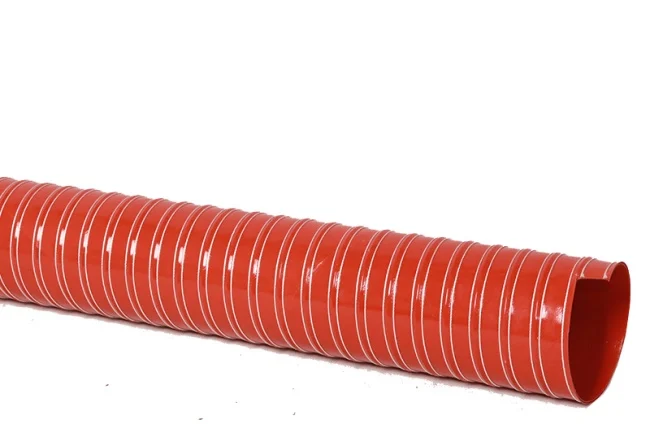
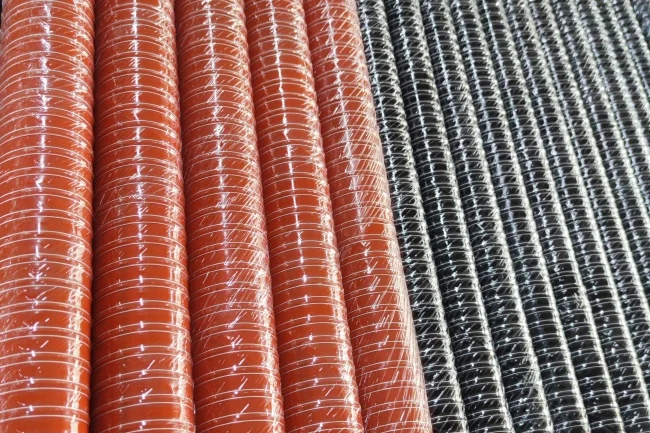
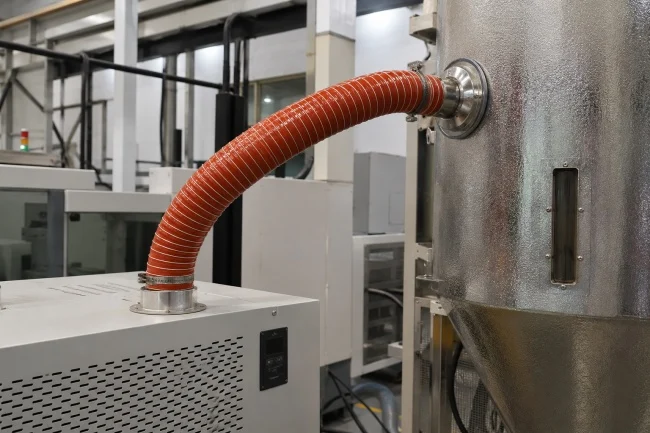
A silicone air duct is a flexible duct used to transfer air and other suitable gaseous media in industrial equipment and air-handling systems.
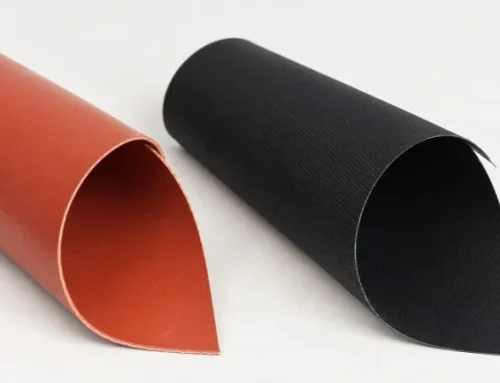
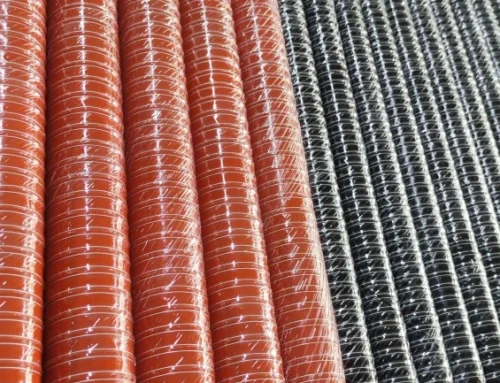
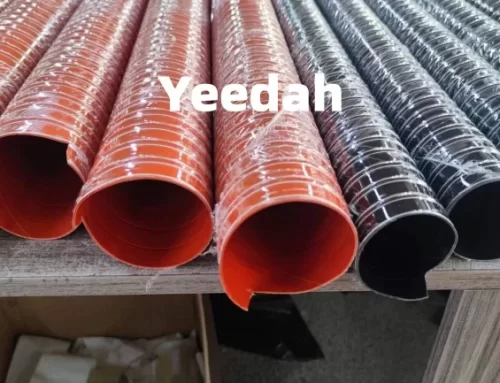
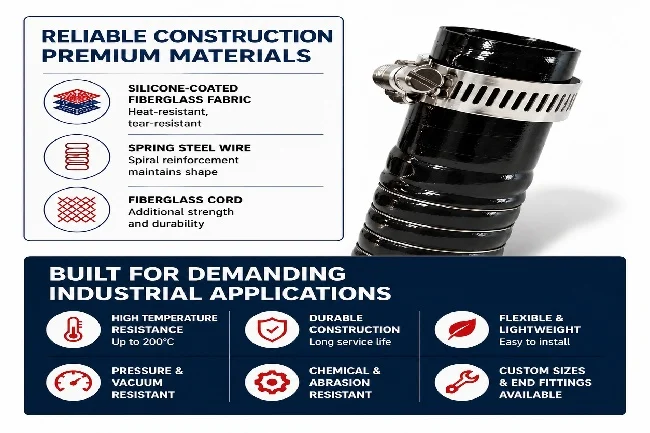
A typical silicone air duct may consist of silicone-coated fiberglass fabric, spiral spring steel wire, and additional reinforcement such as fiberglass cord. The exact construction depends on the product design.
Each component serves a different purpose.
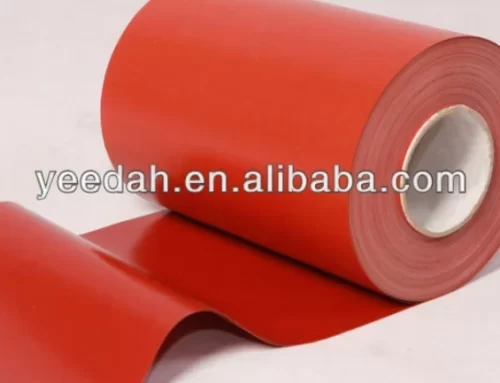
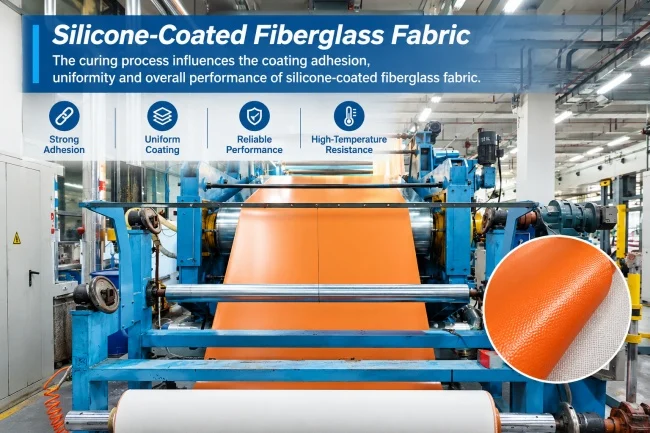
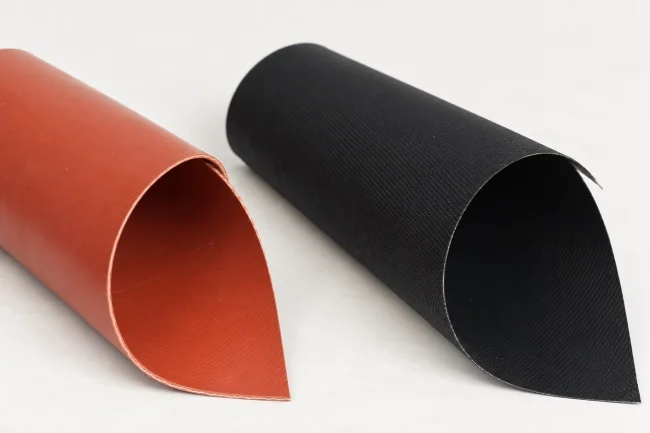
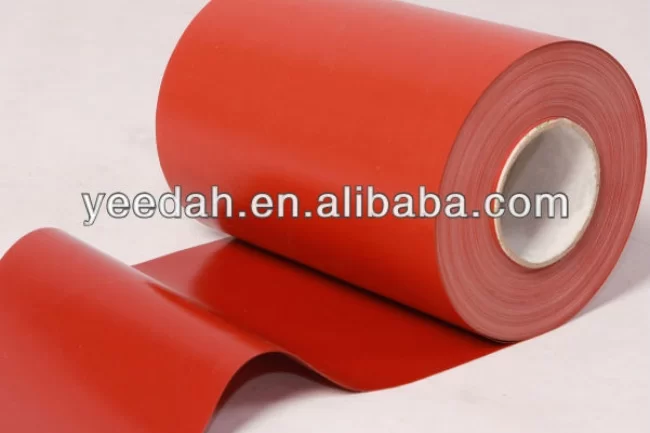
- Silicone-coated fiberglass fabric: Forms the flexible duct wall. Its properties depend on the fiberglass substrate, silicone coating, coating weight, and finished construction.
- Spring steel wire: Provides spiral reinforcement and helps the duct retain its shape.
- Fiberglass cord: May provide additional reinforcement, depending on the design.
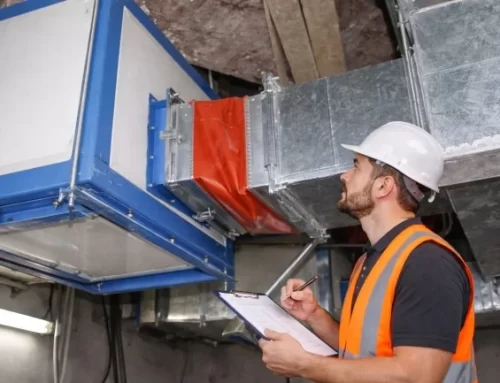
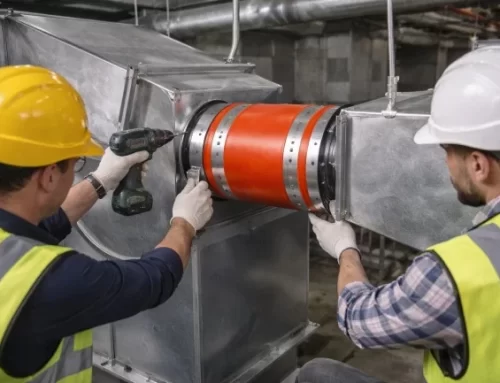
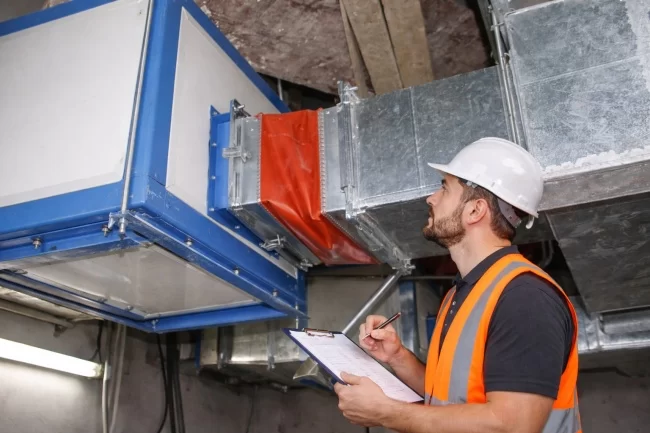
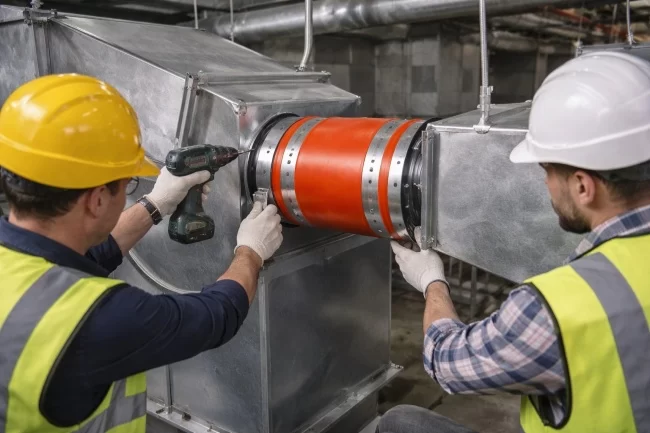
This construction allows flexible ducting to connect equipment outlets, air-handling components, and other connection points where rigid piping may be inconvenient.
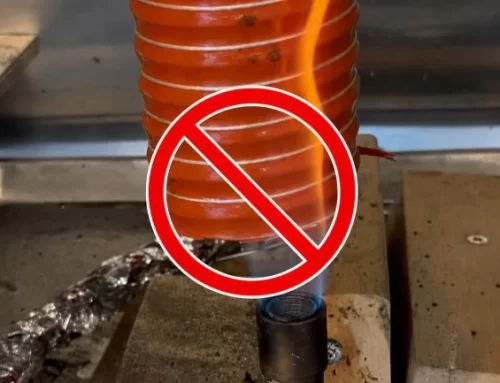
However, not every silicone air duct is suitable for every operating condition. A duct intended for general hot-air transfer should not automatically be assumed suitable for high pressure, strong vacuum, abrasive particles, or aggressive chemical media.
The correct product should be selected according to its documented specifications and actual operating environment.
Temperature Ratings: What Should Buyers Know?
Temperature is an important consideration when selecting a silicone air duct, but the maximum temperature alone does not determine whether a product is suitable.
For YEEDAH’s standard silicone air duct selection, approximately 200°C can be used as an initial continuous operating temperature reference. This is a preliminary selection guideline, not a guarantee that every model will perform continuously at that temperature.
The appropriate limit should be confirmed for the specific construction and application.
Buyers should distinguish between:
- Continuous operating temperature
- Short-term or intermittent temperature
- Actual air temperature at the duct
- Ambient temperature around the installation
- Temperature exposure duration and frequency
Other factors can also influence service life, including pressure or vacuum, vibration, bending, abrasion, chemical exposure, and installation conditions.
A short-term temperature limit must not be treated as a continuous operating rating. Likewise, the temperature resistance of the fiberglass substrate should not be used as the temperature rating of the complete silicone-coated duct.
Before placing an order, provide the expected continuous temperature, peak temperature, peak duration, and operating conditions so the manufacturer can assess the proposed construction.
Industries That Use Silicone Air Ducts
Silicone air ducts are used in various industrial applications where flexible connections and suitable temperature resistance are required.
Depending on the product specification, potential applications include:
- Plastic granulate drying equipment
- Industrial hot-air transfer systems
- Film-blowing machinery
- Blowers and air-handling equipment
- Certain engine-related air-transfer systems
- Other industrial machinery requiring flexible duct connections
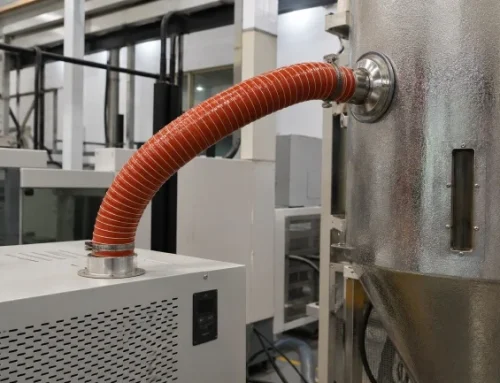
For example, a plastic drying machine may require a flexible connection between a heated-air outlet and another part of the equipment.
An equipment manufacturer may also need a duct that accommodates installation tolerances or limited space around a machine.
These applications may look similar, but their requirements can differ considerably. Air temperature, airflow, pressure, vibration, connection dimensions, and installation layout should all be considered before selecting a product.
The intended application should therefore be discussed with the supplier rather than relying on the product name alone.
Why Consider a Chinese Silicone Air Duct Manufacturer?
China offers a range of industrial manufacturing and coated-fabric suppliers. For international buyers, sourcing from China may provide access to different product specifications, customization options, and established export channels.
The actual advantages depend on the individual manufacturer and the product being purchased.
Access to Industrial Materials and Components
Silicone air duct production can involve several materials and components, including silicone-coated fiberglass fabric, steel wire, reinforcement cord, and connection accessories.
A manufacturer with suitable material sourcing arrangements may be able to offer different product constructions and assess customized requirements.
For OEM projects, this can be useful when the buyer needs a specific inside diameter, length, wall construction, or end configuration.
However, buyers should confirm which components are manufactured in-house and which are purchased from other suppliers if this distinction matters to their project.
Options for Standard and Customized Products
Industrial buyers do not always require the same specifications.
A distributor may need several standard diameters, while an equipment manufacturer may require a particular length or connection arrangement.
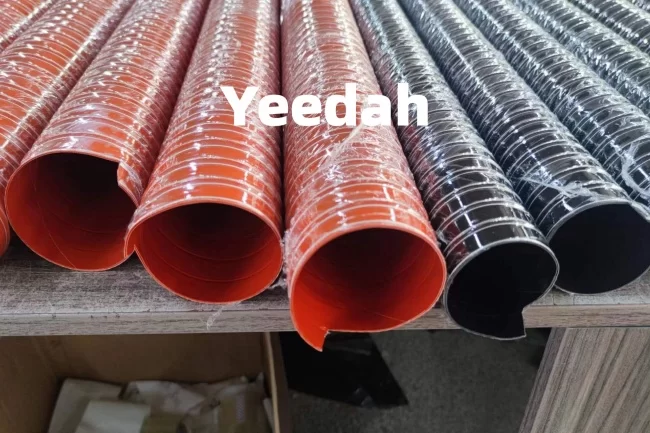
Depending on the manufacturer’s production capability and order quantity, available options may include different diameters, lengths, colors, wall constructions, and end configurations.
Not every combination will necessarily be available. Custom materials, special dimensions, or non-standard configurations may require additional evaluation, a minimum order quantity, or a longer lead time.
Buyers should confirm these details before finalizing their equipment design or purchase order.
Evaluating the Total Procurement Cost
Price is an important factor in industrial purchasing, but the lowest quotation is not necessarily the most economical option.
Two silicone air ducts with similar external dimensions may use different fabric specifications, reinforcement structures, wall thicknesses, or manufacturing methods.
These differences may affect flexibility, weight, service life, and suitability for the intended application.
When comparing quotations, check whether the products have equivalent specifications and whether the quoted prices include the same packaging, inspection, and delivery terms.
The total procurement cost may also include freight, import charges, inspection, installation, replacement, and potential production downtime.
A meaningful comparison should consider both purchase price and the risks associated with using an unsuitable product.
Export and Communication Requirements
For overseas buyers, communication and export arrangements are also important.
A supplier experienced in international B2B business may be familiar with commercial invoices, packing lists, export packaging, shipping coordination, and customer-specific documentation.
At YEEDAH, we supply coated-fabric and related industrial products to overseas markets, including Vietnam, India, the United States, Japan, and European countries.
However, export experience should be evaluated separately from technical capability. Buyers should still verify whether the supplier understands their application and can provide the required product specifications and documentation.
Advantages of Working Directly with a Manufacturer
Buyers sourcing silicone air ducts from China may work with manufacturers, trading companies, distributors, or other intermediaries.
Each business model can be appropriate depending on the purchasing arrangement. Working directly with a manufacturer may offer practical benefits when a project requires technical communication or customized specifications.
Direct Technical Communication
Direct communication with the manufacturer can make it easier to discuss product construction, dimensions, tolerances, and manufacturing limitations.
For example, if an equipment manufacturer requires a particular inside diameter or a customized cuff, the supplier can assess the request against its available materials and production processes.
Clear communication helps reduce misunderstandings between the drawing, quotation, approved sample, and final order.
Buyers should provide written specifications and confirm any important changes before production begins.
Assessing Customization Requirements
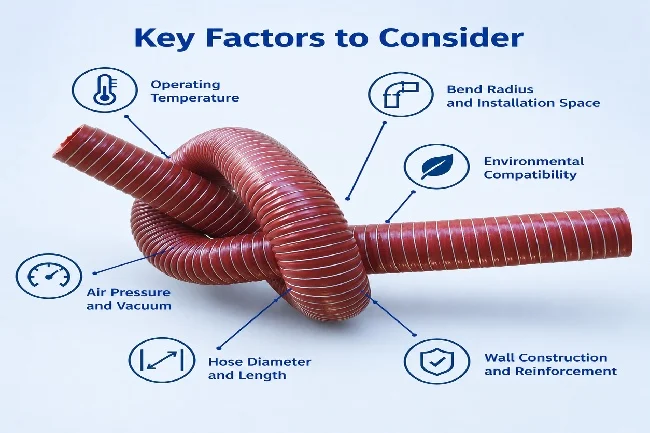
Depending on the available product range and production capability, customization may involve:
- Inside diameter
- Required length
- Wall construction
- Fabric specification
- Color
- Reinforcement configuration
- End cuffs or connection details
- Packaging requirements
A manufacturer should evaluate whether the requested configuration is practical before confirming the order.
For dimensions that affect installation, a technical drawing or sample of the existing connection can help clarify the requirements.
Discussing Quality and Production Requirements
Working directly with the manufacturer can also help buyers establish inspection requirements before production.
For repeat OEM orders, it is useful to define the approved product specification, dimensional tolerances, appearance requirements, packaging, and any required inspection records.
A sample may establish an initial reference, but sample approval alone does not guarantee that every subsequent batch will be identical.
For ongoing orders, buyers should also discuss how the supplier controls production changes and handles non-conforming products.
What Technical Capabilities Should You Evaluate?
A reliable sourcing decision should be based on evidence of relevant manufacturing capability, not simply on factory size or marketing claims.
Material Specifications
Ask the supplier to describe the actual construction of the silicone air duct.
Relevant information may include:
- Fiberglass fabric construction
- Silicone coating specification
- Finished wall thickness, where applicable
- Material weight, where available
- Number of fabric layers
- Reinforcement materials and arrangement
- Available colors and dimensions
Do not assume that two products with the same nominal diameter have the same internal construction.
Differences in materials and construction may influence flexibility, weight, temperature performance, and mechanical durability.
For customized projects, request the applicable technical data and confirm which parameters can be specified or inspected.
Relevant Manufacturing Experience
A factory should have suitable production processes for the products it claims to manufacture.
Buyers can ask about the production equipment, manufacturing steps, available product range, and experience with similar specifications.
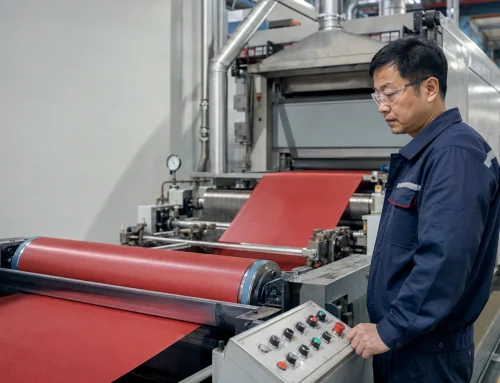
At YEEDAH, we operate 35 production lines across our coated-fabric and related industrial product manufacturing operations.
This figure describes our broader manufacturing operations; it should not be interpreted as 35 dedicated silicone air duct production lines.
The more important question is whether the supplier has the appropriate equipment, materials, and production experience for the product you need.
Quality Control and Inspection
Before placing an order, ask how the manufacturer checks the finished product.
Depending on the product and the agreed specification, relevant checks may include:
- Incoming material checks
- Inside diameter and length measurements
- Visual inspection
- Construction and reinforcement checks
- Surface condition
- Packaging and labeling
- Production or batch records, where available
Not every inspection method is applicable to every product. Pressure testing, temperature testing, and other performance tests should only be claimed when the relevant method is available and the results support the claim.
For critical applications, agree on the inspection criteria before production and clarify whether test reports or inspection records will be supplied.
Customization Details That Matter for OEM Buyers
Customization can help a silicone air duct fit a particular machine or installation, but the requirements need to be defined clearly.
Inside Diameter and Length
When requesting a quotation, specify whether the required diameter refers to the inside diameter (ID) or outside diameter (OD).
For most connection applications, the inside diameter is particularly important because it affects how the duct fits over or inside the connecting component.
Required length should also be clearly defined, including any special requirements for the ends.
If the duct must fit an existing machine, provide a drawing, measurements, or photographs of the connection points where possible.
The supplier should confirm available manufacturing lengths and whether the requested dimensions can be produced as one continuous section.
Wall Construction
Not all silicone air ducts use the same number of fabric layers.
Single-layer and double-layer constructions differ in their material arrangement and overall structure. The appropriate choice depends on the intended application and the manufacturer’s available specifications.
Buyers should not assume that a thicker or heavier duct is automatically suitable for every application. Instead, ask the supplier to explain the available construction options and their relevant limitations.
End Cuffs and Connections
Some installations use plain flexible ends, while others require cuffs or a specific connection arrangement.
A drawing should identify the required cuff length, connection diameter, installation position, and any relevant dimensional tolerances.
Photographs can help illustrate the application, but measurements and written specifications are more useful for confirming the final design.
The manufacturer should confirm which end configurations are available before the order is approved.
Color and Appearance
Different colors may be available depending on the material specification and production process.
If color is important for identification or equipment appearance, specify the required color before ordering and confirm the available options.
Color alone should not be used as evidence of temperature resistance, material composition, or other performance characteristics.
Common Concerns When Sourcing Silicone Air Ducts from China
International buyers often need to verify quality, delivery, documentation, and shipping arrangements before choosing a supplier.
These concerns are best addressed through clear requirements and appropriate verification.
How Can I Check Product Consistency?
Start with a written specification and, where appropriate, an approved sample.
Check the important dimensions, construction, connection fit, appearance, and other agreed characteristics.
For repeat orders, ask the manufacturer how it maintains the approved specification and records relevant production information.
If the application is critical, consider an agreed inspection plan or independent inspection before shipment.
How Can I Confirm the Delivery Schedule?
Ask for a lead time based on the actual quantity, specification, material availability, and production schedule.
Standard products and customized products may have different lead times.
Confirm when the lead time begins, whether sample approval is required, and how changes to the order may affect delivery.
If a shipment has a strict deadline, discuss it before confirming the purchase order.
What Certifications or Test Reports Should I Request?
Requirements depend on the destination market, industry, and final application.
Ask for the specific certificate, declaration, or test report required for your project. Check whether the document applies to the actual product, material, construction, and specification being purchased.
A company-level management-system certificate should not automatically be treated as proof that every product meets a particular performance standard.
Where compliance is essential, verify the scope, validity, and applicability of the relevant documentation.
How Should Shipping Be Evaluated?
Flexible ducts may occupy considerable packaging volume relative to their weight, depending on their diameter, construction, and packing method.
For this reason, buyers should compare not only the product price but also the packing dimensions, shipment quantity, freight method, and applicable delivery terms.
Sea freight may be worth considering for larger shipments, while air freight or express services may suit samples and urgent smaller consignments.
The most appropriate option depends on shipment volume, urgency, destination, and total landed cost.
Common Mistakes Buyers Should Avoid
Several common purchasing mistakes can be avoided by defining the application before requesting a quotation.
Comparing Prices Without Comparing Specifications
If two suppliers quote different prices, first establish whether the products are equivalent.
Check the fabric, wall construction, dimensions, reinforcement, temperature requirements, and connection details.
A price comparison is meaningful only when the products and commercial terms are sufficiently comparable.
Providing Only Diameter and Quantity
A request such as “silicone air duct, ID 100 mm, 50 pieces” may not provide enough information for a reliable technical assessment.
Where applicable, include:
- Inside diameter
- Required length
- Quantity
- Continuous operating temperature
- Peak temperature and exposure duration
- Positive pressure or vacuum conditions
- Transported medium
- Required movement or vibration conditions
- Installation arrangement
- Connection method
If some values are unknown, explain the application and ask the manufacturer which additional information is needed.
Choosing Only by Temperature Rating
Temperature is only one factor in product selection.
A duct that appears suitable for the required temperature may still be unsuitable for the pressure, vacuum, abrasion, chemical exposure, movement, or installation conditions.
Evaluate the complete operating environment rather than relying on one temperature figure.
Skipping Sample Evaluation
For a new supplier or customized product, sample evaluation can help identify dimensional or connection problems before a larger order is placed.
A sample can be used to check fit, flexibility, construction, and appearance.
However, visual inspection alone cannot verify every performance characteristic. Any critical performance requirement should be evaluated using an appropriate test method or supporting documentation.
Assuming a Flexible Air Duct Is a Pressure Hose
Flexible air ducts and pressure-rated hoses are not automatically interchangeable.
A fabric-reinforced duct designed for air transfer may have limitations under positive pressure, vacuum, pulsation, or other mechanical loads.
If the system operates under these conditions, provide the actual operating values and request confirmation that the proposed product is suitable.
Do not assume that a duct is pressure-rated simply because it contains spiral steel wire or retains its shape.
How to Evaluate a Chinese Silicone Air Duct Manufacturer
A structured supplier evaluation is more useful than choosing a manufacturer based on website photographs or the lowest quotation.
Before placing an order, consider checking the following:
- Relevant manufacturing capability: Confirm that the company manufactures the type of duct you require.
- Product specifications: Request details of the materials, construction, dimensions, and applicable operating limits.
- Customization capability: Confirm whether your required diameter, length, and connection arrangement are practical.
- Quality control: Ask about inspection procedures and available records.
- Technical communication: Evaluate whether the supplier understands your application and asks appropriate questions.
- Documentation: Confirm which certificates, declarations, or test reports are available and applicable.
- Delivery arrangements: Agree on the production lead time, packing requirements, and shipping terms.
- Sample evaluation: Consider a sample or trial order before committing to a larger quantity.
For larger or long-term projects, buyers may also consider a factory audit or independent inspection.
Supplier evaluation should continue after the first order. Delivery performance, communication, consistency with the approved specification, and the handling of problems all provide useful information for future purchasing decisions.
Questions to Ask Before Placing Your First Order
Before confirming a silicone air duct supplier, consider asking these ten questions.
1. What materials and construction does the product use?
Request a clear description of the duct wall, reinforcement, and other relevant components.
2. What continuous and short-term temperature limits apply to this model?
Ask for the applicable product information and explain the expected temperature exposure.
3. Is the duct suitable for my pressure or vacuum conditions?
Provide actual operating values rather than assuming the product is suitable.
4. Can you supply my required diameter and length?
Confirm dimensional availability and manufacturing limitations.
5. What dimensional tolerances can you provide?
This is particularly important when the duct must fit existing equipment.
6. Can you provide a sample?
Discuss sample availability and how the sample will be evaluated.
7. What inspection records or technical documents are available?
Confirm which documents can be supplied for the selected product.
8. What is the production lead time?
Clarify the expected schedule for samples and mass production.
9. What is the minimum order quantity?
Check whether special materials, colors, or dimensions affect the MOQ.
10. What information do you need to recommend a suitable product?
A useful technical discussion should consider the application, not just the diameter and price.
The answers to these questions can help buyers determine whether a supplier is suitable for their requirements and whether additional verification is necessary before placing an order.
Conclusion
Choosing a Chinese silicone air duct manufacturer can provide access to industrial manufacturing capabilities, material options, customization, and export services.
However, the right supplier should be selected according to the actual product requirements rather than the country of origin or quotation price alone.
For procurement managers, engineers, and OEM manufacturers, the most important considerations include material specifications, duct construction, operating conditions, manufacturing capability, quality control, documentation, and delivery arrangements.
Before ordering, define the required dimensions, continuous and peak temperatures, pressure or vacuum conditions, transported medium, connection method, and installation environment.
A supplier that evaluates these details and clearly explains the limits of its products can help buyers make a more informed purchasing decision.
Discuss Your Silicone Air Duct Requirements with YEEDAH
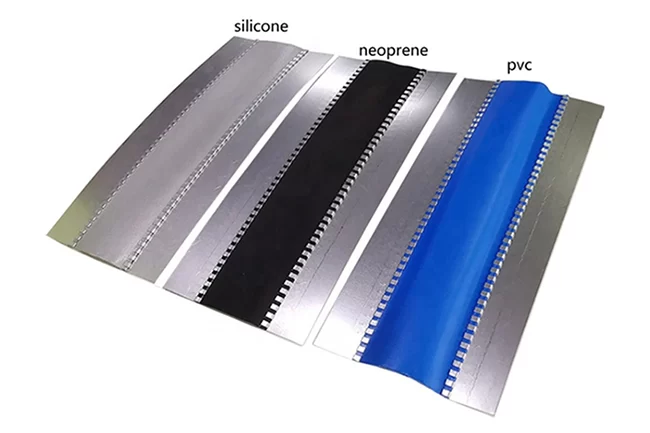
At YEEDAH, we manufacture silicone-coated fiberglass fabric, silicone flexible ducting, neoprene ducting, flexible duct connectors, and other coated-fabric products for B2B customers.
If you are sourcing silicone air ducts for industrial dryers, plastic processing equipment, or other industrial air-transfer applications, you can send us your requirements for review.
To help us assess your requirements, please email sales@yeedah.com with the following details: required inside diameter, length, quantity, operating temperature, pressure or vacuum conditions, transported medium, connection method, and any special installation requirements.
We can then discuss the available product specifications and determine whether they are suitable for your application.