Table of Contents
Silicone rubber is widely used in industrial applications because it offers good flexibility, weather resistance, ozone resistance, and temperature performance. However, the performance of a finished silicone product depends on more than the silicone formulation itself.
Curing conditions are one of the important process factors that can influence the final properties of silicone rubber.
For silicone-coated fiberglass fabric, silicone hoses, silicone air ducts, and other reinforced silicone products, buyers often focus on thickness, coating weight, temperature rating, and reinforcement. These specifications are important, but they do not tell the whole story.
The curing system, curing temperature, heating time, product thickness, coating construction, catalyst or curing-agent system, and production conditions can all affect the final material. If curing is insufficient, inconsistent, or not properly matched to the silicone formulation, the finished product may not achieve the intended physical properties.
This article explains how silicone rubber curing works, which processing factors matter, what can happen when curing is incomplete, and what industrial buyers should discuss with their silicone product suppliers.
Why Curing Conditions Matter in Silicone Rubber Manufacturing
Silicone rubber does not obtain its final elastic structure until the polymer chains are crosslinked through a suitable curing reaction.
The exact curing mechanism depends on the silicone system. Commercial silicone rubber may use peroxide curing, platinum-catalyzed addition curing, or other curing chemistries designed for particular applications. Different formulations can therefore require significantly different processing conditions.
The degree and uniformity of crosslinking can affect properties such as:
- Shore hardness
- Tensile strength
- Elongation
- Tear resistance
- Compression set
- Elastic recovery
- Surface condition
- Dimensional stability
- Adhesion to a substrate
- Residual volatile content
However, curing is not the only factor controlling these properties. Silicone formulation, fillers, pigments, reinforcement, coating thickness, substrate condition, and testing method can also have significant effects.
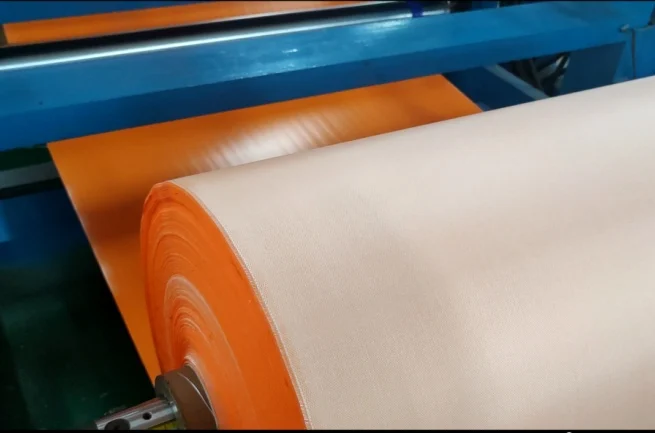
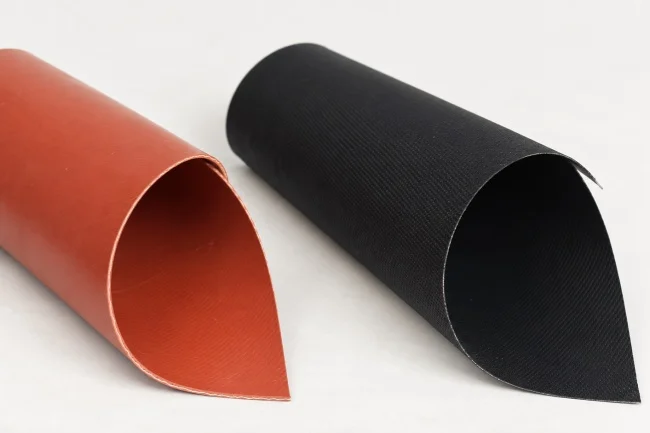
For example, a silicone-coated fiberglass fabric may have the correct nominal thickness and coating weight but still show poor performance if the coating is not adequately cured or if the bond between the silicone and fiberglass is not properly developed.
This is why finished-product performance should be evaluated together with the material formulation and manufacturing process.
How Silicone Rubber Curing Works
Silicone rubber curing, also called vulcanization or crosslinking in many industrial contexts, converts the uncured silicone compound into an elastic material through chemical crosslinking.
The exact reaction depends on the curing system.
A peroxide-cured silicone system uses an organic peroxide to initiate crosslinking when heated. Peroxide-cured silicone rubber is widely used in molding, extrusion, tubing, sheeting, and other industrial products.
Platinum-cured silicone uses an addition reaction in which Si-H groups react with vinyl groups in the presence of a platinum catalyst. WACKER describes this as a platinum-catalyzed hydrosilylation reaction that forms a three-dimensional network.
Other silicone systems, including certain room-temperature-curing materials, use different chemical mechanisms. Their curing behavior should not be directly compared with heat-cured high-consistency silicone rubber.
Therefore, there is no single curing temperature or curing time that applies to all silicone rubber products.
The appropriate processing conditions depend on factors such as:
- Silicone formulation
- Cure chemistry
- Curing-agent or catalyst system
- Product thickness
- Coating weight
- Product geometry
- Processing method
- Reinforcing substrate
- Oven conditions
- Production-line speed
- Intended application
The material supplier’s technical data and the manufacturer’s own process validation should be used to establish the appropriate cure conditions.
Peroxide-Cured Silicone Rubber
Peroxide curing is widely used with high-consistency silicone rubber and is suitable for applications including molding, extrusion, tubing, sheeting, and calendered products.
During heating, the organic peroxide decomposes and initiates the crosslinking reaction.
Different peroxide systems are designed for different processing requirements. For example, Dow lists peroxide curing agents for applications including general molding, thick molding, hot-air vulcanization, and rapid curing.
The amount and type of curing agent, mixing uniformity, temperature, and heating time all need to be controlled according to the specific silicone formulation.
Some peroxide-cured silicone products may also require post-curing. Post-curing can be used to reduce residual volatile materials or further stabilize selected properties, but it is not automatically required for every peroxide-cured silicone product.
The correct processing conditions should therefore be taken from the technical specification of the actual silicone compound rather than from a general rule.
Platinum-Cured Silicone Rubber
Platinum-cured silicone is an addition-cure system. The curing reaction normally involves a platinum catalyst and a reaction between Si-H and vinyl groups.
One advantage of platinum-catalyzed addition curing is that it does not generate the same type of peroxide decomposition by-products associated with peroxide curing. WACKER also notes that platinum-catalyzed curing can provide fast curing and a dry surface.
However, platinum-cured silicone has an important processing consideration: cure inhibition.
Certain substances can interfere with the platinum catalyst. Dow identifies several potential inhibitor groups, including:
- Certain amines and amides
- Sulfur-containing compounds
- Certain tin compounds
- Some phosphorus compounds
- Certain solvents and residual chemicals
- Some primers and coatings
WACKER similarly warns that sulfur- and amine-containing substances can inhibit platinum-catalyzed silicone curing.
If inhibition occurs, the silicone may remain soft, tacky, or partially uncured.
This is why equipment cleanliness, material compatibility, and separation from incompatible rubber-processing materials can be particularly important when platinum-cured silicone is used.
Condensation- and Moisture-Cured Silicone
Some silicone systems cure at room temperature through condensation or moisture-related reactions.
For moisture-curing systems, environmental conditions can affect curing because the reaction depends partly on moisture reaching the material.
A thick section may therefore cure differently from a thin exposed layer. A surface that appears cured does not necessarily prove that the entire material has reached its required cure state.
These systems are common in sealants, bonding, encapsulation, and other applications. Their curing behavior should be evaluated according to the specific product’s technical instructions.
They should not be used as a direct reference for the curing conditions of heat-cured silicone rubber used in industrial fabric coatings, hoses, or molded components.
The Main Curing Conditions That Affect Silicone Rubber Performance
Several process variables can influence curing. These variables are interconnected, so changing one may require adjustment or revalidation of another.
Important variables include:
- Temperature
- Heating time
- Product thickness
- Coating weight
- Cure chemistry
- Catalyst or curing-agent concentration
- Mixing uniformity
- Oven airflow
- Production-line speed
- Product loading
- Substrate construction
- Material storage condition
- Environmental conditions, where applicable
For example, increasing production-line speed reduces the residence time of a coated material inside the curing oven. If the process is not adjusted accordingly, the material may not receive the same thermal exposure as before.
Curing Temperature
Temperature influences the rate of the curing reaction, but higher temperature does not automatically mean better curing.
The appropriate temperature depends on the silicone formulation and curing system.
For example, Dow technical data for different silicone compounds shows that different materials can have different recommended curing conditions. One peroxide-cured silicone compound lists a molding condition of 10 minutes at 170°C, while another extrusion-grade compound uses a different curing-agent system and curing condition.
Therefore, a general statement such as “silicone should be cured at X°C” is not technically appropriate.
If the actual material temperature is too low or the heating time is insufficient, the required degree of crosslinking may not be achieved.
If the process temperature is unnecessarily high, other problems may occur, depending on the formulation and product construction. These can include:
- Premature curing
- Discoloration
- Changes in pigment stability
- Release of volatile materials
- Damage to sensitive additives
- Damage to the reinforcement or substrate
- Changes in final physical properties
The relevant temperature is therefore not simply the oven setpoint. Manufacturers should understand the temperature experienced by the actual product during processing.
Curing Time and Residence Time
The silicone must receive sufficient thermal or environmental exposure for the intended curing reaction to occur.
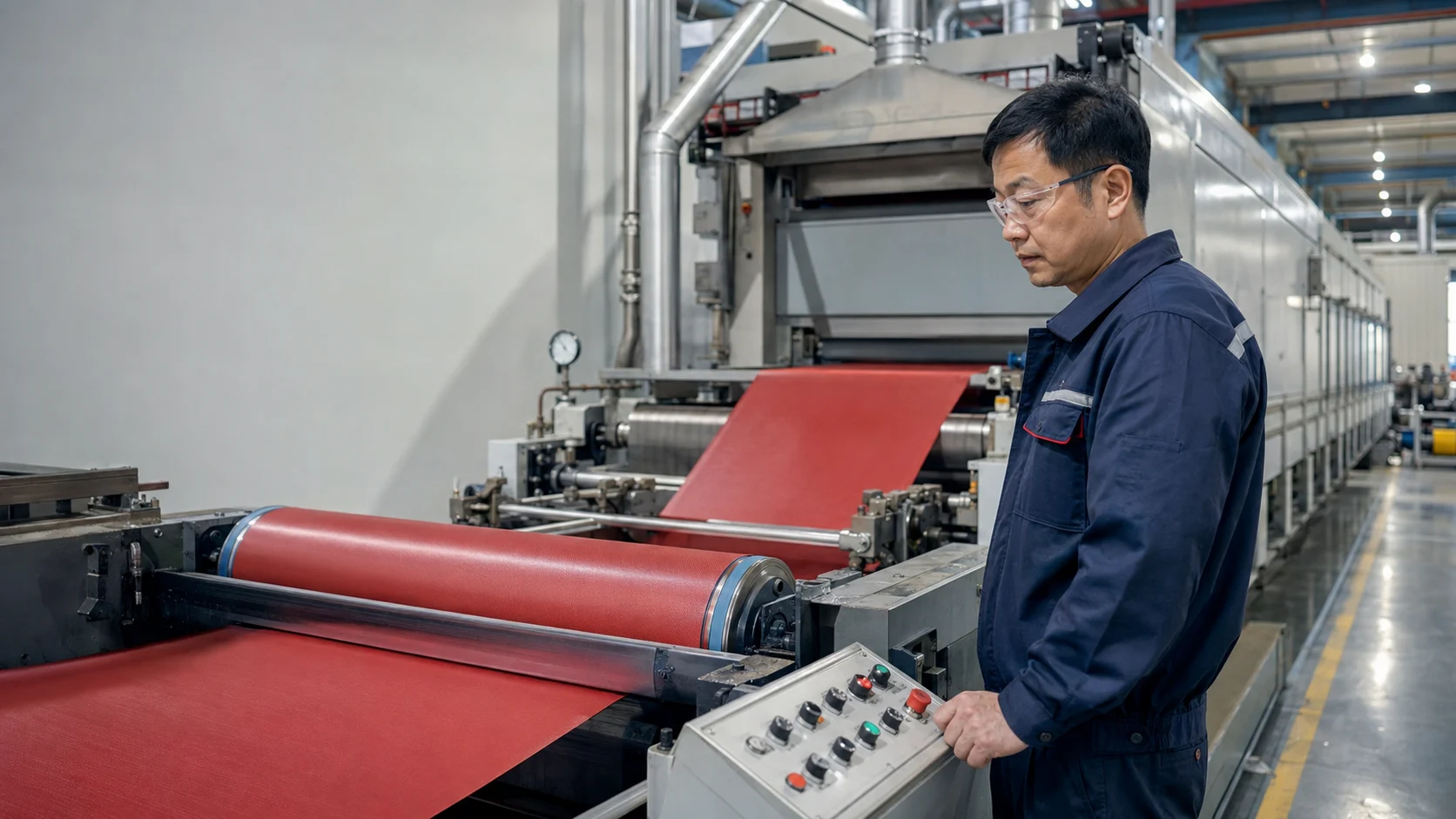
For continuous coating production, residence time is strongly related to:
- Oven length
- Line speed
- Number of heating zones
- Product temperature
- Oven temperature
- Coating thickness
- Product construction
A faster production line means less time in the heated zone. If line speed changes significantly, the curing process should be re-evaluated rather than assuming that the original curing result will remain unchanged.
For molded silicone products, the required cure time can also depend on the dimensions and geometry of the component.
Coating Thickness and Product Geometry
Thickness is particularly important because the entire silicone layer must reach the required processing conditions.
A thin silicone coating and a thick molded silicone component should not be expected to follow the same cure schedule.
For silicone-coated fiberglass fabric, additional considerations may include:
- Coating weight
- Number of coating passes
- Fabric construction
- Local thickness variation
- Overlaps
- Edges
- Reinforced areas
- Embedded components
- Fabric tension
A thicker or locally heavier silicone layer may require different processing conditions from a thinner coating.
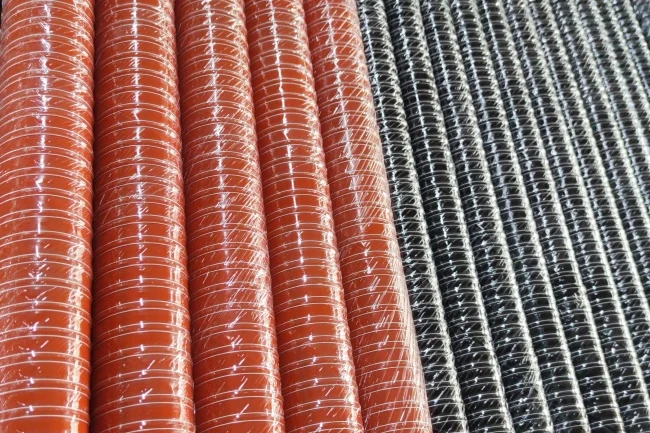
For reinforced silicone products, such as silicone air ducts, the fabric construction and reinforcement may also affect heat transfer during processing.
Airflow and Oven Uniformity
In industrial ovens, temperature uniformity is important for consistent processing.
If different areas of the oven operate at noticeably different temperatures, products positioned in different locations may receive different thermal histories.
Air circulation, oven loading, exhaust, and heating-zone control can therefore influence process consistency.
For processes that release volatile materials or curing by-products, appropriate ventilation is also important.
However, ventilation requirements depend on the curing chemistry. Manufacturers should follow the requirements of the silicone formulation and the curing system rather than applying a single ventilation rule to all silicone products.
Humidity in Moisture-Cured Systems
Humidity is particularly relevant to moisture-cured silicone systems.
Because these systems depend on moisture for curing, environmental conditions can influence cure speed. Low humidity can slow curing, while the behavior under high humidity depends on the specific formulation.
This consideration is much less relevant to conventional heat-cured high-consistency silicone rubber.
Therefore, humidity should be treated as a process variable when it is relevant to the specific curing chemistry, rather than as a universal requirement for all silicone rubber manufacturing.
What Happens When Silicone Rubber Is Under-Cured?
Under-curing means that the material has not developed the intended degree of crosslinking under the specified process conditions.
Possible signs include:
- Soft or tacky surface
- Inconsistent hardness
- Reduced mechanical strength
- Excessive permanent deformation
- Poor elastic recovery
- Poor adhesion
- Residual odor or volatile materials
- Inconsistent performance between areas or batches
However, these symptoms do not automatically prove that the material is under-cured.
For example, poor adhesion between silicone and fiberglass may also result from:
- Surface contamination
- Unsuitable surface treatment
- Incompatible materials
- Incorrect coating conditions
- Poor interface preparation
A proper investigation should therefore consider the complete manufacturing process.
For coated fabric, a surface may feel dry while the overall product still requires further evaluation. Physical testing and production records are more reliable than a simple touch test.
Can Silicone Rubber Be Over-Cured?
The term “over-cured” should be used carefully.
Unlike some simplified descriptions, silicone rubber does not necessarily become worse simply because it receives additional curing. The effect of additional heat depends on the formulation, curing chemistry, temperature, time, atmosphere, and total thermal history.
Once the required crosslinking level has been achieved, additional heat does not necessarily provide further useful improvement.
Excessive thermal exposure may, depending on the formulation and construction, contribute to:
- Changes in hardness
- Loss of elongation
- Discoloration
- Changes in surface appearance
- Thermal degradation of sensitive components
- Damage to pigments or reinforcement
- Unnecessary energy consumption
Therefore, it is more technically accurate to discuss excessive thermal exposure rather than claiming that all silicone rubber becomes “over-cured” in the same way.
The acceptable processing window should be established for the specific silicone formulation and finished product.
How Curing Conditions Influence Key Silicone Properties
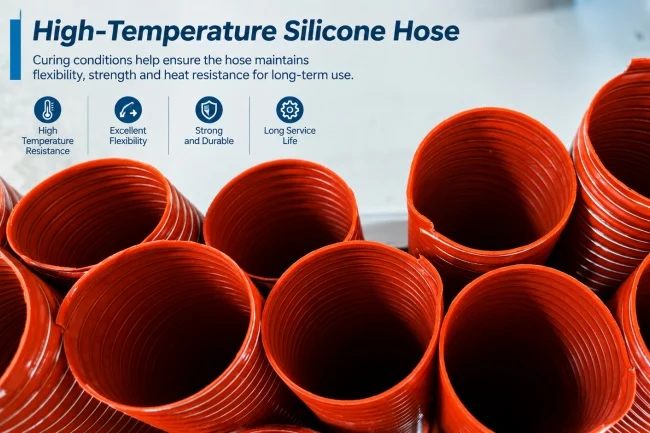
Curing can influence the development of several physical properties, but it should not be considered the only determining factor.
| Property | How curing may affect the property |
|---|---|
| Hardness | May change as crosslinking develops; inconsistent curing can result in variation |
| Tensile strength | May be affected by the degree of crosslinking and formulation |
| Elongation | Can change with crosslink density and thermal history |
| Tear resistance | Depends on curing as well as formulation and reinforcement |
| Compression set | Can be influenced by cure state and formulation |
| Elastic recovery | May be affected by crosslinking and material formulation |
| Adhesion | Can depend on cure state, surface preparation, primer, and interface chemistry |
| Volatile content | May depend on curing system and whether post-curing is used |
| Surface quality | Can be affected by curing conditions, coating process, contamination, and formulation |
The relationship is therefore not simply “more curing = better properties.”
For example, Dow’s published data for different silicone compounds shows that physical properties and curing conditions are linked to the specific compound and curing system.
When comparing suppliers, buyers should therefore make sure that samples are tested using comparable product constructions and test methods.
The Role of Post-Curing
Post-curing is a separate heating stage performed after the initial cure.
Depending on the silicone system and application, post-curing may be used to:
- Reduce residual volatile materials
- Remove certain curing by-products
- Stabilize selected physical properties
- Improve selected compression-set characteristics
- Prepare a product for specific application requirements
However, not every silicone product requires post-curing.
For example, Dow provides silicone compounds with specific curing and post-curing recommendations, while other silicone products may be designed for applications without a separate post-cure stage.
Post-curing should therefore be regarded as a formulation- and application-dependent process.
It should not be treated as a universal method for correcting manufacturing defects.
Post-curing cannot reliably compensate for problems such as:
- Incorrect material formulation
- Incorrect component ratio
- Severe catalyst inhibition
- Poor mixing
- Major contamination
- Serious coating-adhesion problems
- Incorrect substrate preparation
In particular, platinum-cured silicone requires careful control of contamination because certain substances can inhibit the catalyst. Simply applying additional heat is not necessarily a solution to catalyst inhibition.
Curing Silicone Coatings on Fiberglass Fabric
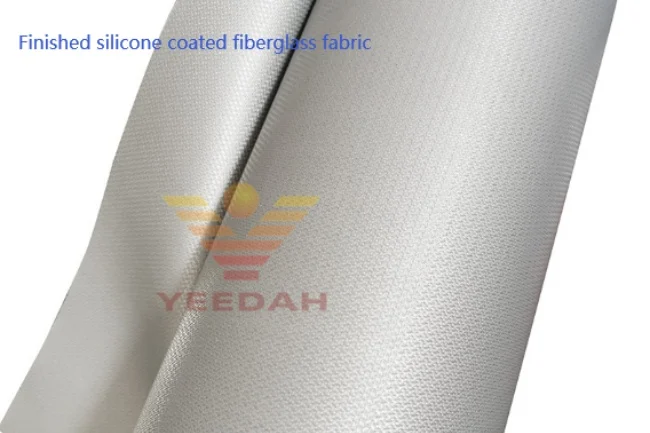
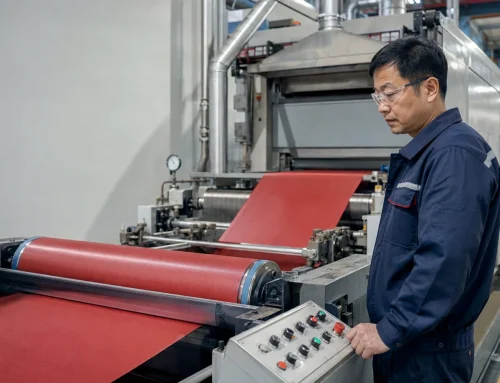
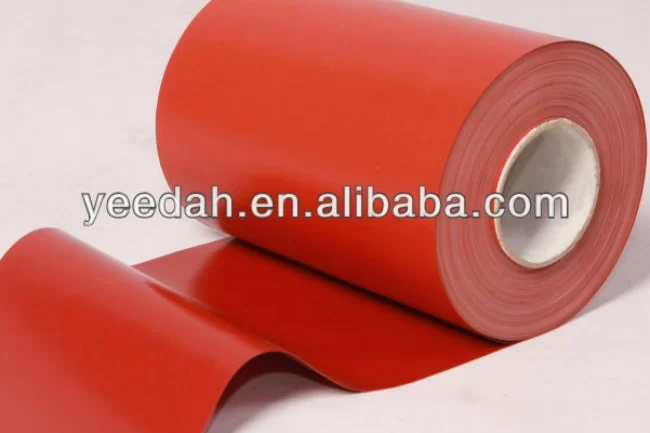
Silicone-coated fiberglass fabric is a composite material consisting of a fiberglass fabric substrate and a silicone coating.
Its performance depends on both the silicone coating and the interaction between the coating and the fiberglass substrate.
Important manufacturing variables may include:
- Fiberglass fabric construction
- Surface condition of the fabric
- Silicone formulation
- Silicone viscosity
- Coating weight
- Coating uniformity
- Number of coating passes
- Fabric tension
- Oven temperature
- Residence time
- Cooling conditions
- Winding conditions
For this type of product, the curing process should be considered together with the coating process.
If the coating is locally too thin, the finished fabric may not provide the intended surface coverage. If the coating is locally too thick, the area may have different heating and curing behavior.
Multiple coating passes also add to the product’s total thermal history. The process should therefore be controlled so that sufficient curing is achieved without unnecessarily exposing the fabric and coating to excessive heat.
Potential production defects can include:
- Pinholes
- Blisters
- Uneven coating
- Local tackiness
- Poor adhesion
- Surface marks
- Edge build-up
- Color variation
- Coating separation
Importantly, not every one of these defects is caused by curing. Coating formulation, fabric preparation, coating equipment, tension, contamination, and drying conditions can also contribute.
Why Cure Uniformity Matters in Converted Products
A coated fabric may look acceptable in roll form but experience different stresses after conversion.
For example, it may be:
- Cut into strips
- Folded
- Wrapped around reinforcement
- Clamped between components
- Sewn into an assembly
- Formed into a flexible connector
- Repeatedly bent during operation
These processes can reveal weaknesses that are not obvious during simple visual inspection.
For flexible ducting and fabric connectors, repeated movement can place additional stress on the coating and the interface between silicone and fiberglass.
This is why testing the finished construction or a representative sample can be more informative than relying only on the generic properties of the raw silicone compound.
Common Curing Problems and Factors to Investigate
The following table can be used as a troubleshooting guide. The listed causes are possible factors to investigate rather than automatic diagnoses.
| Observed problem | Factors to investigate |
|---|---|
| Tacky surface | Insufficient cure, incorrect processing conditions, incorrect curing-agent/catalyst system, or catalyst inhibition |
| Uneven hardness | Temperature variation, coating-thickness variation, poor mixing, or inconsistent curing conditions |
| Bubbles or blisters | Trapped air, moisture, volatile release, coating process, or excessively rapid surface curing |
| Poor fabric adhesion | Surface contamination, substrate preparation, formulation compatibility, interface treatment, or insufficient cure |
| Discoloration | Excessive thermal exposure, pigment stability, contamination, or formulation effects |
| Cracking during flexing | Material formulation, thermal aging, excessive thermal exposure, poor adhesion, or mechanical overload |
| Strong residual odor | Residual volatile materials, curing by-products, incomplete processing, or insufficient post-curing where applicable |
| Batch-to-batch variation | Changes in raw materials, mixing, coating weight, oven conditions, line speed, or substrate |
A common troubleshooting mistake is to increase the curing temperature immediately after a defect appears.
For example, if platinum-cured silicone is affected by catalyst inhibition, simply increasing the oven temperature may not solve the underlying contamination problem.
A more systematic investigation should consider:
- Raw-material batch
- Material storage condition
- Mixing ratio
- Mixing method
- Catalyst or curing-agent addition
- Potential contamination
- Coating thickness
- Actual product temperature
- Residence time
- Oven temperature uniformity
- Production-line speed
- Physical test results
How Manufacturers Verify Cure Quality
Visual inspection is useful, but it is not sufficient for every industrial application.
Depending on the product, manufacturers may use several types of verification.
Temperature and Production Records
For continuous production, manufacturers can monitor:
- Oven temperature
- Production-line speed
- Residence time
- Heating-zone conditions
For critical applications, temperature profiling can provide additional information about the actual thermal history of the product.
Shore Hardness Testing
Hardness testing can help identify differences between batches or areas of a product.
However, hardness alone does not prove that every aspect of the material has reached the required performance.
Tensile Strength and Elongation Testing
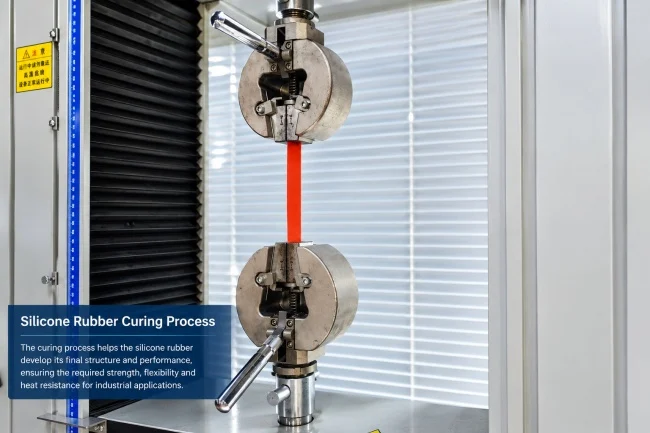
Tensile testing measures strength and elongation under a defined test method.
Results can depend on:
- Specimen geometry
- Thickness
- Test direction
- Conditioning
- Product construction
For silicone-coated fiberglass fabric, the result may represent the behavior of the composite rather than the silicone coating alone.
Tear and Adhesion Testing
Tear resistance can be important for materials that will be:
- Cut
- Sewn
- Punctured
- Clamped
- Repeatedly flexed
Adhesion testing can help evaluate the bond between silicone and fiberglass.
This is particularly relevant to coated-fabric applications because good silicone properties alone do not guarantee good adhesion to the reinforcing fabric.
Compression-Set Testing
Compression set measures the ability of a material to recover after being compressed under defined conditions.
It can be relevant to:
- Seals
- Gaskets
- Flexible connectors
- Clamped fabric components
- Applications requiring elastic recovery
Heat-Aging and Application Testing
Heat-aging tests can help evaluate changes in properties after thermal exposure.
However, laboratory heat aging should not automatically be treated as a direct prediction of field service life. Actual application conditions may involve bending, vibration, pressure, chemicals, moisture, or other stresses.
For silicone hoses and flexible ducts, application-specific testing can therefore provide useful additional information.
What Industrial Buyers Should Ask Their Silicone Product Supplier
Industrial buyers do not necessarily need to know every internal production parameter. However, several questions can help establish whether a supplier has appropriate process control.
Useful questions include:
- What curing system is used?
- Is the silicone peroxide-cured, platinum-cured, or another system?
- Does the material require post-curing?
- How are curing temperature and production speed controlled?
- How is coating thickness or coating weight monitored?
- How is adhesion to the fiberglass substrate evaluated?
- Are the reported properties based on the actual finished construction?
- Are test samples representative of production material?
- What tolerances apply to thickness, weight, hardness, and other key properties?
- Has the material been evaluated after relevant heat exposure?
- Can a production-representative sample be tested for the intended application?
- Are there materials or processes that could interfere with curing?
One important point is that raw silicone compound data should not automatically be treated as finished-product data.
A silicone compound datasheet may provide tensile strength, hardness, elongation, and curing conditions for a particular test specimen. These values do not necessarily represent a finished silicone-coated fiberglass fabric, reinforced hose, or fabricated duct connector.
The closer the test construction is to the actual purchased product, the more useful the results are for application evaluation.
How to Select an Appropriate Cure Specification for Your Application
The appropriate curing process should be considered together with the actual requirements of the finished product.
Define the Temperature Conditions
Specify:
- Normal continuous operating temperature
- Short-term or peak temperature
- Duration of high-temperature exposure
A short temperature peak is different from continuous exposure over a long service period.
The heating method should also be considered. Heating from one side can produce different temperature profiles from heating the complete assembly.
Identify the Mechanical Requirements
Consider whether the product will experience:
- Repeated flexing
- Vibration
- Compression
- Clamping
- Internal pressure
- Abrasion
- Folding
- Tensile loading
- Frequent installation and removal
A static insulation material and a flexible duct exposed to repeated movement do not necessarily require the same mechanical performance.
Review the Operating Environment
The application may involve:
- Oils
- Fuels
- Cleaning chemicals
- Moisture
- Steam
- Outdoor weather
- Ozone
- Dust
- Process gases
- Condensation
Temperature resistance should not be used as a substitute for chemical compatibility evaluation.
The actual medium, concentration, temperature, and exposure duration should be considered separately.
Consider Downstream Fabrication
Cutting, sewing, bonding, wrapping, clamping, and forming can affect the final product.
For example, a coated fabric used for an insulation jacket may require good tear resistance around sewn areas. A flexible connector may require stable adhesion after repeated movement.
The finished construction should therefore be considered during material selection.
Validate the Finished Construction
For customized industrial applications, representative sample testing is often the most practical way to reduce uncertainty.
Where appropriate, testing should use:
- The intended material thickness
- The actual reinforcement
- Representative joints or seams
- The expected operating temperature
- Realistic bending or movement
- Relevant process media
A curing condition should not simply be copied from an unrelated silicone grade. Even silicone materials with similar appearance can have different curing systems and processing requirements.
Frequently Asked Questions About Silicone Rubber Curing
Does a Higher Curing Temperature Always Produce Better Silicone Rubber?
No.
A higher temperature can accelerate curing within the recommended processing range, but excessive thermal exposure may cause unwanted changes depending on the formulation and product construction.
The appropriate temperature must be determined from the specific silicone system and manufacturing process.
How Can You Tell Whether Silicone Rubber Is Fully Cured?
Surface appearance alone is not enough.
Depending on the application, manufacturers may combine:
- Hardness testing
- Tensile and elongation testing
- Adhesion testing
- Compression-set testing
- Temperature records
- Production-speed records
- Volatile or extractable testing where relevant
- Application-specific testing
The acceptance criteria should be established for the specific finished product.
Does Post-Curing Make Silicone More Heat Resistant?
Post-curing can improve selected properties or reduce residual volatile materials for some silicone systems.
However, post-curing does not automatically transform a general-purpose silicone formulation into a different high-temperature material.
The final temperature capability still depends on the silicone formulation, reinforcement, construction, and application conditions.
Can Improper Curing Cause Silicone Hose to Crack?
Improper curing can contribute to poor mechanical performance and may be one factor in cracking.
However, cracking in a silicone hose can also result from:
- Operating above the recommended temperature
- Excessive bending
- Incorrect bend radius
- Chemical exposure
- Abrasion
- Incorrect installation
- Thermal aging
- Unsuitable hose construction
- Poor reinforcement or adhesion
A proper failure analysis should therefore consider both manufacturing and service conditions.
Do Thick Silicone Coatings Require Longer Curing Times?
Not necessarily in a simple one-to-one relationship, but thicker sections generally require more attention to heat transfer and temperature uniformity.
The actual curing requirement depends on:
- Silicone formulation
- Cure chemistry
- Coating thickness
- Product construction
- Oven conditions
- Starting temperature
- Residence time
Manufacturers should validate the actual product rather than applying a universal time rule.
Can Platinum-Cured Silicone Fail to Cure?
Yes.
Platinum-catalyzed silicone can be inhibited by certain contaminants, including some sulfur-containing compounds, amines, tin-containing materials, and other substances identified by the silicone manufacturer.
For this reason, clean equipment, compatible materials, and appropriate process separation are important.
Conclusion
Curing is an important part of silicone rubber processing, but it should not be viewed as an isolated step or as the only factor determining final product performance.
Temperature, time, cure chemistry, product thickness, coating weight, mixing, substrate construction, and production conditions need to be considered together.
Insufficient or inconsistent curing can contribute to tackiness, variation in hardness, poor mechanical performance, or adhesion problems. On the other hand, excessive thermal exposure can also affect the silicone, pigments, reinforcement, or substrate depending on the formulation and construction.
For industrial buyers, the key point is simple:
Do not evaluate a silicone product only from its nominal silicone formulation or temperature rating.
Ask how the finished product is processed, what curing system is used, how process consistency is controlled, and how the actual finished construction is tested.
For critical or customized applications, testing a representative sample under realistic operating conditions is often more useful than relying only on generic raw-material data.
Call to Action
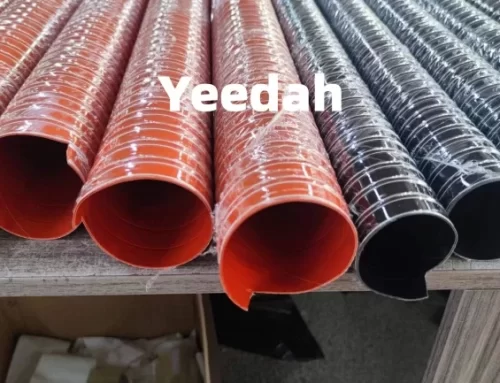
At YEEDAH, we manufacture silicone-coated fiberglass fabric, silicone air ducts, and flexible duct connector materials for wholesale industrial applications.
We support customized dimensions, coating constructions, colors, and fabricated products for importers, distributors, equipment manufacturers, insulation-product manufacturers, and other industrial buyers.
If you are selecting a silicone material for a high-temperature, flexible, or reinforced application, please send us the operating temperature, dimensions, movement requirements, contact media, and expected quantity at sales@yeedah.com.
Our team can review the application requirements and discuss suitable material and customization options.