Table of Contents
When buyers order industrial flexible air ducting, they often begin with two basic dimensions: diameter and length. However, two flexible ducts manufactured to the same nominal size may not measure exactly the same at every position.
This does not necessarily indicate a quality problem.
A coated-fabric air duct is flexible rather than rigid. Its finished dimensions can be influenced by the coated fabric, spiral steel wire, external fiberglass cord, material overlap, production tooling, cuff construction, packaging and measurement method.
For procurement managers and engineers, the practical question is not simply:
“What is the nominal duct diameter?”
The more important question is:
Will the finished flexible duct fit the actual pipe connection and operate correctly under the specified conditions?
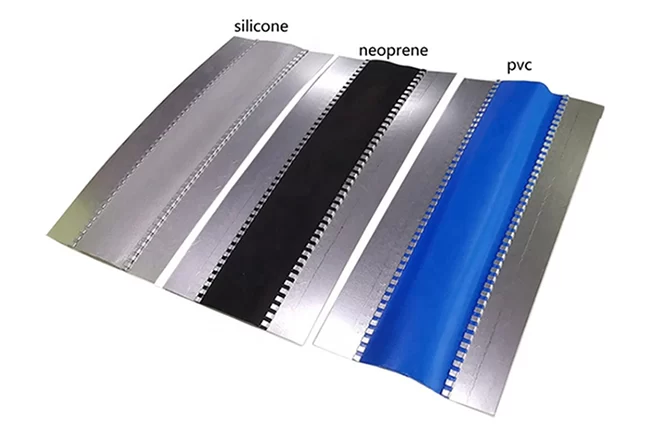
In this guide, we explain the dimensions that should be controlled when purchasing customized industrial flexible air ducting, with particular attention to silicone air duct and neoprene air duct constructions.
What Is Dimensional Tolerance?
Dimensional tolerance is the permitted variation between a specified nominal dimension and the actual measured dimension of the finished product.
For example, silicone ducting may be ordered with a nominal internal diameter of 200 mm. The actual diameter should fall within an agreed acceptable range rather than being expected to measure exactly 200 mm at every position.
Important dimensions may include:
- Internal diameter, or ID
- External diameter, or OD
- Overall length
- Soft-cuff length
- Soft-cuff thickness
- Spiral-wire pitch
- Distance from the duct edge to the first reinforcement wire
The appropriate tolerance depends on the duct diameter, material, number of layers, reinforcement, production method, connection requirements and measurement condition.
There is no single tolerance value that should automatically be applied to every industrial flexible duct.
Why Flexible Air Duct Tolerance Matters
Dimensional tolerance directly affects installation and connection fit.
If the duct ID is too small, the cuff may not fit over the pipe. Forcing it into position can damage the coating, fiberglass fabric, seam or cuff.
If the ID is too large, the clamp may not compress the cuff evenly. Excess material can fold under the clamp and potentially cause:
- Air leakage
- Uneven sealing
- Duct movement
- Local abrasion
- Premature cuff damage
- Accidental disconnection
Dimensional control is particularly important when:
- The duct must fit over a fixed pipe OD.
- Installation clearance is limited.
- A specific clamp must be used.
- Multiple ducts must be interchangeable.
- The equipment is manufactured repeatedly.
- The connection must minimize leakage.
- The duct is exposed to heat or temperature cycling.
- The installation involves vibration or movement.
A purchase order stating only “200 mm flexible duct” is incomplete. It should identify whether 200 mm refers to the ID or OD and state the acceptable tolerance.
Construction of Silicone Air Ducting
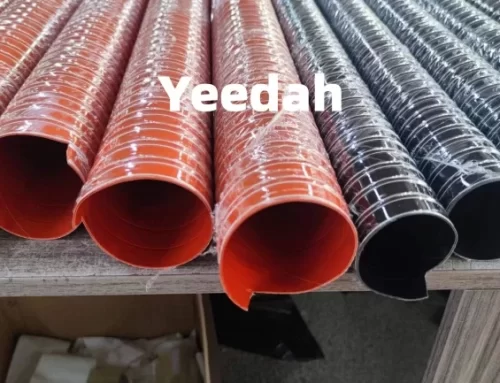
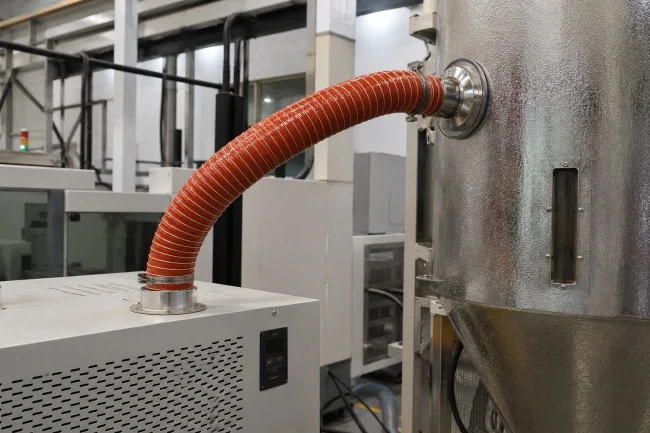
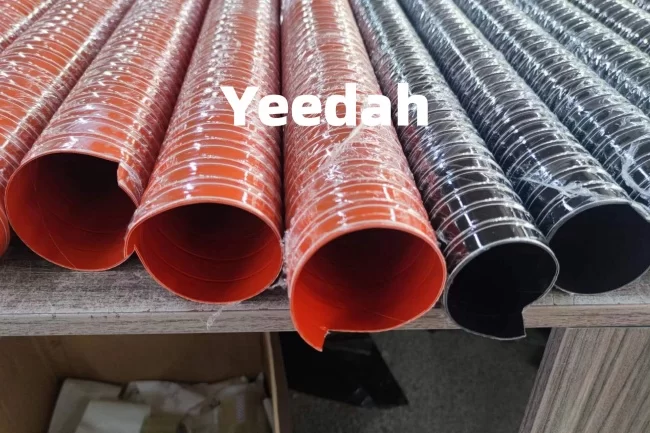
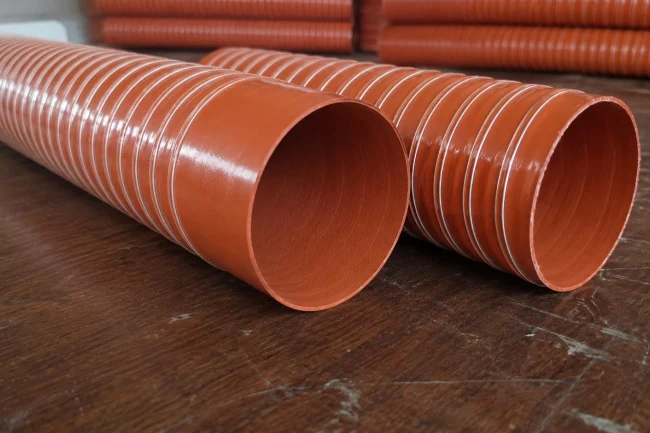
A typical YEEDAH silicone air duct is manufactured from:
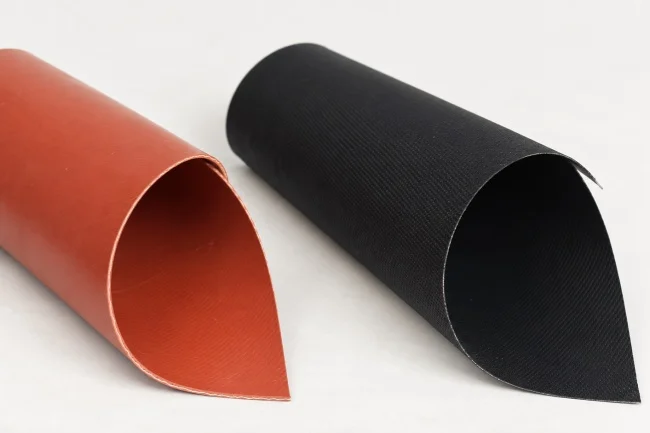
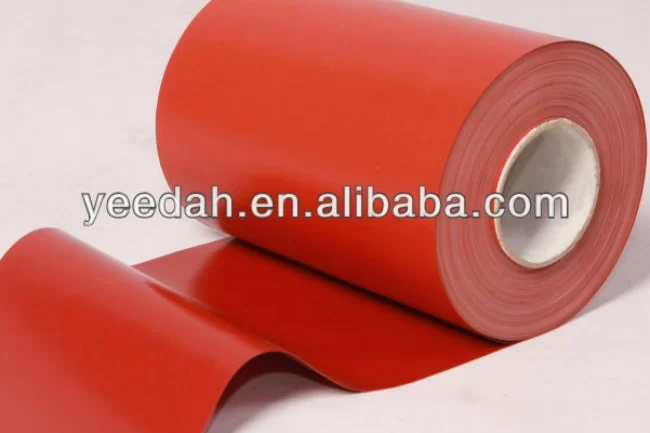
- Silicone-coated fiberglass fabric
- Spiral spring steel wire
- External fiberglass cord
- Spiral material overlap or seam
- Optional unsupported soft cuffs
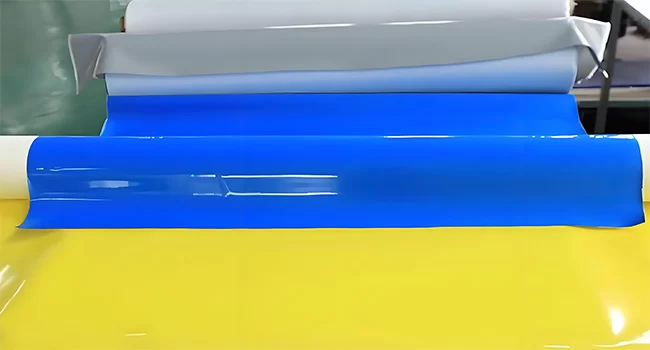
The fiberglass fabric provides textile reinforcement, while the silicone rubber coating provides flexibility, surface protection and heat resistance.
The spiral steel wire helps support the circular shape of the silicone ducting. The external fiberglass cord follows the spiral reinforcement and helps secure the coated fabric around the wire.
Silicone air ducting may be produced in single-layer or double-layer construction.
A single-layer silicone air duct uses one principal coated-fabric layer. A double-layer duct contains an additional coated-fabric layer and is therefore different in thickness, weight and flexibility.
Because silicone ducting is a flexible fabricated product, minor variations may occur in:
- Roundness
- Spiral pitch
- Surface profile
- Seam position
- Open-end shape
These normal characteristics should be distinguished from dimensional deviations that prevent installation or affect performance.
Construction of Neoprene Air Ducting
A typical neoprene air duct is manufactured from:
- Neoprene-coated fiberglass fabric
- Spiral spring steel wire
- External fiberglass cord
- Spiral material overlap or seam
- Optional unsupported soft cuffs
The coating material is neoprene rubber rather than silicone rubber.
Like silicone ducting, neoprene ducting can be manufactured in single-layer or double-layer construction.
Neoprene air ducting is generally used for industrial ventilation, machinery air transfer and other compatible moderate-temperature air-handling applications.
The actual suitability of the finished duct should be evaluated according to:
- Continuous operating temperature
- Peak temperature
- Duration of peak-temperature exposure
- Pressure or vacuum
- Transported medium
- Required bend radius
- Installation movement
- Connection method
A material name alone does not establish the complete performance rating of a finished duct.
Silicone Ducting Versus Neoprene Ducting
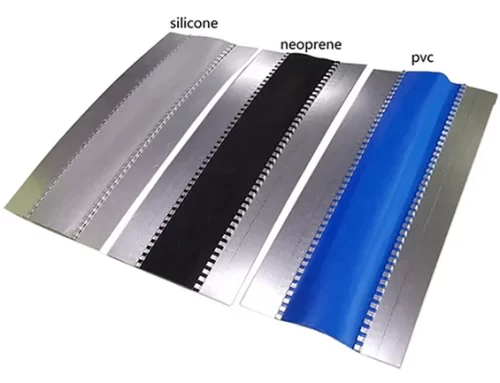
The two duct types use a similar fabricated structure, but their coating materials and suitable temperature ranges differ.
| Feature | Silicone ducting | Neoprene ducting |
|---|---|---|
| Coating | Silicone rubber | Neoprene rubber |
| Base material | Fiberglass fabric | Fiberglass fabric |
| Shape reinforcement | Spiral steel wire | Spiral steel wire |
| External reinforcement | Fiberglass cord | Fiberglass cord |
| Construction options | Single or double layer | Single or double layer |
| General positioning | Higher-temperature air handling | Moderate-temperature air handling |
For YEEDAH products, silicone air ducting is typically rated from approximately −70°C to +260°C, while neoprene air ducting is typically used from approximately −20°C to +110°C.
These figures should be treated as general product ranges. Final suitability depends on the complete duct construction and actual operating conditions.
Coated-Fabric Air Ducting Is Not a Pressure Hose
A coated-fabric air duct has a relatively thin, flexible wall supported by spiral reinforcement.
This construction is fundamentally different from an extruded solid-rubber hose or a purpose-designed pressure hose.
Silicone air ducting and neoprene air ducting are mainly intended for ventilation, air transfer and compatible low-pressure applications. They should not automatically be selected for significant positive pressure simply because the coating material has good temperature resistance.
If the application involves positive pressure or vacuum, the buyer should provide the exact operating value for technical evaluation.
Temperature resistance alone does not confirm pressure capability.
Internal Diameter
Silicone air duct and neoprene air duct products are generally specified according to nominal internal diameter, but this should be confirmed in the quotation and drawing.
The finished ID can be influenced by:
- Coated-fabric thickness
- Single- or double-layer construction
- Spiral steel wire
- Material overlap
- Internal seam profile
- Cuff construction
- Temporary ovality
- Measurement pressure
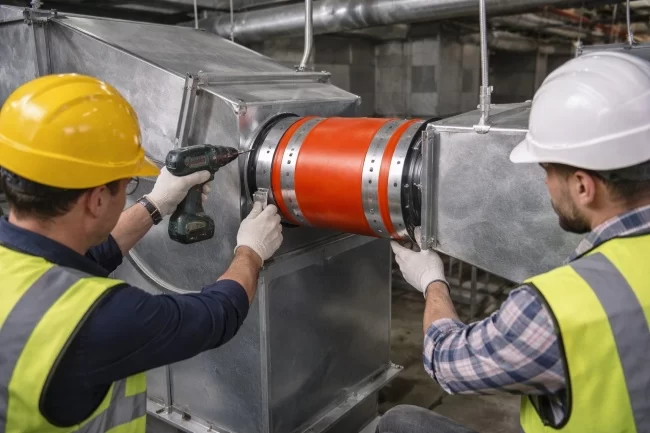
When the duct must fit over a pipe, the buyer should provide the pipe’s actual measured OD.
Nominal pipe size is not always the same as actual outside diameter. Paint, surface treatment or another covering may also affect the effective connection size.
Nominal Duct ID Versus Actual Pipe OD
Confusing nominal pipe size with actual pipe OD is a common cause of installation problems.
If a customer requests a silicone air duct for a “200 mm pipe,” the manufacturer still needs to know:
- Is 200 mm the actual measured OD?
- Does the pipe have a coating?
- Must the duct slide directly over the pipe?
- How much insertion depth is available?
- Which clamp will be used?
- What sealing level is required?
A duct with an ID exactly equal to the pipe OD may be difficult to install. However, choosing a much larger duct can create folds when the cuff is clamped.
There is no universal installation clearance suitable for every size and construction.
The appropriate fit depends on:
- Cuff flexibility
- Cuff thickness
- Number of layers
- Seam construction
- Clamp adjustment range
- Installation access
- Required sealing performance
For a critical connection, we recommend providing the actual pipe OD, a photograph, a technical drawing and the proposed clamp details.
External Diameter
The external diameter can be important when the duct must pass through a machine opening, protective guard or restricted installation area.
The exterior of coated-fabric ducting is not completely smooth. The spiral reinforcement and fiberglass cord create local raised areas.
If installation space is limited, the buyer should specify the maximum allowable external dimension rather than relying only on the nominal ID.
Changing from a single-layer duct to a double-layer duct may also change the finished OD, even when the nominal ID remains the same.
Overall Duct Length
The measured length of flexible air ducting can vary depending on whether the product is:
- Compressed
- Relaxed
- Extended
- Bent
- Twisted
- Installed under tension
A complete length requirement should specify:
- Overall length
- Acceptable length tolerance
- Whether soft cuffs are included
- Whether the duct is measured straight
- Whether it is relaxed or extended
- Measurement reference points
Unless otherwise agreed, the duct should normally be placed straight and relaxed on a flat surface during measurement.
A duct compressed during packaging should be allowed to return to its natural condition before final inspection.
The duct should not be pulled excessively simply to reach the specified length.
Flexible Ducting With a Soft Cuff
Some silicone air duct and neoprene air duct products have an unsupported soft cuff at one or both ends.
The soft cuff is the section between the end of the spiral reinforcement and the open edge of the duct. It normally does not contain steel wire.
A soft cuff can provide:
- A flexible connection area
- Space for pipe insertion
- A smoother clamping surface
- Limited installation adjustment
Not every duct requires a soft cuff. Some constructions have spiral reinforcement extending close to the open end.
The appropriate design depends on the actual connection method.
Soft-Cuff Length and Tolerance
Soft-cuff length should be measured from an agreed reinforcement reference point to the open edge of the duct.
The customer drawing should specify:
- Cuff length at each end
- Acceptable cuff-length tolerance
- Measurement starting point
- Distance from the last wire to the duct edge
- Required clamping area
If the cuff is too short, the clamp may overlap the transition between the soft cuff and reinforced duct body.
If the cuff is excessively long, it may fold or lack sufficient support.
For customized silicone ducting or neoprene ducting, the cuff dimensions should therefore be confirmed on an approved drawing.
Soft-Cuff Thickness and Tolerance
Soft-cuff thickness can affect:
- Flexibility
- Installation force
- Clamp selection
- Compression under the clamp
- Connection fit
- Sealing behavior
The thickness depends on:
- Coated-fabric specification
- Number of layers
- Material overlap
- Additional cuff reinforcement
- Measurement position
A single-layer cuff is normally thinner than a double-layer cuff.
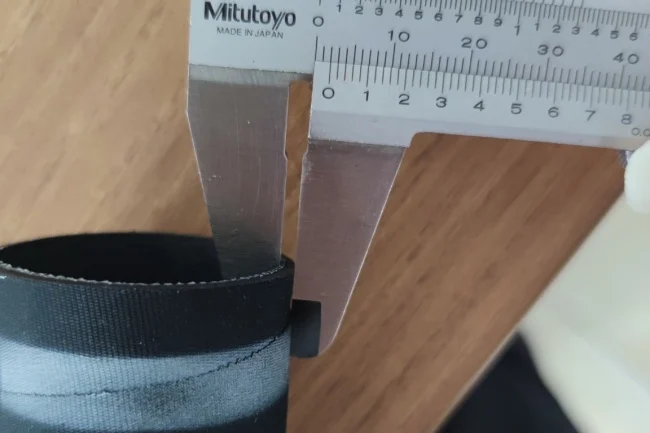
When using a caliper, only one wall of the cuff should be measured. One measuring jaw should contact the inside surface and the other should contact the outside surface of the same wall.
The caliper should not span the entire duct diameter or measure two opposite walls together.
The drawing should state:
- Required cuff thickness
- Thickness tolerance
- Measurement location
- Number of material layers
- Whether seam areas should be excluded
Single-Layer Versus Double-Layer Ducting
Single-layer and double-layer coated-fabric air ducts should not be treated as dimensionally identical.
| Feature | Single-layer construction | Double-layer construction |
|---|---|---|
| Principal fabric layers | One | Two |
| Finished wall | Thinner | Thicker |
| Weight | Lower | Higher |
| Flexibility | Generally greater | May be lower |
| External profile | Generally smaller | Generally larger |
| Cuff thickness | Thinner | Thicker |
Changing the number of layers may affect:
- Finished ID
- Maximum OD
- Cuff thickness
- Clamp range
- Installation clearance
- Bend behavior
If the duct construction changes, the mating pipe and clamp dimensions should be reviewed again.
Spiral-Wire Pitch
Spiral-wire pitch is the distance between adjacent turns of the reinforcement wire.
It can influence:
- Flexibility
- Bend radius
- Shape stability
- Resistance to collapse
- Compression behavior
- Weight
Wire pitch should be selected according to the actual duct diameter and application.
A smaller pitch provides more frequent support but can increase weight and reduce compressibility. A larger pitch may increase flexibility but provide less support between wire turns.
If the customer requires a specific pitch or pitch tolerance, it should be shown on the drawing.
How to Measure Flexible Air Ducting
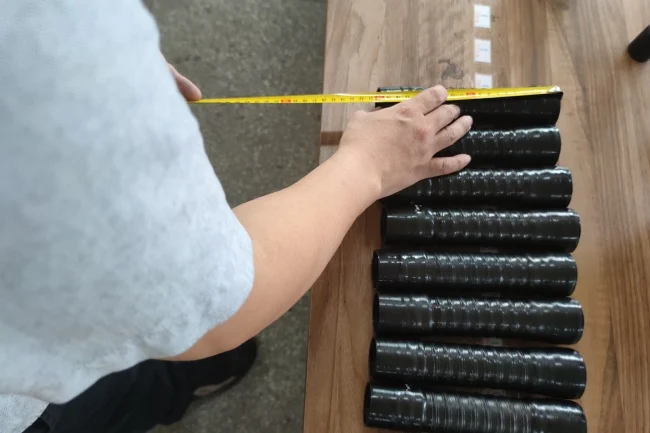
A dimensional tolerance is meaningful only when the measurement method is consistent.
Before measurement:
- Remove the duct from its packaging.
- Allow it to return to its natural shape.
- Place it on a flat surface.
- Keep it straight and relaxed.
- Avoid stretching, compressing or twisting it.
For diameter inspection:
- Measure at more than one position.
- Do not crush the duct with the measuring tool.
- Avoid relying on a measurement taken directly over a seam.
- Measure in more than one direction if the duct is oval.
- Record whether the measurement applies to the cuff or reinforced body.
For length inspection:
- Define the starting and ending points.
- State whether cuffs are included.
- Measure the duct straight and relaxed.
- Do not pull it excessively.
For cuff inspection:
- Use the agreed reinforcement point as the length reference.
- Measure each end separately.
- Measure only one wall when checking cuff thickness.
- Avoid excessive caliper pressure.
What Causes Dimensional Variation?
Several factors can affect the finished dimensions of coated-fabric air ducting.
Coated-fabric variation
Silicone-coated and neoprene-coated fiberglass fabrics have normal variations in thickness, coating weight and flexibility.
Production tooling
The dimensions and condition of the forming tool can influence the finished duct diameter.
Wire diameter and tension
The spiral-wire diameter, forming tension and pitch affect the shape and dimensional stability of the duct.
Material overlaps
The spiral material overlap may be locally thicker and slightly stiffer than the normal duct wall.
Manual fabrication
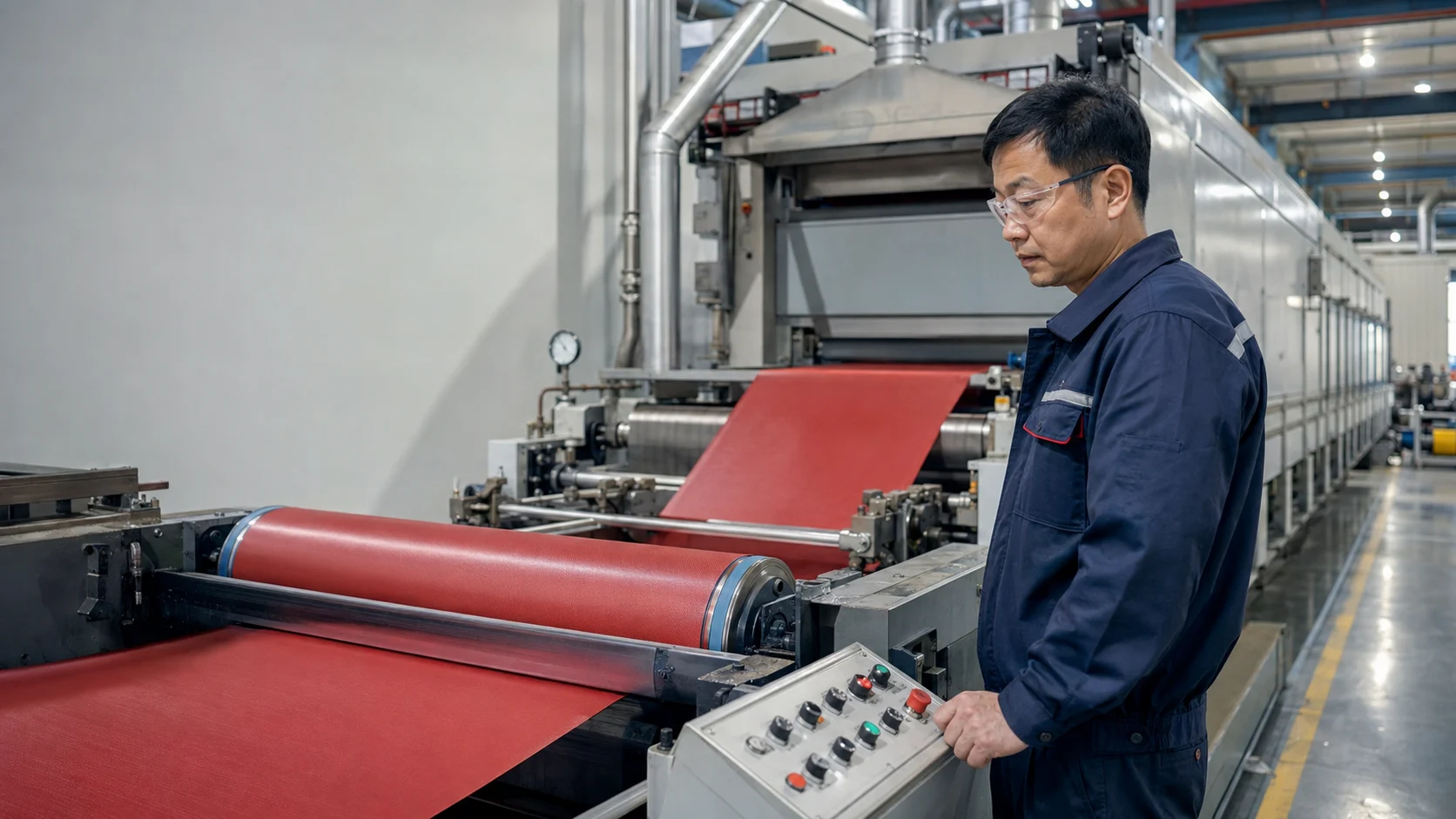
Customized coated-fabric ducts involve skilled manual production. Special cuffs, non-standard diameters and double-layer constructions can introduce reasonable dimensional variation.
Packaging and transportation
Flexible ducting can become temporarily compressed or oval during packing and shipment. The product should be allowed to relax before inspection.
Temperature, Pressure and Movement
Dimensional requirements should be reviewed together with the operating conditions.
Temperature
The buyer should provide:
- Continuous operating temperature
- Peak temperature
- Duration of peak exposure
- Ambient temperature
- Temperature of the transported medium
The temperature of the transported air may not be identical to the actual temperature at the duct wall.
Pressure and vacuum
Internal pressure may cause a lightweight flexible duct to expand or elongate. Vacuum may cause it to contract or collapse if the reinforcement is unsuitable.
The exact positive pressure or vacuum level should therefore be provided for technical review.
Silicone air ducting and neoprene air ducting should not automatically be treated as pressure hoses.
Movement
The installation may involve:
- Bending
- Vibration
- Axial compression
- Axial extension
- Limited lateral movement
The duct should be long enough to accommodate the expected movement without being overstretched or sharply bent.
Excessive length can also cause sagging, abrasion or airflow restriction.
How to Specify Duct Dimensions on a Drawing
A useful technical drawing should include:
- Product material
- Single- or double-layer construction
- Nominal internal diameter
- ID tolerance
- Maximum OD, if critical
- Overall length
- Length tolerance
- Soft-cuff length at each end
- Cuff-length tolerance
- Cuff thickness and tolerance
- Effective clamping area
- Distance to the first wire
- Spiral pitch, if critical
- Measurement reference points
- Actual mating pipe OD
- Clamp information
For non-standard products, the drawing should be reviewed before the purchase order is finalized.
If the connection is critical, a pre-production sample should be tested with the actual pipe and clamp.
Avoid Applying Unrelated Hose Standards
Different hose categories use different materials, manufacturing processes and applicable standards.
A standard intended for an extruded rubber hose, plastic hose or metallic hose should not automatically be applied to coated-fabric silicone ducting or neoprene ducting.
For customized coated-fabric air ducts, acceptance criteria may instead be based on:
- An approved drawing
- An agreed material specification
- A reference sample
- The manufacturer’s achievable production tolerance
- A mutually confirmed inspection method
If a customer requires compliance with a specific standard, its applicability should be reviewed before quotation and production.
Common Specification Mistakes
Common mistakes include:
- Providing only the nominal pipe size
- Confusing duct ID and OD
- Requesting an exact size without tolerance
- Omitting cuff dimensions
- Failing to specify the measurement condition
- Measuring the duct while compressed
- Measuring two cuff walls together
- Assuming a clamp can correct any oversized cuff
- Changing the layer count without reviewing the fit
- Selecting a duct based only on temperature
- Treating coated-fabric air ducting as a pressure hose
Avoiding these mistakes can reduce installation problems and disagreements during inspection.
Information Buyers Should Provide
For a customized inquiry, we recommend providing:
- Silicone or neoprene coating
- Single- or double-layer construction
- Required ID
- Acceptable ID tolerance
- Actual mating pipe OD
- Maximum allowable OD
- Overall length and tolerance
- Soft-cuff length at each end
- Cuff-length tolerance
- Cuff thickness and tolerance
- Clamp or connection method
- Continuous operating temperature
- Peak temperature and duration
- Positive pressure or vacuum
- Transported medium
- Required bend radius
- Expected movement
- Required quantity
- Technical drawing
- Photographs of the existing connection
This information allows us to review dimensional feasibility and application suitability together.
Evaluating a Pre-Production Sample
A customized sample should be evaluated with the actual pipe, clamp and equipment whenever possible.
The buyer should confirm:
- The cuff fits over the pipe.
- Installation does not require excessive force.
- The cuff provides sufficient clamping length.
- The clamp compresses the cuff evenly.
- The duct does not develop severe folds.
- The installed length is suitable.
- The duct achieves the required bend.
- The duct does not kink or collapse under the intended conditions.
The approved sample should be supported by a drawing and measurement record.
It should also be clear whether sample approval covers appearance, dimensions, construction, performance or all of these items.
Conclusion
Dimensional tolerance for industrial flexible air ducting is part of the overall connection design rather than only a final inspection issue.
For silicone air duct, silicone ducting, neoprene air duct and neoprene ducting, the most important factors may include:
- Internal diameter
- Actual pipe OD
- Overall length
- Soft-cuff length
- Soft-cuff thickness
- Number of fabric layers
- Spiral reinforcement
- Clamp selection
- Measurement method
- Operating conditions
Because these products are manufactured from coated fiberglass fabric, spring steel wire and external fiberglass cord, they should not be evaluated in the same way as rigid components or unrelated hose constructions.
The most reliable approach is to identify the functionally critical dimensions, agree on realistic tolerances, define the measurement method and test a sample when necessary.
Call to Action
We are YEEDAH, a B2B manufacturer of industrial coated fabrics and flexible ducting in China.
We manufacture customizable silicone air ducting and neoprene-coated fiberglass ducting for industrial equipment manufacturers, importers, wholesalers and distributors.
If you need help reviewing the duct diameter, cuff design, connection method or dimensional tolerance, please send your technical drawing, actual pipe OD, operating temperature, pressure or vacuum, transported medium and required quantity to sales@yeedah.com