Table of Contents
When purchasing coated industrial fabrics, many buyers focus on coating materials, thickness, and temperature resistance. However, the construction of the underlying fiberglass fabric is another important factor that influences the mechanical performance of the finished material.
Fiberglass fabric is widely used as a reinforcement substrate in silicone-coated fiberglass fabric, neoprene-coated fiberglass fabric, industrial flexible connectors, insulation materials, and other technical textile products.
Different weave patterns create different arrangements of warp and weft yarns. These structural differences influence yarn crimp, yarn movement, fabric stability, and the way mechanical loads are distributed.
But does a tighter weave always mean a stronger fabric? Is satin weave stronger than plain weave? And how much does the coating material affect the final performance?
In this article, we examine four common fiberglass weave patterns, explain their effects on mechanical properties, and discuss how industrial buyers can select suitable coated fiberglass fabrics for their applications. We also refer to published research and internationally recognized testing standards to provide a more reliable technical explanation.
1. What Is Fiberglass Fabric Weave Construction?
Fiberglass fabric is manufactured by interlacing fiberglass yarns to create a woven textile structure. This structure provides reinforcement and serves as the base material for many coated industrial fabrics.
To understand how weave patterns influence strength, we first need to understand the basic construction of woven fiberglass fabric.
Warp and Weft: The Two Basic Yarn Directions
Woven fiberglass fabric consists of two main yarn systems:
- Warp: Yarns running lengthwise along the fabric roll.
- Weft: Yarns running across the width of the fabric.
These yarns intersect at regular intervals to form different weave patterns.
The arrangement of warp and weft yarns determines how frequently the yarns interlace and how much they bend within the fabric structure.
This is important because mechanical properties can differ between the two directions.
For example, a fiberglass fabric may have different tensile strength in the warp and weft directions because of differences in yarn specifications, yarn density, and fabric construction.
Important Factors in Fiberglass Fabric Construction
Several parameters influence the mechanical properties of fiberglass fabric.
1. Yarn specifications
The type, size, and strength of fiberglass yarns affect the overall load-bearing capacity of the fabric.
2. Warp and weft density
Yarn density refers to the number of yarns within a specified length of fabric. It is commonly expressed as ends per inch (EPI) for warp yarns and picks per inch (PPI) for weft yarns.
Higher yarn density can increase fabric coverage, but it does not automatically guarantee higher tensile or tear strength.
3. Fabric thickness and weight
Fabric thickness is usually measured in millimeters, while fabric weight is expressed in grams per square meter (GSM).
These specifications help identify the material construction, but fabrics with identical thickness or weight can still have different mechanical properties.
4. Yarn crimp
Yarn crimp describes the waviness of a yarn caused by passing over and under other yarns.
A higher crimp ratio generally means the yarn follows a more curved path through the fabric.
During tensile loading, some deformation may initially be used to straighten the yarns before they carry the load more directly.
However, the relationship between crimp and strength is not always straightforward. Yarn strength, weave structure, yarn density, and coating conditions must also be considered.
Why does this matter?
When selecting fiberglass fabric for industrial applications, we should evaluate the complete fabric construction rather than focusing on a single parameter. Weave pattern, yarn specifications, density, and coating properties work together to determine the performance of the finished material.
2. Common Fiberglass Weave Patterns Used in Industrial Coated Fabrics
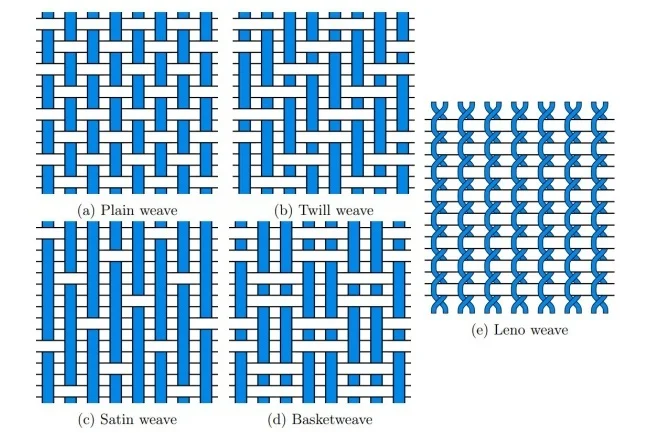
Comparison of plain weave, twill weave, satin weave, and leno weave fiberglass fabric textures.
Different weave patterns create different fabric structures. The most commonly discussed constructions include plain weave, twill weave, and satin weave. Leno weave is another specialized structure used where yarn positioning and open construction are important.
Each structure has its own characteristics, and the best choice depends on the intended application.
2.1 Plain Weave
Plain weave is one of the simplest and most widely used woven fabric constructions.
In this structure, each warp yarn passes alternately over and under each weft yarn, creating a regular interlacing pattern.
Main characteristics:
- High frequency of yarn interlacing.
- Regular and balanced fabric construction.
- Relatively good structural stability.
- Generally limited yarn movement.
- Higher yarn crimp than many longer-float constructions.
Plain-weave fiberglass fabric is commonly used as a reinforcement substrate in industrial coated fabrics.
Its regular structure makes it suitable for applications requiring consistent fabric construction and general dimensional stability.
However, the frequent interlacing points can create additional yarn crimp. Depending on the yarn specifications and fabric density, this may influence tensile behavior and flexibility.
It is important not to assume that plain weave always has the highest or lowest strength. Its actual performance must be evaluated through testing.
2.2 Twill Weave
Twill weave is characterized by a diagonal pattern on the fabric surface.
In this construction, the interlacing points are staggered rather than arranged in a simple one-over-one-under sequence.
This generally creates longer yarn floats and can reduce yarn crimp compared with a comparable plain weave.
Main characteristics:
- Visible diagonal surface pattern.
- Different yarn crimp characteristics from plain weave.
- Often good flexibility and drapability.
- Better conformability in certain fabric constructions.
- Potentially different yarn mobility under mechanical loading.
Twill-weave fiberglass fabric may be considered for applications requiring a material that can conform to curved surfaces or irregular shapes.
For example, certain industrial insulation covers and flexible protective materials may benefit from the conformability of twill constructions.
However, longer yarn floats can also increase exposure to snagging or localized yarn damage in some applications.
The actual performance depends on the specific twill design, yarn density, and yarn specifications.
2.3 Satin Weave
Satin weave has fewer interlacing points and longer yarn floats than plain weave.
This creates a relatively smooth surface and allows yarns to follow a less frequently crimped path.
Main characteristics:
- Longer yarn floats.
- Generally lower yarn crimp than comparable plain-weave structures.
- Smooth surface appearance.
- Good drapability and conformability.
- Potentially favorable tensile behavior under certain loading conditions.
Because yarns may remain relatively straight, certain satin constructions can provide efficient load transfer along the yarn direction.
Published research has also demonstrated that satin-weave glass fabrics can achieve favorable mechanical performance under specific test conditions.
However, satin weave is not automatically stronger than plain or twill weave in every mechanical property.
Longer yarn floats can also influence yarn mobility, surface durability, and resistance to localized damage.
Therefore, the selection should be based on the required mechanical properties rather than the weave name alone.
2.4 Leno Weave
Leno weave uses a different interlacing structure from conventional plain, twill, and satin weaves.
In this construction, warp yarns twist around adjacent warp yarns to hold the weft yarns in position.
This arrangement helps reduce yarn displacement and creates an open or mesh-like structure.
Main characteristics:
- Twisted warp yarn arrangement.
- Improved resistance to yarn displacement.
- Open fabric structure.
- Useful for specialized mesh and reinforcement applications.
Leno weave can be suitable where maintaining yarn spacing is important.
However, its open construction means that fabric coverage and coating requirements may differ from those of conventional woven fiberglass fabrics.
For solid coated industrial fabrics, its suitability should be evaluated according to the required coverage, coating process, and mechanical properties.
Comparison of Common Fiberglass Weave Patterns
| Weave pattern | Structural characteristics | Potential advantages | Considerations |
|---|---|---|---|
| Plain weave | Frequent warp and weft interlacing | Regular structure and good general stability | Higher yarn crimp may affect tensile behavior and flexibility |
| Twill weave | Staggered interlacing with diagonal surface pattern | Good drapability and conformability in many constructions | Longer floats may be more exposed to snagging |
| Satin weave | Longer yarn floats and fewer interlacing points | Smooth surface and potentially favorable tensile behavior | Yarn mobility and surface durability need evaluation |
| Leno weave | Twisted warp yarns holding weft yarns | Reduced yarn displacement and open construction | Coverage and coating requirements may differ |
Important: This table describes general structural characteristics, not a universal strength ranking. The actual performance of each fabric depends on its yarn specifications, density, thickness, coating, and testing conditions.
3. How Do Different Weave Patterns Affect the Mechanical Strength of Fiberglass Fabrics?
The weave pattern influences how fiberglass yarns interact with one another and distribute mechanical loads.
However, different mechanical properties do not always respond to weave changes in the same way.
A fabric with favorable tensile performance may not necessarily have the highest tear resistance or abrasion resistance.
3.1 Tensile Strength: Resistance to Pulling Forces
Tensile strength describes a material’s resistance to breaking when subjected to a pulling force.
For woven fiberglass fabrics, tensile performance should be evaluated separately in the warp and weft directions.
Important influencing factors include:
- Fiberglass yarn strength.
- Yarn thickness and linear density.
- Warp and weft yarn density.
- Yarn crimp.
- Weave construction.
- Coating properties in the finished material.
For example, plain weave has frequent interlacing points, which can result in higher yarn crimp.
Twill and satin structures may allow yarns to follow straighter paths, potentially improving load-bearing efficiency under certain conditions.
However, lower crimp alone does not guarantee higher tensile strength.
The number of load-bearing yarns, individual yarn strength, fabric density, and load direction also matter.
Practical consideration: When comparing fiberglass fabrics, request tensile test results in both warp and weft directions. A single tensile value may not fully describe the material’s mechanical behavior.
3.2 Tear Strength: Resistance to Fabric Tearing
Tear strength measures the force required to initiate or propagate a tear in a material.
It is different from tensile strength because a tear involves localized damage rather than uniform pulling across the entire specimen.
Weave construction can influence tear resistance through:
- Yarn interlacing frequency.
- Yarn mobility.
- Yarn pull-out resistance.
- Yarn strength.
- Fabric density.
- Load distribution around the damaged area.
For example, longer yarn floats may allow greater yarn movement during tearing. Depending on the construction, this movement may help redistribute stress or allow yarns to pull out more easily.
Consequently, the relationship between weave pattern and tear strength is complex.
A tighter weave does not automatically provide better tear resistance, and a fabric with higher tensile strength may still have lower tear strength.
For protective covers, flexible connectors, and industrial fabrics exposed to mechanical handling, tear resistance should be evaluated as a separate property.
3.3 Abrasion Resistance: Resistance to Surface Wear
Abrasion resistance refers to a material’s ability to withstand surface damage caused by friction or repeated contact.
For coated fiberglass fabrics, abrasion performance depends on both the woven substrate and the coating layer.
Important factors include:
- Coating thickness and formulation.
- Coating adhesion.
- Surface texture.
- Yarn exposure.
- Fabric construction.
- Contact pressure and friction conditions.
For example, longer yarn floats in some satin and twill constructions may create different surface characteristics compared with plain weave.
However, once the fabric is coated, the coating layer becomes a major factor in determining the surface’s resistance to wear.
Therefore, abrasion resistance should be evaluated using the finished coated fabric rather than estimated from the uncoated weave pattern.
This is particularly important for materials used around industrial machinery, protective covers, and equipment exposed to repeated contact.
3.4 Flexibility and Flex-Fatigue Resistance
Flexibility describes how easily a material can bend or conform to a particular shape.
Flex-fatigue resistance refers to its ability to withstand repeated bending without developing unacceptable damage.
These properties are important for:
- Flexible industrial hoses.
- Industrial ducting.
- Expansion joints.
- Flexible duct connectors.
- Removable insulation jackets.
Weave construction influences flexibility through yarn crimp, interlacing frequency, and yarn mobility.
ion processes.
The correct material should provide a suitable balance between flexibility and dimensional stability for its intended application.
4. Does the Coating Material Change the Strength of Fiberglass Fabric?
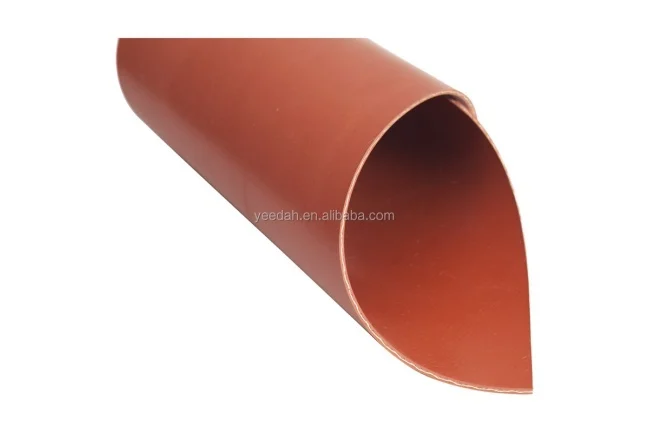
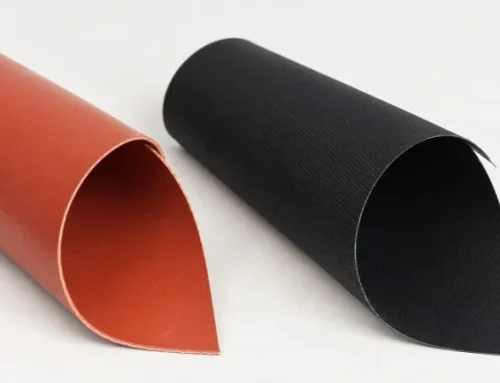
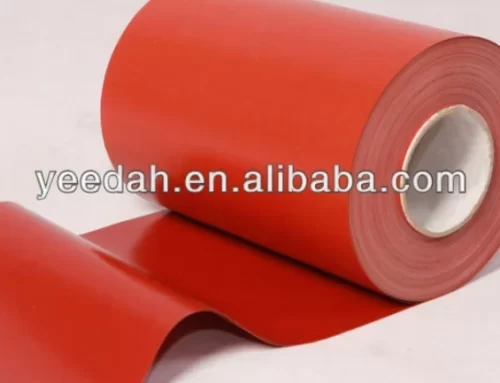
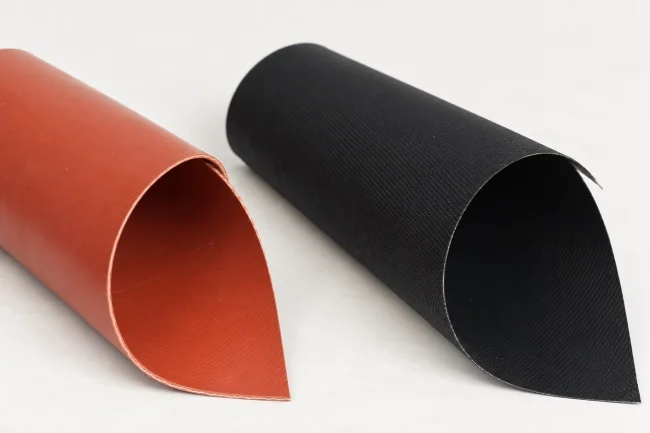
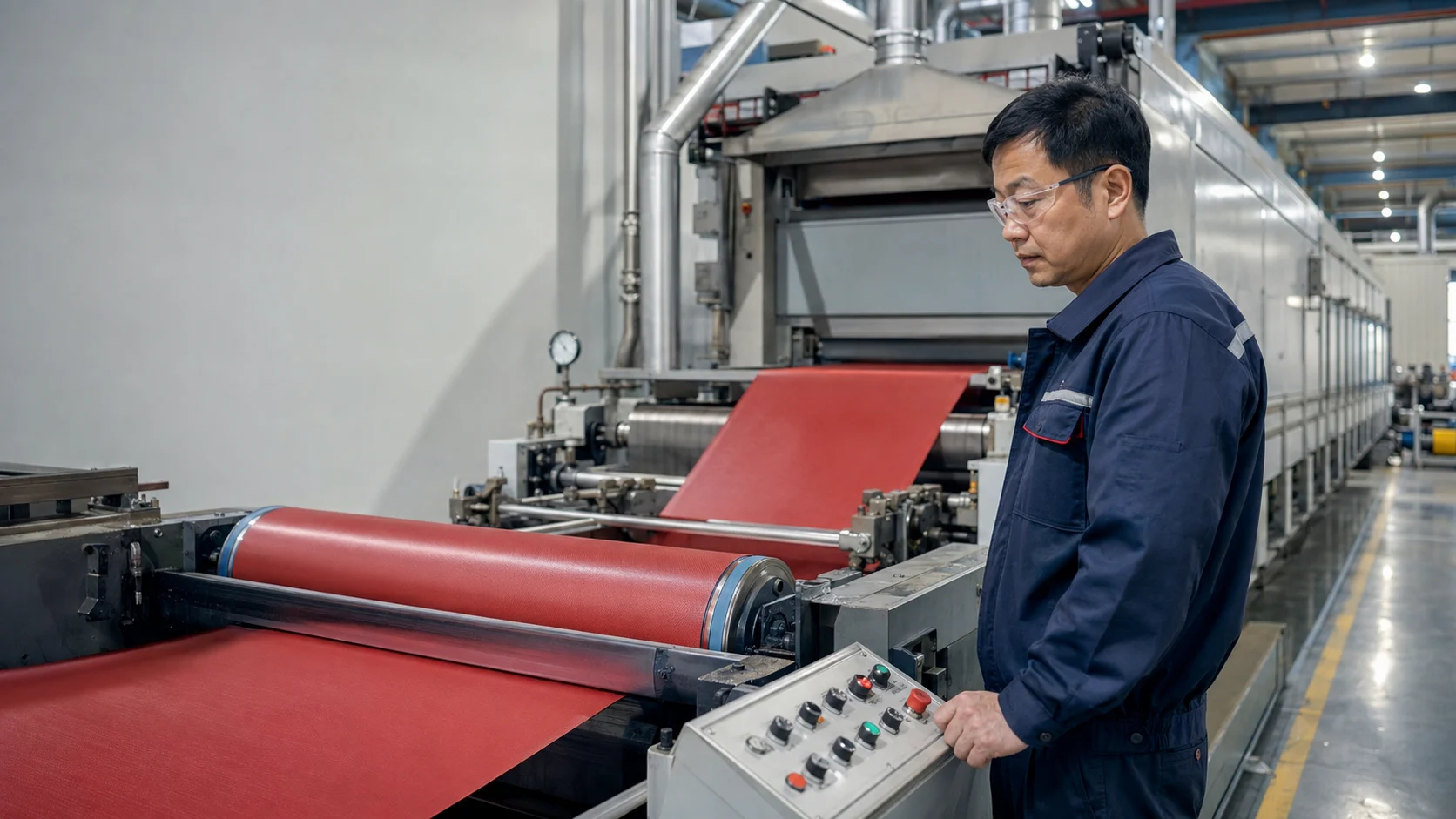
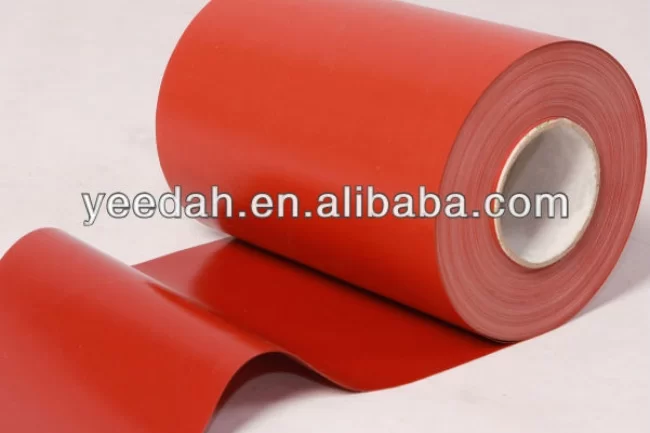
Red silicone-coated fiberglass fabric designed for industrial applications requiring heat resistance and flexibility.
Yes. The coating material and coating process can significantly influence the mechanical properties of finished coated fiberglass fabrics.
The fiberglass substrate provides reinforcement, while the coating contributes surface protection and application-specific properties.
This means that two fabrics using the same weave pattern can perform differently after coating.
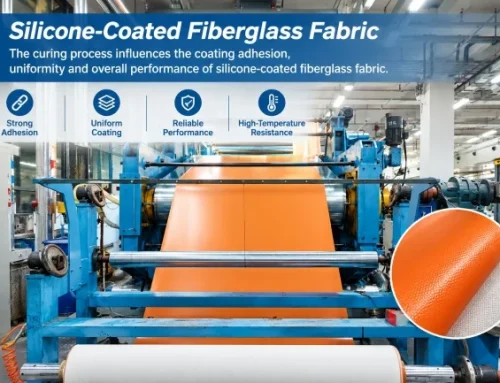
4.1 Silicone-Coated Fiberglass Fabric
Silicone-coated fiberglass fabric combines a fiberglass reinforcement substrate with a silicone rubber coating.
The fiberglass base provides structural reinforcement, while the silicone coating contributes flexibility, heat resistance, and surface protection.
Depending on the formulation and construction, silicone-coated fiberglass fabric can be used in:
- High-temperature insulation covers.
- Flexible duct connectors.
- Industrial protective covers.
- Thermal insulation systems.
- Welding and heat-protection materials.
- Specialized industrial flexible products.
When selecting silicone-coated fiberglass fabric, buyers should consider:
Operating temperature: Specify the expected continuous operating temperature and any intermittent temperature peaks.
Fabric construction: Select suitable yarn specifications, weave pattern, and fabric density according to the mechanical requirements.
Coating thickness: The coating should provide the required protection without making the material unsuitable for the intended bending conditions.
Coating adhesion: The coating should remain properly bonded to the fiberglass substrate during use.
Flexibility: The finished material should be suitable for installation and operating movement.
The temperature resistance of a finished coated fabric depends on the complete material construction and operating conditions, not simply the temperature resistance of silicone rubber or fiberglass considered separately.
4.2 Neoprene-Coated Fiberglass Fabric
Neoprene-coated fiberglass fabric combines a fiberglass reinforcement layer with a neoprene rubber coating.
The fiberglass substrate provides structural reinforcement, while the neoprene coating contributes flexibility and resistance to various environmental conditions.
Depending on the formulation and construction, it can be used in:
- Industrial protective covers.
- Flexible fabric connectors.
- Specialized industrial hoses.
- Equipment insulation products.
- Other rubber-coated industrial fabric applications.
When selecting neoprene-coated fiberglass fabric, consider:
- Required fabric thickness and weight.
- Tensile and tear strength.
- Coating thickness and adhesion.
- Flexibility requirements.
- Operating temperature.
- Exposure to oils, chemicals, and moisture.
Neoprene and silicone have different performance characteristics. Therefore, the coating should be selected according to the actual operating environment.
4.3 Why the Same Weave Can Produce Different Coated Fabric Performance
An important point for industrial buyers is that the weave pattern alone cannot determine the mechanical performance of the finished material.
Consider two plain-weave fiberglass fabrics.
One may use heavier fiberglass yarns and a thicker silicone coating, while the other may use lighter yarns and a thinner neoprene coating.
Although both have the same weave pattern, their finished thickness, weight, flexibility, tensile behavior, and tear resistance may be different.
The following manufacturing factors also contribute to the final performance:
Coating formulation: Different rubber formulations provide different mechanical and environmental properties.
Coating thickness: The amount of coating influences finished thickness, weight, and flexibility.
Coating penetration: The degree to which coating enters the fabric structure can influence yarn movement and interaction between the coating and substrate.
Coating adhesion: Proper bonding helps maintain the integrity of the finished material.
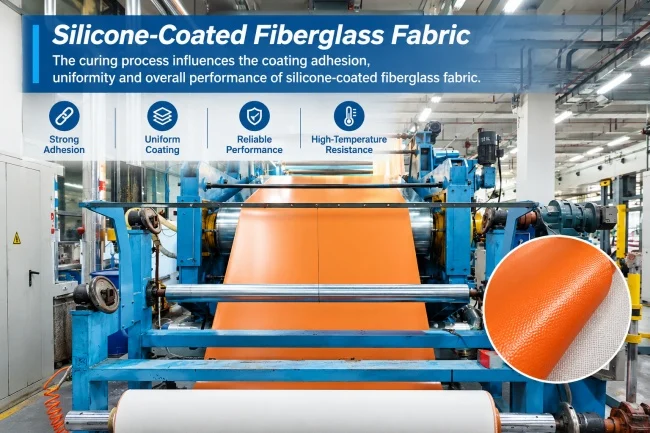
Curing conditions: Temperature and curing time influence the final coating properties.
Fabric quality: Variations in yarn density and fabric construction can affect production consistency.
Therefore, industrial buyers should evaluate the complete coated fabric rather than choosing materials based only on the uncoated fiberglass weave pattern.
5. How to Choose the Right Fiberglass Weave Pattern for Different Industrial Applications
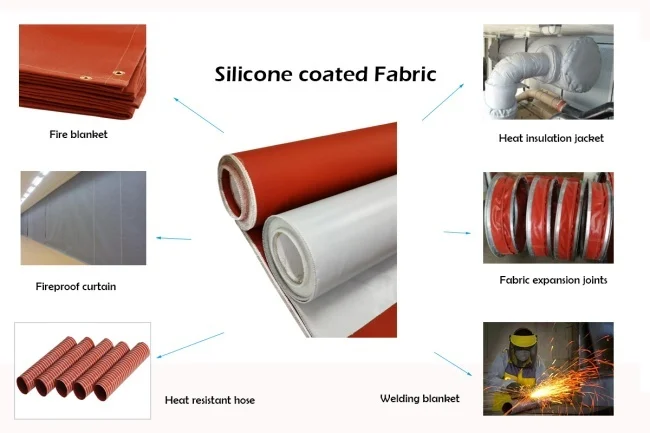
Industrial applications of silicone-coated fiberglass fabric, including fire blankets, insulation jackets, fabric expansion joints, heat-resistant hoses, and welding blankets.
The best weave pattern depends on the actual operating requirements of the finished product.
A fabric used in a stationary insulation cover may have different requirements from one used in an industrial hose or expansion joint.
Below are several common applications and the main material selection factors to consider.
5.1 For High-Temperature Flexible Hoses and Industrial Ducting
High-temperature flexible hoses and industrial ducting require materials that can maintain suitable performance under specified thermal and mechanical conditions.
Important selection factors include:
- Tensile strength.
- Tear resistance.
- Flexibility.
- Resistance to repeated bending.
- Coating adhesion.
- Operating temperature.
- Required pressure or vacuum performance.
Silicone-coated fiberglass fabric is one possible reinforcement material for these applications, depending on the hose construction and operating requirements.
The weave pattern should provide sufficient reinforcement without making the finished hose unnecessarily rigid.
Twill constructions may be worth evaluating when fabric conformability is important, while plain weave may be suitable when a regular reinforcement structure is preferred.
However, the final choice must also consider hose diameter, reinforcement layers, steel wire construction, connection design, and actual operating conditions.
Practical advice: Do not select a fiberglass fabric for flexible ducting based on flexibility alone. The complete hose should be evaluated for its required pressure, vacuum, temperature, and bending performance.
5.2 For Expansion Joints and Flexible Duct Connectors
Expansion joints and flexible duct connectors are used to accommodate movement, vibration, thermal expansion, and installation variations in industrial systems.
Depending on the application, these products may experience:
- Repeated mechanical movement.
- Vibration.
- Pressure differences.
- Thermal cycling.
- Installation tension.
- Environmental exposure.
The fabric must provide an appropriate balance of tensile strength, flexibility, dimensional stability, and coating durability.
The weave pattern should be selected according to the movement requirements and the construction of the finished connector.
For example, a fabric with good conformability may be useful when the connector must accommodate complex shapes. However, sufficient reinforcement is also necessary to maintain the required structural performance.
When selecting coated fiberglass fabric for expansion joints or flexible duct connectors, buyers should specify operating temperature, pressure, movement range, and expected service conditions.
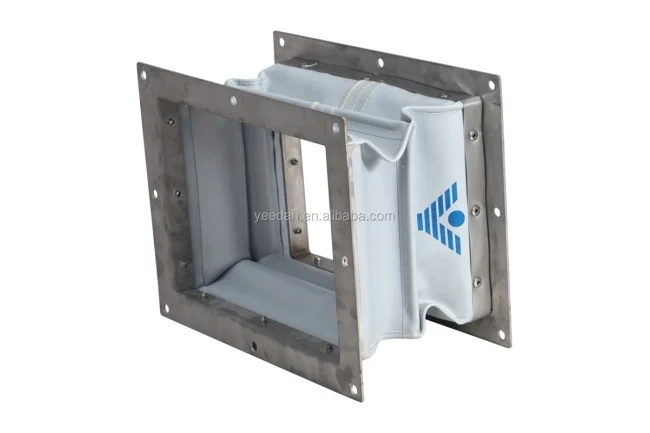
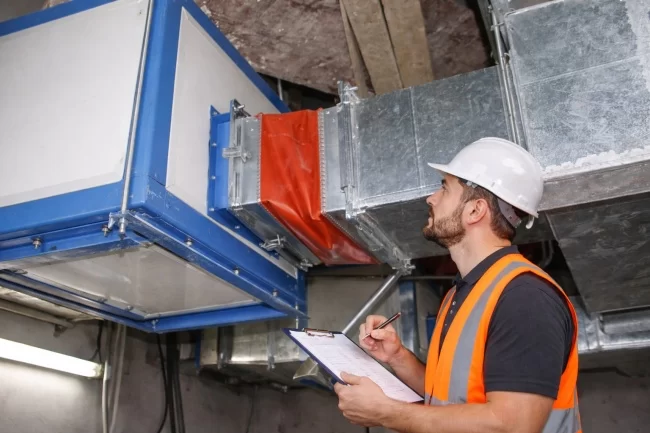
Rectangular fabric expansion joint designed to accommodate movement and vibration in industrial ducting systems.
5.3 For Industrial Insulation Jackets and Removable Insulation Covers
Industrial insulation jackets are used around equipment such as:
- Valves.
- Pipes.
- Turbines.
- Pumps.
- Industrial machinery.
These covers often need to fit irregular shapes and allow convenient installation and removal.
Therefore, flexibility and fabrication characteristics are important considerations.
The fabric should be sufficiently flexible to follow equipment contours while maintaining suitable mechanical strength during handling and installation.
Twill and satin constructions may be considered when greater conformability is required. Plain-weave fabrics may also be suitable where regular construction and dimensional stability are important.
In addition to weave pattern, buyers should consider coating type, surface protection, fabric thickness, and operating temperature.
5.4 For Protective Covers and Industrial Equipment Applications
Protective covers are used to protect machinery and components from heat, abrasion, dust, sparks, and other environmental factors, depending on the material specification.
For these applications, material selection should be based on actual exposure conditions.
Important considerations include:
- Abrasion resistance.
- Tear resistance.
- Tensile strength.
- Surface durability.
- Flexibility.
- Temperature resistance.
- Chemical and environmental exposure.
For example, a protective cover installed near moving machinery may require greater abrasion resistance than one used in a stationary environment.
Similarly, a cover that is frequently removed and reinstalled should have suitable tear resistance and flexibility.
We recommend identifying the main failure risks before choosing the weave pattern and coating combination.
6. Other Factors That Influence the Strength of Coated Fiberglass Fabrics
ring conditions
Poor adhesion or unsuitable curing conditions may contribute to coating separation, cracking, or inconsistent properties.
8. Manufacturing consistency and quality control
Variations in yarn density, fabric thickness, coating weight, and curing conditions may result in differences between production batches.
9. Operating environment
Temperature, chemical exposure, moisture, vibration, pressure, and mechanical loading can all affect material performance during service.
The key point is that coated fiberglass fabric should be evaluated as a complete material system. No single specification can provide a complete picture of its performance.
7. How to Evaluate the Strength of Coated Industrial Fiberglass Fabrics
For procurement managers and technical buyers, understanding test data is an important part of supplier evaluation.
Instead of relying only on product descriptions or general material claims, buyers should request relevant technical specifications and test reports for the finished coated fabric.
The following standards provide useful references for evaluating important mechanical properties.
7.1 Tensile Strength Testing
Tensile strength testing measures the force required to break a fabric specimen under specified testing conditions.
ISO 1421:2016 is an international standard for determining the tensile strength and elongation at break of rubber- or plastics-coated fabrics.
It includes two methods:
- Method 1: Strip test, which determines tensile strength and elongation at break.
- Method 2: Grab test, which determines tensile strength.
When reviewing tensile test reports, buyers should pay attention to:
- Test standard and edition.
- Test direction (warp or weft).
- Specimen dimensions.
- Reported breaking force.
- Elongation at break, where applicable.
- Material thickness and construction.
Results should be compared using the same test method and comparable testing conditions.
ASTM D5035 is another standard for determining the breaking force and elongation of textile fabrics using strip test procedures. However, it should not be treated as interchangeable with ISO 1421 without considering their different scopes and procedures.
7.2 Tear Strength Testing
Tear strength testing evaluates the force required to initiate or propagate a tear in a material.
ISO 4674-1:2016 provides methods for determining the tear resistance of rubber- or plastics-coated fabrics.
The two methods include:
- Method A: Tongue tear.
- Method B: Trouser tear.
Tear resistance is particularly relevant for industrial protective covers, flexible connectors, and materials exposed to mechanical handling.
When comparing results, buyers should confirm that the same test method and conditions have been used.
A higher tensile strength result does not necessarily indicate higher tear resistance.
7.3 Coating Adhesion and Flexibility Testing
Mechanical strength is not the only consideration when evaluating coated fiberglass fabrics.
Coating adhesion is important because the coating must remain properly bonded to the fiberglass substrate during use.
If adhesion is insufficient, the coating may separate or peel away, potentially reducing the protective performance of the finished material.
Flexibility testing is also relevant for materials used in hoses, flexible connectors, and removable insulation covers.
Depending on the application, evaluation may include:
- Coating adhesion testing.
- Repeated bending or flex-fatigue testing.
- Visual inspection for cracking.
- Assessment of coating separation.
- Performance evaluation after environmental exposure.
The appropriate test methods should be selected according to the product specification and intended operating conditions.
7.4 Why Buyers Should Request Finished-Fabric Test Data
One common mistake in industrial sourcing is relying only on the mechanical properties of uncoated fiberglass fabric when evaluating a finished coated product.
However, coating application can change the material’s thickness, flexibility, tensile behavior, and tear performance.
For this reason, we recommend requesting test data for the actual finished material whenever possible.
A useful technical document should identify:
- Product name and specification.
- Fiberglass fabric construction.
- Coating material.
- Total thickness.
- Fabric weight.
- Test methods.
- Test results.
- Testing direction.
- Sample identification.
Buyers should also confirm whether the test report represents the exact product being quoted or only a similar material.
A test report is most useful when it clearly identifies the tested construction and can be connected to the material being supplied.
8. Common Mistakes When Selecting Fiberglass Weave Patterns
Selecting the wrong fabric construction can lead to unnecessary costs, production difficulties, or unsatisfactory performance.
The following are common mistakes that industrial buyers should avoid.
Mistake 1: Assuming that a tighter weave always means higher strength.
A tighter construction may improve fabric coverage and influence stability, but it does not automatically provide higher tensile or tear strength.
Mistake 2: Looking only at tensile strength.
Tensile strength is important, but industrial materials may also require good tear resistance, abrasion resistance, and flex-fatigue performance.
Mistake 3: Ignoring warp and weft differences.
A fabric may have different tensile properties in the two directions. Buyers should check both values when directional loading matters.
Mistake 4: Choosing a flexible fabric without considering long-term durability.
Initial flexibility does not guarantee good performance under repeated bending.
Mistake 5: Ignoring the coating material.
The coating system influences the finished fabric’s flexibility, surface protection, adhesion, and environmental resistance.
Mistake 6: Comparing test results from different standards.
Results obtained using different test methods may not be directly comparable. Buyers should confirm the test standards and conditions before making a decision.
Mistake 7: Selecting materials based only on thickness or GSM.
Thickness and weight are useful specifications, but they cannot independently establish the mechanical performance of a fabric.
Mistake 8: Not providing sufficient application information.
A manufacturer cannot make a meaningful material recommendation without understanding the intended application, operating temperature, mechanical loading, and other relevant conditions.
Avoiding these mistakes can make material selection more efficient and reduce the risk of choosing a fabric that does not meet the actual application requirements.
9. How to Work with a Coated Fiberglass Fabric Manufacturer to Select the Right Material
For industrial buyers, choosing the right material is not simply about comparing prices or selecting a familiar specification.
A suitable manufacturer should be able to understand the application requirements and discuss available material constructions.
At YEEDAH, we specialize in coated industrial fabrics and flexible ducting products. As a China-based factory with 35 production lines, we provide customizable product specifications for different B2B industrial applications.
When discussing a coated fiberglass fabric project with a manufacturer, we recommend preparing the following information.
1. Intended application
Explain whether the fabric will be used for a flexible hose, expansion joint, duct connector, insulation jacket, protective cover, or another industrial product.
2. Operating temperature
Provide the expected continuous operating temperature and any intermittent temperature peaks.
3. Mechanical requirements
Specify the required tensile strength, tear resistance, flexibility, pressure, vacuum, or movement conditions, where applicable.
4. Fabric specifications
If known, provide the required:
- Weave pattern.
- Thickness.
- Fabric weight (GSM).
- Roll width.
- Fiberglass yarn specifications.
If you are unsure which weave pattern is suitable, discuss the application requirements with the manufacturer before finalizing the construction.
5. Coating requirements
Identify whether silicone, neoprene, PVC, or another coating material is required.
Also explain any specific requirements concerning coating thickness, surface appearance, adhesion, or environmental resistance.
6. Samples and testing
Before placing a bulk order, request samples where practical.
Evaluate the material according to the intended application and confirm that its properties meet the agreed specifications.
7. Manufacturing consistency and quality documentation
Discuss the manufacturer’s quality control procedures, production capabilities, inspection requirements, and available technical documentation.
For B2B wholesale purchasing, it is also important to confirm minimum order quantities, production lead times, packaging requirements, and delivery arrangements.
Working with a manufacturer that understands both fiberglass fabric construction and coating requirements can help buyers identify a more suitable material for their products.
Conclusion
Fiberglass weave patterns influence the mechanical characteristics of coated industrial fabrics, including tensile behavior, tear resistance, flexibility, abrasion resistance, and dimensional stability.
Plain, twill, satin, and leno weaves each have different structural characteristics. However, there is no universally strongest weave pattern for every industrial application.
The final performance of coated fiberglass fabric depends on several interconnected factors, including fiberglass yarn specifications, yarn density, fabric thickness, weave construction, coating material, coating thickness, and manufacturing quality.
Published research confirms that weave structure and coating conditions can produce measurable differences in mechanical performance. However, those findings must be interpreted in the context of the specific materials and test conditions used.
For engineers and procurement managers, the most reliable approach is to evaluate the complete material construction against actual operating requirements and request relevant test data before making a purchasing decision.
Call to Action
Looking for a reliable manufacturer of silicone-coated fiberglass fabric or neoprene-coated fiberglass fabric?
At YEEDAH, we specialize in coated industrial fabrics and flexible ducting products. As a China-based factory with 35 production lines, we provide customizable material specifications for different industrial applications.
Whether you are sourcing materials for flexible duct connectors, expansion joints, insulation jackets, high-temperature hoses, or industrial protective covers, we welcome your inquiries.
Contact our team at sales@yeedah.com to discuss your requirements. We’ll be happy to recommend suitable product options for your application.
References
- Bandaru, A. K., Khan, A. N., Alagirusamy, R., & O’Higgins, R. M. (2022). Mechanical properties of polytetrafluoroethylene coated glass fabrics: Influence of weave pattern and coating percentage. Journal of Industrial Textiles. DOI: https://doi.org/10.1177/15280837221107165
- ISO 1421:2016. Rubber- or plastics-coated fabrics — Determination of tensile strength and elongation at break. https://www.iso.org/standard/65588.html
- ISO 4674-1:2016. Rubber- or plastics-coated fabrics — Determination of tear resistance — Part 1: Constant rate of tear methods. https://www.iso.org/standard/65592.html